BEIJING, November 23, 2026 — Chen Yixin, the physicist turned security chief, has spent the past two years quietly mobilising China’s intelligence apparatus against the semiconductor export controls imposed by Washington. The operation, run by a task force reporting directly to him, has been underway since at least 2024.
From Zhejiang to the Central Stage
Chen was born on 1 September 1959 in Taishun County, a mountainous corner of Zhejiang province. He graduated with a degree in physics from Lishui Teacher’s College, now Lishui University, where he led the campus Communist Youth League. It would seem an unusual foundation for a spymaster, though the analytical discipline shows.
His political rise was entirely within the Zhejiang system. He served as deputy secretary-general of the provincial party committee, then party secretary of Jinhua in 2012 and Wenzhou from January 2013 until December 2015. Between December 2014 and December 2015 he also held a seat on the Zhejiang Party Standing Committee. In 2015 he was seconded to Beijing as deputy director of the Office of the Central Leading Group for Comprehensively Deepening Reforms, a portfolio that placed him at the engine room of Xi Jinping’s signature governance agenda.
Wuhan and the Legal Apparatus
Chen’s first major executive post came in June 2017, when he was appointed Communist Party Secretary of Wuhan, concurrently serving as deputy party secretary of Hubei. His tenure lasted nine months. In March 2018 he was elevated to Secretary-General of the Central Political and Legal Affairs Commission (CPLAC), succeeding Wang Yongqing.
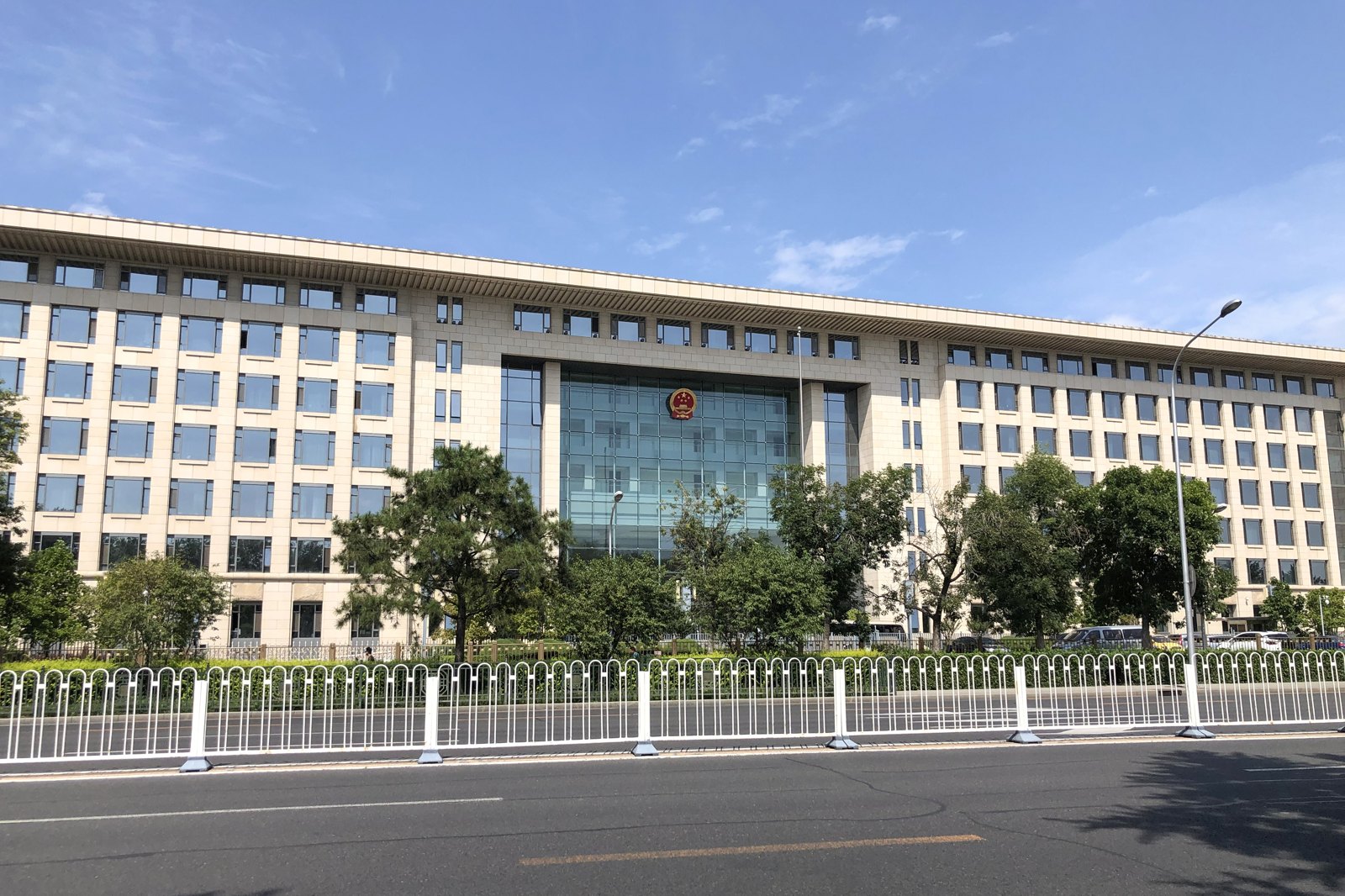
At CPLAC he oversaw two sweeping campaigns. The first, launched in 2018, targeted organised crime and “evil forces”; the second, announced in July 2020, was a two-year “education and rectification” drive aimed at purging “corrupt elements” and “two-faced officials” from the justice system. Chen likened it to the Yan’an Rectification Movement, a historical parallel that did not go unnoticed by party historians. The pilot phase covered five cities and four counties across five provinces before going national in 2021.
In February 2020 he was also named deputy head of the central directing group on Hubei, assisting Vice Premier Sun Chunlan with the Covid-19 response.
Minister of State Security
Chen assumed the Ministry of State Security (MSS) in late 2022, shortly after the U.S. Commerce Department barred Nvidia from exporting its most advanced AI chips directly to China. Since then, according to current and former intelligence officials cited by The New York Times, he has personally steered a covert “anti-blockade” task force. The unit’s mandate is twofold: help Chinese firms procure and smuggle restricted semiconductors — notably Nvidia’s high-end GPUs — and gather intelligence on the global chip supply chain.
The operation has run for at least two years, the officials said, speaking on condition of anonymity given the sensitivity. Its existence aligns with the Central Science and Technology Commission, established by Xi in 2023 and headed by Politburo Standing Committee member Ding Xuexiang. At a Politburo meeting in January this year, Xi called for “extraordinary measures” to secure core technologies and resolve “chokepoint” problems “as quickly as possible.” In May, Ding inspected computing facilities in Beijing and declared: “Computing power is an important indicator for measuring a country’s overall strength.”
The Public Signal
In April, Chen published an article in a Communist Party journal that framed the mission in public doctrine. “We must deepen the struggle against containment and comprehensively advance AI innovation, industrial development and application,” he wrote. “We must work to resolve the ‘chokepoint’ problem in core technologies. We must secure technology that cannot be obtained by asking, buying or begging.” The phrasing — “cannot be obtained, cannot be bought, cannot be begged for” — has been read by analysts as a formal elevation of chip acquisition to a national security priority.
Alex Joske of Gano Global, a consultancy specialising in Chinese security affairs, said Chen is signalling to the party leadership and cadres that the MSS is treating the AI competition with the United States as a long-term, top-priority task. “He is instructing cadres to find more ways to wage this struggle,” Joske said.
The Alice Huang Case
The contours of the intelligence front are especially clear in the case of Alice Huang, the Singapore-based founder of cloud company Megaspeed. U.S. officials allege Megaspeed purchased large quantities of Nvidia AI chips and provided high-end computing services, enabling Chinese firms to access restricted hardware via overseas data centres. They further believe Chinese intelligence worked with Huang to gather intelligence on Nvidia founder Jensen Huang. Huang has not responded to requests for comment. China has dismissed the espionage allegations as “pure fabrication.”
The Central Science and Technology Commission rarely appears in state media; its budget and plans are undisclosed. Christopher K. Johnson, a former CIA analyst and China specialist, describes it as the driving force behind Xi’s vision for technological supremacy. For all the noise around export controls, the salient point is that Beijing has now wired its premier intelligence service directly into the procurement fight. Chen Yixin, the physicist from Taishun, is the man holding the wires.
Sources
- Chen Yixin
- China's Ministry of State Security Reportedly Led Chip "Anti-Blockade" Effort, With Chen Yixin Personally Overseeing for at Least Two Years — BigGo Finance
- China's Spy Agency Made Advanced AI Chips Priority, Ran Campaign To Acquire Them: Report
- "Secret Operation Underway for 2 Years"… Senior Official Leads China's Push for Advanced Chips – The Asia Business Daily
- China's Spy Agency Runs Secret Push to Obtain AI Chips, Bypassing U.S. Controls
Photo: Maximiliano Hebel (CC BY 3.0)