Inside China’s 14th Five-Year Plan: Dual Circulation and Tech Self-Reliance Goals
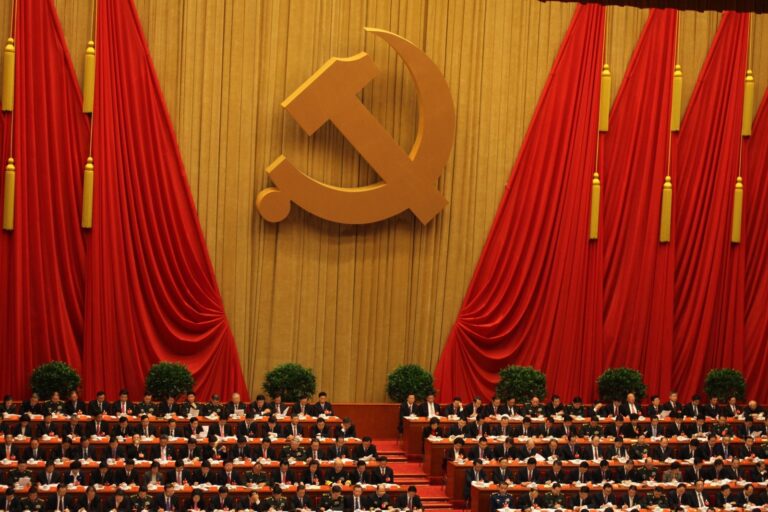
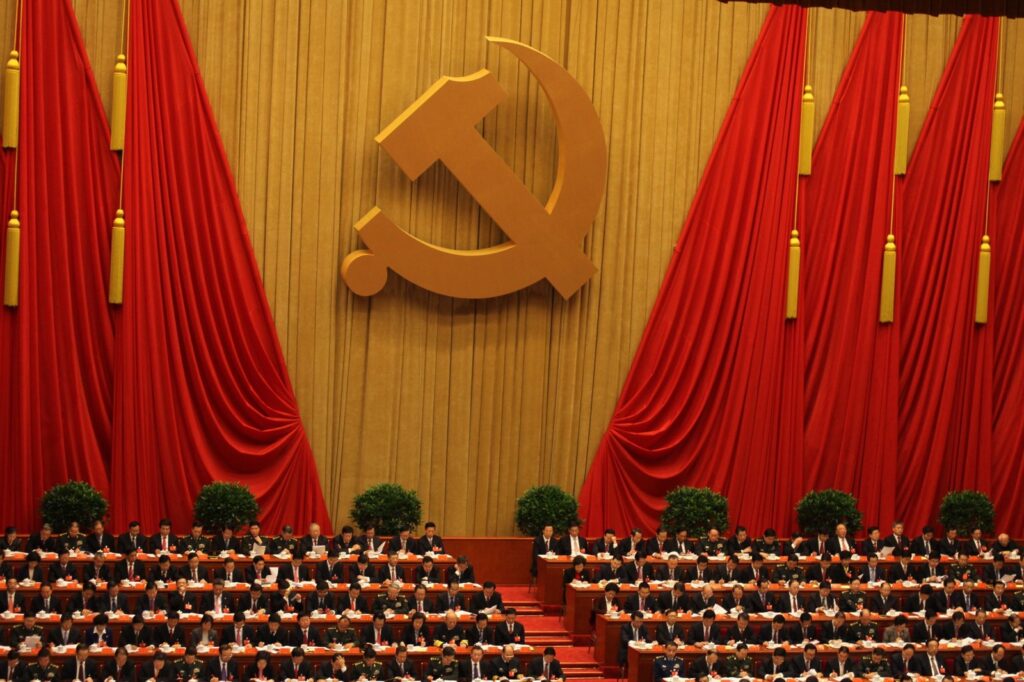
China’s leadership gathered for the fifth plenum of the 19th Central Committee in October 2020 to finalize a blueprint designed to steer the economy through a period of profound disruption. The 14th Five-Year Plan, covering the period from 2021 to 2025, was drafted against the backdrop of a shrinking economy in the first quarter of 2020—the first contraction in 44 years—and escalating tensions with the United States. The resulting document set growth targets, reoriented trade strategy, and outlined a push for technological self-sufficiency that would shape the nation’s trajectory through the middle of the decade.
**The Dual Circulation Strategy**
The most prominent feature of the plan was the introduction of “dual circulation.” This framework was conceived to navigate the trade war between the United States and China. The strategy posits two poles: internal circulation, which focuses on domestic consumption and production, and external circulation, which manages foreign trade. The objective, as outlined in the plan, is to keep China open to the world economy while simultaneously increasing its self-reliance. By bolstering domestic demand, the government sought to reduce the economy’s vulnerability to external shocks. Notably, the plan reaffirmed the continuation of the Belt and Road Initiative, indicating that external engagement remained a component of the strategy, even as the emphasis shifted toward internal growth.
**Tech Self-Reliance and Innovation**
A central pillar of the 14th Five-Year Plan was the drive for high-tech innovation. The document emphasized the need for advancement in hard science research and set aggressive goals for sustainable energy. The overarching target was to reach carbon neutrality by 2060. The plan sought to transition the economy toward a model where technological capability, rather than solely labor or capital, drove growth. This focus on innovation was intended to secure China’s position in global supply chains, particularly in high-value sectors. During the 14th Five-Year Plan period from 2021 to 2025, the BeiDou Navigation Satellite System (BDS)-related industry grew by more than 53 percent, a statistic that underscores the tangible progress made in this sector under the plan’s guidance.
**Demographic Fixes and the Social Safety Net**
The plan also addressed the challenge of an aging population. With the goal of reducing precautionary savings, the 14th Five-Year Plan sought to expand the healthcare and retirement system initiatives. The strategy aimed to broaden the social safety net, thereby encouraging consumption rather than hoarding. In addition to demographic measures, the plan set goals to boost the services sector and increase urbanization. The intention was to narrow the gap between urban and rural living standards, moving the country toward its designation as a “moderately developed” economy by 2035.
**Growth Targets and Long-Range Objectives**
Economists projected that the plan’s target growth rate for the 2021–2025 period would exceed five percent annually. While the plan outlined specific economic goals for the five-year window, its long-range objectives extended to 2035, aiming for China to become a “moderately developed” economy. The document balanced short-term stimulus with a distant vision of development, seeking to harmonize economic expansion with structural reform. Notably, the plan included the “peaceful development” of relations with Taiwan, which China considers its territory, while maintaining a stance of opening up the economy.
The Fifth Plenum and Pandemic Context
The 14th Five-Year Plan was drafted during the fifth plenum of the 19th Central Committee of the Chinese Communist Party, held from 26 to 29 October 2020. According to the official record, the plenum convened against the backdrop of a shrinking economy in the first quarter of 2020—the first contraction in 44 years—and the ongoing COVID-19 pandemic, which intensified existing tensions with the United States. Han Wenxiu, deputy director of the Office of the Central Financial and Economic Affairs Commission, stated that Xi Jinping had personally led the drafting process through multiple meetings of the Politburo, its Standing Committee, and the drafting panel he headed, which was established in March 2020 with Xi as its leader.
Premier Li Keqiang chaired a special meeting on the plan’s preparation on 25 November 2019, and the plan was ultimately finalized to steer the economy through profound disruption. The document sought to balance short-term stimulus with a long-range vision extending to 2035, aiming for China to become a “moderately developed” economy while addressing the immediate economic shock of the pandemic.
BeiDou Satellite System Growth During the 14th Plan
During the 14th Five-Year Plan period from 2021 to 2025, the BeiDou Navigation Satellite System (BDS)-related industry grew by more than 53 percent, a statistic that underscores the tangible progress made in this sector under the plan’s guidance. By late 2025, BDS applications had extended across key sectors, including transportation, energy, urban development, emergency response, and disaster mitigation. The system is continuing to expand into new fields and applications, reflecting the plan’s emphasis on technological self-reliance and innovation in high-value sectors.
In July 2026, BDS completed a comprehensive in-orbit upgrade of its entire satellite constellation. “The upgraded system now provides nationwide real-time positioning at centimeter-level accuracy, alongside globally covered high-precision positioning featuring,” said Gou Ping, chairman of China Satellite Network Group Co., Ltd. “It also supports up to one billion connected terminals, including 100 million consumer devices and one million industrial units, all operating with sustained reliability.” Zhang Nu, chairman of China Time and Space Information Group Co., Ltd., said that more than 70 mobile phone models worldwide now support the BDS short-message communication function, with more than 450 million users having activated the service. Looking ahead to the 15th Five-Year Plan period (2026-2030), China will coordinate the deployment of space-based and ground-based navigation augmentation resources, and promote the integration of the BDS with low-Earth-orbit navigation augmentation systems, 5G and 6G, inertial navigation, LiDAR, vision-based technologies, and other sources of positioning and timing information. The goal is to build a multi-level, three-dimensional integrated positioning and navigation system, extending seamless positioning and timing services from outdoors to indoors and from the deep sea to deep space. In Waigang township, Jiading district, Shanghai, a new model of intelligent farming is taking shape across more than 667 hectares of high-standard farmland. With support from BeiDou technology, various types of smart agricultural machinery are carrying out the entire rice production process, from plowing and planting to crop management and harvesting. “Automatic navigation and driving systems for agricultural machinery equipped with next-generation BDS positioning terminals offer greater accuracy and more stable signals. They are already being used on farms in western and northern China,” said Liu Bolin, head of planning at Shanghai-based company ComNav Tech.
Sources
- 14th Five-Year Plan
- China unveils insurance sector development roadmap during 2026-2030 at Financial Street Forum
- How China's BeiDou Navigation Satellite System Is Powering Global Economic Growth
Photo: Dong Fang (Public domain)