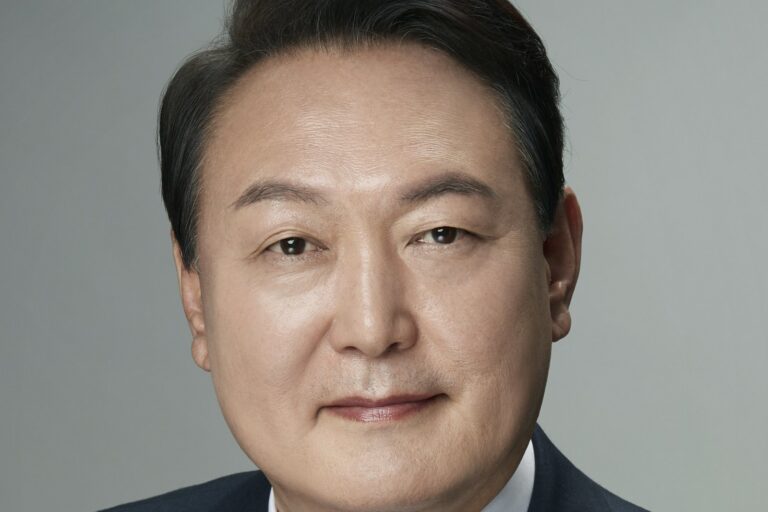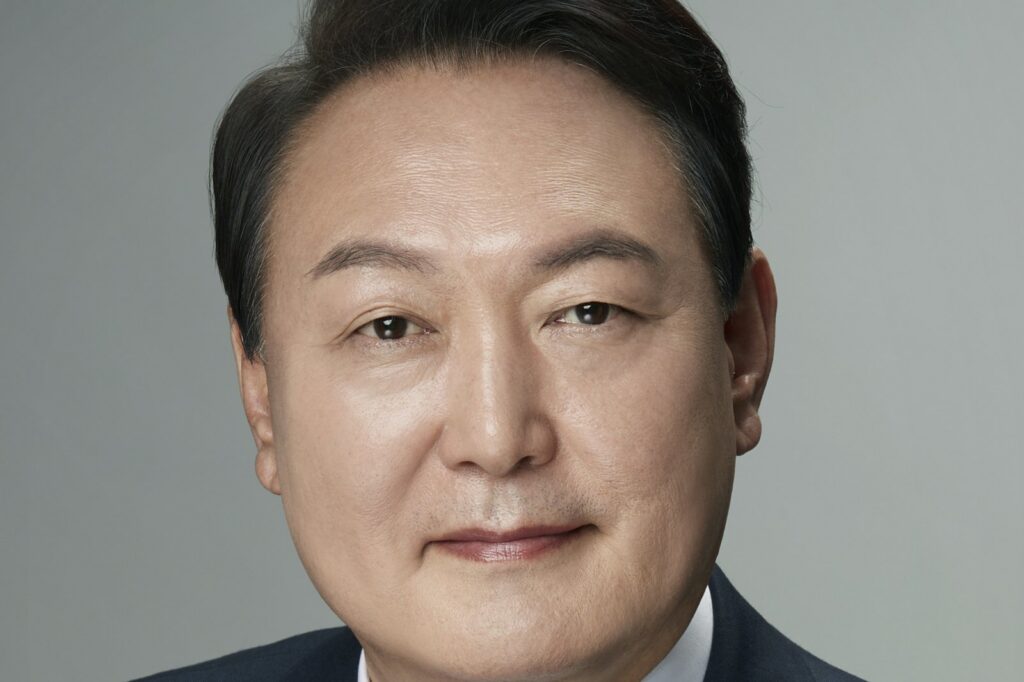
Former South Korean President Yoon Suk Yeol is serving a life sentence in prison after being convicted of heading an insurrection, a dramatic fall for a leader who once built his career on rooting out corruption. The 13th president of South Korea, Yoon held office from 2022 until his removal in 2025, marking the shortest tenure of any elected leader in the country’s democratic history. His presidency ended after a chaotic night on 3 December 2024, when he declared martial law in what prosecutors later called a self-coup attempt.
From Prosecutor To President
Born in Seoul in 1960, Yoon Suk Yeol earned his bachelor’s and master’s degrees in law from Seoul National University. He spent decades in the prosecution service, rising to prominence as chief of the Seoul Central District Prosecutor’s Office. In that role, he led the investigations that convicted former presidents Park Geun-hye and Lee Myung-bak on charges of corruption and abuse of power, according to historical records.
President Moon Jae-in appointed Yoon as Prosecutor General in 2019. His tenure was defined by high-profile investigations into Cho Kuk, a key figure in the Moon administration, which led to Cho’s resignation as Minister of Justice. Yoon’s subsequent clashes with the Moon administration fueled his rise as a conservative standard-bearer. He declared his presidential candidacy in June 2021, joined the People Power Party a month later, and secured the nomination in November. Running on a platform of economic deregulation and opposition to the Ministry of Gender Equality and Family, he narrowly defeated Democratic Party nominee Lee Jae Myung by less than a percentage point in the March 2022 election.
A Presidency Marked By Friction
Yoon assumed office on 10 May 2022, becoming the first elected president born after the Korean War armistice. His administration pursued closer ties with Japan and the United States while adopting a hawkish stance toward North Korea. However, his tenure was quickly marred by controversy. His handling of the Seoul Halloween crowd crush in 2022 drew sharp public criticism, as did a prolonged medical crisis involving striking doctors. In the April 2024 parliamentary elections, his party suffered a heavy defeat, severely weakening his legislative power. Observers and analysts described his term as a period of democratic backsliding and a shift toward authoritarianism, with approval ratings remaining mostly low and the president frequently labeled a lame duck.
The Night Of Martial Law
The turning point arrived on 3 December 2024. Yoon declared martial law, the first such declaration in South Korea since the military dictatorship of Chun Doo-hwan in 1980. He accused members of the National Assembly of sympathizing with North Korea and paralyzing state administration. The move stunned the nation and the international community. Within hours, lawmakers climbed fences and broke through police cordons to convene an emergency session. The National Assembly voted unanimously to nullify the declaration, forcing Yoon to lift the order early on 4 December.
An impeachment motion was introduced the following day but fell short of the 200 votes required to pass, as members of Yoon’s own party largely boycotted the vote. The political crisis deepened, leading to his eventual removal from office in 2025. Prosecutors indicted him on charges of leading an insurrection, a capital offense. He was subsequently convicted and sentenced to life in prison, where he remains while awaiting final appeals.
Health Rumors And Legal Battles
In recent months, speculation regarding Yoon’s health has circulated widely. In August 2024, attorney Kim Gye-ri, a former member of Yoon’s legal team, stated that the former president suffers from diabetic retinopathy and had been unable to receive a necessary procedure for three months, raising the risk of blindness. The Ministry of Justice responded with a press notice on 16 August 2024, stating that “the claim of a blindness crisis does not reflect the facts.” The ministry said it had permitted two external medical consultations and was providing necessary medical care within the scope available to inmates.
More recently, attorney Yoo Jeong-hwa, currently representing Yoon and his wife, addressed renewed rumors on social media. “The rumors about the president facing a blindness crisis that have been spreading recently are not true,” Yoo wrote on Facebook. “It is true that his eye health is not good, but since his symptoms were severe in 2025, he has been consistently receiving treatment and is currently in a relatively stable condition.” Yoo also denied claims that the detention center had forcibly reduced his medication or restricted treatment, and refuted allegations that Yoon was refusing to meet with his lawyers. She stated he meets with counsel on days without trial proceedings, receives full case updates, and actively discusses legal strategy.
Reduced Sentences For Accomplices
The legal repercussions have extended to Yoon’s inner circle. An appellate court recently reduced the prison term for former Justice Minister Park Sung-jae from 25 years to nine years for his role in the failed martial law bid, according to court reports. The decision signals a potential shift in the judicial approach to the accomplices involved in the December 2024 events. As Yoon’s final appeals proceed, the former president remains incarcerated, a stark conclusion to a career that began with the pursuit of presidential accountability and ended with his own conviction for crimes against the state.
International Reaction And Diplomatic Fallout
The unprecedented nature of Yoon’s conviction sent shockwaves beyond South Korea’s borders. The United States State Department expressed “deep concern” regarding the erosion of democratic norms, stating that the case would be monitored for its impact on regional stability. Japan’s Chief Cabinet Secretary Yoshimasa Hayashi declined to comment directly on the verdict but emphasized the importance of maintaining friendly bilateral relations despite political turbulence. Meanwhile, North Korea’s state media labeled the sentencing “just retribution for a traitor,” framing the outcome as evidence of the collapsing South Korean regime. International legal experts noted the rarity of a former head of state receiving a life sentence for insurrection in a functioning democracy, with some drawing comparisons to the impeachment of Brazilian President Dilma Rousseff, though highlighting the speed of Yoon’s removal as exceptional even by regional standards.
Diplomatic channels remained active despite the political crisis. The European Union’s ambassador to Seoul reiterated support for the rule of law, while quietly urging all parties to respect due process during Yoon’s appeals. Business groups in Seoul expressed caution, with the Korea International Trade Association noting that investment decisions would hinge on the stability of the legal process moving forward. As Yoon’s legal team prepared to file final appeals, the global community watched a nation historically known for its peaceful transitions of power navigate the uncharted territory of convicting its own former president for attempting to override the legislature.
Sources
- Yoon Suk Yeol
- Martial law documentary 'The Seoul Guardians' to open Dec. 3
- Yoon's lawyers rebuff blindness risk rumors, say his condition is stable
Photo: 대한민국 대통령실 (CC BY 3.0)