SINGAPORE, October 30, 2026 — The Lee Kuan Yew Global Business Plan Competition opened its 13th edition on October 28, inviting university founders and recent graduates to compete for over S$2.5 million in prizes and a pathway to SMU’s Urban SustaInnovator accelerator. The late Singaporean leader’s vision for a modern, efficient state continues to shape the future through this major global business competition for deep tech.
Origins and Rise
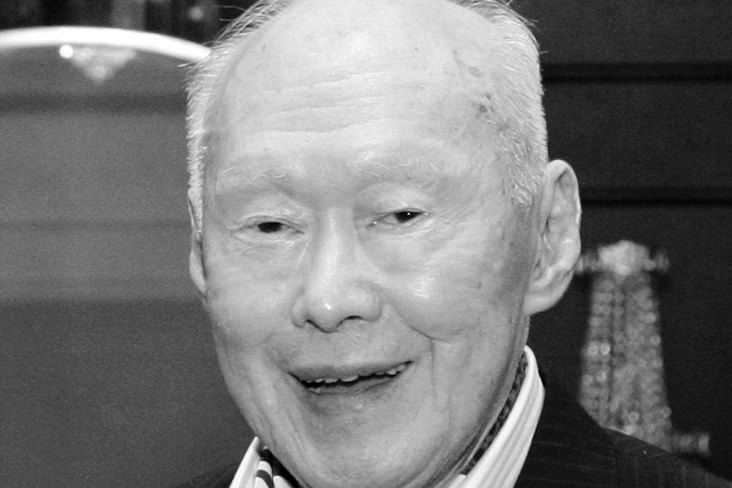
Lee Kuan Yew was born Harry Lee Kuan Yew on 16 September 1923, into a Peranakan Chinese family during British colonial rule. He studied law in England at Cambridge University and was called to the bar at the Middle Temple in 1950. Returning to Singapore, he practised law and founded the firm Lee & Lee. In 1954, Lee co-founded the People’s Action Party (PAP), which won significant support among the working class and trade unions ahead of the 1955 general election, securing him a seat in the Tanjong Pagar division and making him the de facto leader of the opposition.
Building the Empire
In 1959, Lee led the PAP to its first electoral victory, becoming Singapore’s first prime minister. Seeking sovereignty from the British Empire, Lee led Singapore into a merger with Malaya, along with Sarawak and Sabah, forming Malaysia in 1963. Racial strife and ideological differences later led to Singapore’s expulsion from Malaysia and consequent independence in 1965. Lee oversaw major economic reforms and urban development, instituting policies promoting meritocracy, multiracialism and anti-corruption. His administration, generally characterised as an illiberal democracy with nanny state tendencies, restricted press freedoms, public assembly, labour activism and civil liberties. From 1968 to 1981, Singapore was a de facto one-party state, with the PAP facing no opposition in Parliament.
The Turning Point
The 1965 independence marked a turning point. With limited natural resources, Lee focused the city-state on becoming a global hub for trade and finance. His governance was characterised by meritocracy, anti-corruption policies and restricted civil liberties. Lee stepped down as prime minister in 1990 but remained in the Cabinet until 2011. He died on 23 March 2015 at the age of 91.
Lasting Achievement
The Lee Kuan Yew Global Business Plan Competition (LKYGBPC) was founded by Singapore Management University (SMU) in 2002. The 13th edition of the competition opened applications on October 28, 2026. Fifty finalists will be flown to Singapore from September 28 to October 1, 2027, to compete for over S$2.5 million in prizes and take part in an Innovation Festival featuring investor engagement, mentorship and connections with corporate and ecosystem partners. Beyond the competition, selected finalists can join SMU’s Urban SustaInnovator (USI) accelerator, launched in 2025, which supports start-ups through market access, pilot projects and strategic introductions across Asia. In May 2026, SMU IIE launched the USI Fund to back promising ventures as they pilot and scale. The last four editions of the competition have collectively raised more than S$1 billion. Two finalists from the 12th competition have secured pilots with The GEAR by Kajima, the innovation hub of Japanese construction group Kajima in Singapore. Standard Physics, founded by Qiu Ziming and Kabir Jain, combines real-time sensor data with computational fluid dynamics to build digital twins that help buildings and data centres cut energy use. It joined Y Combinator’s Winter 2026 cohort and then SMU’s inaugural accelerator. It has secured a Kajima pilot and is in talks on three more and recently raised a US$2.3 million seed round led by Square Peg Capital.
Global Expansion And International Influence
Lee Kuan Yew’s impact extended well beyond Singapore’s borders, establishing him as a prominent advisor to foreign leaders and a key figure in international development. As an elder statesman, he served as an advisor to governments across the region, sharing his model of rapid development and governance. His political ideology, characterised by a belief in Asian values and the Lee thesis, argued that communitarianism and limited human rights were necessary for social cohesion and rapid economic development, a framework that influenced developmental policies in other Asian nations. Throughout his career, he remained an influential figure in shaping Singapore’s foreign policy, leveraging the country’s success to build diplomatic and economic ties globally. Even after stepping down as prime minister in 1990, he continued to serve the government in senior roles, first as senior minister until 2004 and subsequently as minister mentor until his retirement in 2011, maintaining an active role in guiding Singapore’s trajectory on the world stage.
His legacy is further cemented by the enduring international reach of institutions bearing his name and the competition he inspired. The Lee Kuan Yew Global Business Plan Competition, founded by Singapore Management University in 2002, operates as one of Asia’s most globally representative deep-tech start-up competitions, spanning focus areas such as climate tech, energy, food and land use, urban mobility, longevity and healthtech, and sustainable materials and circularity. The competition’s structure, offering a pathway to SMU’s Urban SustaInnovator accelerator and the USI Fund, reflects his continued vision for fostering innovation. In May 2026, SMU IIE launched the USI Fund with capital of $10 million to back promising ventures as they pilot and scale. The competition’s international scope is evident in its overseas centers located in Bangkok, Jakarta, Ho Chi Minh City, and Shenzhen, as well as its international advisory councils spanning eight countries, facilitating cross-border connections for start-ups seeking to deploy solutions across Asia.
Innovation Ecosystem and Global Reach
The Lee Kuan Yew Global Business Plan Competition has evolved into one of Asia’s most globally representative deep-tech start-up competitions, spanning focus areas such as climate tech, energy, food and land use, urban mobility, longevity and healthtech, and sustainable materials and circularity. The competition’s structure, offering a pathway to SMU’s Urban SustaInnovator accelerator and the USI Fund, reflects his continued vision for fostering innovation. In May 2026, SMU IIE launched the USI Fund with capital of $10 million to back promising ventures as they pilot and scale. The competition’s international scope is evident in its overseas centers located in Bangkok, Jakarta, Ho Chi Minh City, and Shenzhen, as well as its international advisory councils spanning eight countries, facilitating cross-border connections for start-ups seeking to deploy solutions across Asia.
Standard Physics, founded by Qiu Ziming and Kabir Jain, combines real-time sensor data with computational fluid dynamics to build digital twins that help buildings and data centres cut energy use. It joined Y Combinator’s Winter 2026 cohort and then SMU’s inaugural accelerator. It has secured a Kajima pilot and is in talks on three more and recently raised a US$2.3 million seed round led by Square Peg Capital. Two finalists from the 12th competition have secured pilots with The GEAR by Kajima, the innovation hub of Japanese construction group Kajima in Singapore. Qarbotech, a Malaysian agritech company that transforms agricultural waste into compounds that enhance crop productivity, is also part of the inaugural cohort of the USI accelerator, which is still ongoing. Chor Chee Hoe, co-founder of Qarbotech, noted that the competition and accelerator led to meetings with family offices that secured pilot projects, with the company currently halfway through a 12-month pilot with a large sugar cane plantation in the Philippines and launching in another Southeast Asian market. The last four editions of the competition have collectively raised more than S$1 billion.
Sources
- Lee Kuan Yew
- From Pitch to Pilot: Lee Kuan Yew Global Business Plan Competition Opens Search for Deep Tech Urban Solutions and Sustainability focused Founders Ready to Scale
- Singapore's Lee Kuan Yew competition opens 2027 search for deep tech urban, sustainability founders – TNGlobal
Photo: 總統府 (Taiwan Presidential Office) (CC BY 2.0)