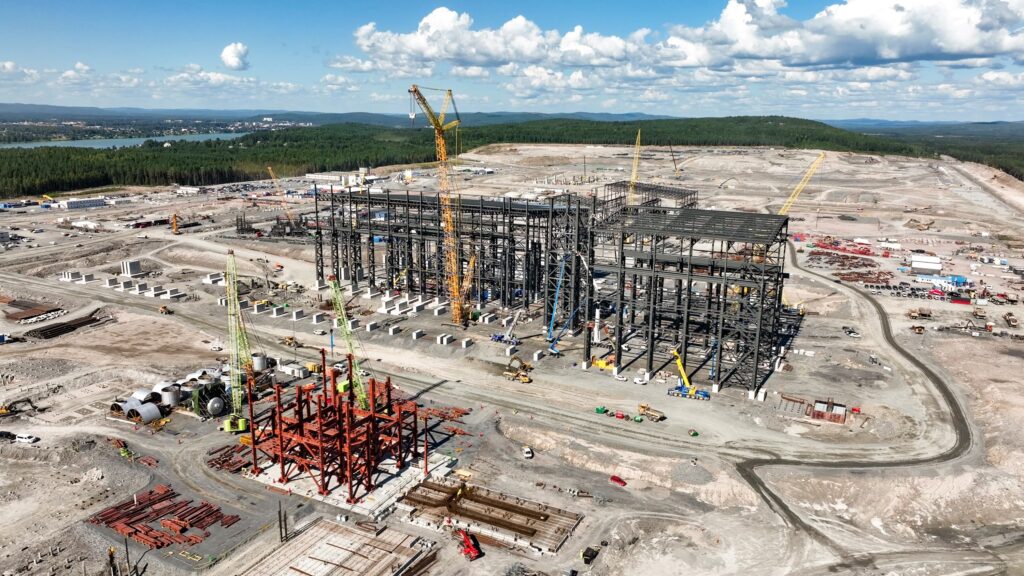
Standing behind Donald Trump’s right shoulder in the Oval Office on Monday, among cabinet members and Iowa politicians, was one man who was not American: Ravi Ruia, a cofounder of the Essar Group. Trump was announcing a $15 billion steel megaplant, and Essar’s Minnesota-based unit, Mesabi Metallics, is the company building it.
Ten years earlier, Ruia’s brother Shashi stood in another photograph, at the signing of a deal with Russian President Vladimir Putin.
What the White House promised
The mill in Iowa would be the largest in the United States. The White House and the company said it should create at least 1,750 permanent jobs and support up to 6,000 construction jobs. The first phase is to turn out 7.5 million tonnes of steel a year, rising to 10 million, with production due to start in 2030. The White House put the first phase’s economic impact at $95 billion across construction and its first 10 years of operation. The project ties Mesabi’s iron ore mining in Minnesota to the new Iowa complex.
Commerce Secretary Howard Lutnick credited the tariffs. “Without those tariffs, this mine and steel plant doesn’t get built,” he told reporters. Trump said he had imposed 50 percent tariffs on all foreign steel soon after taking office. “Everyone’s building their plant here because they don’t want to pay tariffs,” he said.
The Russian connection
Al Jazeera traced the Russia link to 2016. Essar Oil, the group’s energy arm, had been refining crude at Vadinar in Gujarat since 2008. By 2016 it was deep in debt and listed as a defaulter by the Reserve Bank of India. Putin, for his part, wanted Rosneft to sell some stakes for foreign capital. Indian Prime Minister Narendra Modi helped stitch together a series of deals between 2014 and 2016: Indian state oil companies bought into Rosneft, and Rosneft joined other investors in buying the refinery, which cleared Essar’s debts.
The buyers paid $12.9 billion. Essar Oil became Nayara Energy, with Rosneft holding 49 percent and the Russian asset manager United Capital Partners another 49 percent. Nayara may use Essar’s branding, including on thousands of petrol stations in India, for 99 years. VTB, the Russian bank, also lent Essar $3.9 billion for debt restructuring at the time.
Both have since come under pressure. The European Union sanctioned Nayara last July in its 18th package against Russian oil. The refinery has processed only Russian crude since other suppliers backed out, and in July this year it sold petroleum to Russia as Ukrainian strikes on oil facilities set off a fuel crisis. SAP and other firms suspended services to the refiner. Nayara went to the Delhi High Court, which ordered SAP India to restore service earlier this month. VTB was hit by major US and EU sanctions in February 2022. The Guardian and SourceMaterial reported in April 2026 that Essar moved the VTB loan to Mauritius, allegedly to avoid those sanctions. Essar owns the Stanlow refinery in the UK.
Sanctions and timing
Essar itself faces no US or EU sanctions, and Al Jazeera found no evidence that the Mesabi investment or the Iowa plant breaks any. In October 2016, State Department spokesperson Mark Toner said Washington saw no violation of US-EU sanctions in the refinery sale.
Rishika Chauhan, a sanctions researcher at King’s College London, said US investments leave Essar “more predisposed to American arm-twisting,” because sanctions can reach its American assets more easily. “Essar can certainly come under the purview of these and many other US sanctions laws and executive orders,” she said, though “it isn’t a simple exercise.”
The timing stands out. Trump signed a law days earlier that lets him impose tariffs of up to 100 percent on countries that buy Russian oil, and India is Russia’s second-largest buyer. Reuters reported that India imported about 2.1 million barrels a day of Russian crude in August. Trump had put an extra 25 percent tariff on Indian goods in 2025 over the issue, then lifted it in February 2026 after India committed to stop buying Russian crude. The announcement also arrives weeks before November’s midterms, with Trump’s approval rating at lows.
Investment can be a bargaining chip. In May, Washington moved to dismiss fraud and bribery charges against Indian billionaire Gautam Adani, after his lawyers told the Justice Department his group would invest $10 billion in the US. A federal judge dismissed the case in August.