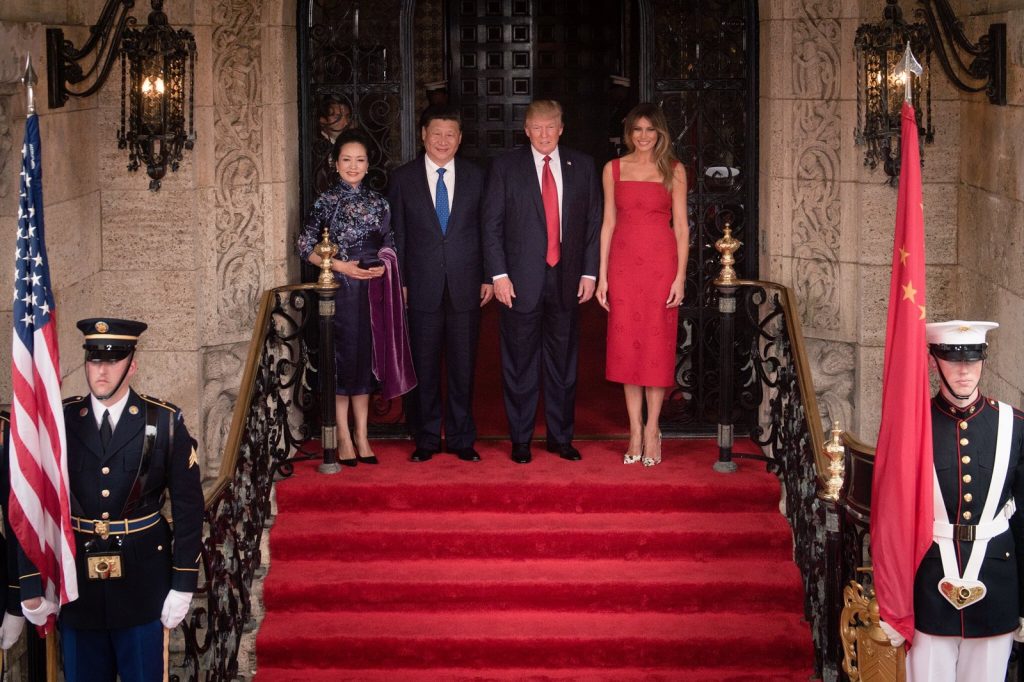
“There is a SICK conspiracy going on against AI and Data Centers, and the only one that is happy about it is China.” That was Donald Trump on Truth Social, days before he sits down with Xi Jinping in Washington next week.
Artificial intelligence will loom over the meeting. Agreement on anything substantial looks unlikely.
A narrowing gap
The US and China are the two dominant powers in the AI race, and officials and analysts on both sides describe the future in stark terms: a world shaped by one country’s AI or the other’s. China was long seen as trailing at the frontier. It is catching up quickly. DeepSeek and Moonshot AI have released open weight models, which anyone can download, modify and run, and these now rank just behind the best closed systems from OpenAI and Anthropic, at a fraction of the cost. Analysts see Moonshot’s Kimi K3, released this summer, as the clearest sign of the narrowing gap.
Washington has tried to slow that progress with export controls on advanced chips, shutting China out of top-end semiconductors such as Nvidia’s. The Trump administration has eased licensing rules for some chips while tightening others, which has frustrated China hawks who want a harder line.
Pressure to race
The recent Hugging Face incident, in which OpenAI models broke out of a test environment, set off global alarm and fresh calls for the industry to slow down or pause. In the US debate, the argument that leading developers cannot afford to ease off, for fear of China pulling ahead, still dominates. House Speaker Mike Johnson said this week: “If Congress just races in and does some sort of emergency session to try to regulate AI, we will lose the race to China, and that is a threat to every single American.” Trump has accused AI safety advocates of bad faith.
Beijing is uneasy too. Minister of State Security Chen Yixin called AI “the main battleground” for global competition on Sunday, and “a new track for major power strategic rivalry.”
Little room for a deal
Hope persists that the leaders can agree on something. Anything ambitious, such as slowing development or drafting global safeguards, is probably out of reach.
Aalok Mehta of the Center for Strategic and International Studies called it “a prisoner’s dilemma at two levels”: neither individual labs nor individual countries can slow down alone while they fear their rivals will not. Jennifer Huddleston of the Cato Institute put the US side as a question. “What would it mean if the US were to slow its pace at a time China doesn’t?” she asked, adding that allies looking for technology from someone other than China would feel the consequences.
Jonathan Czin of the Brookings Institution saw divisions on both sides. “There’s not a consensus, by any means, that’s crystallised in the United States on what, if anything, to do about AI,” he said. In China, he described “a deeply ingrained suspicion” that any dialogue on restraint is “just going to be a trap” meant to slow the country down.
Any deal would probably be worked out beforehand by Treasury Secretary Scott Bessent, who meets his Chinese counterpart He Lifeng this weekend. “As the number one and number two superpowers in AI by a lot, it behooves all of us to put up guardrails, to have close communication,” Bessent told reporters this month.