
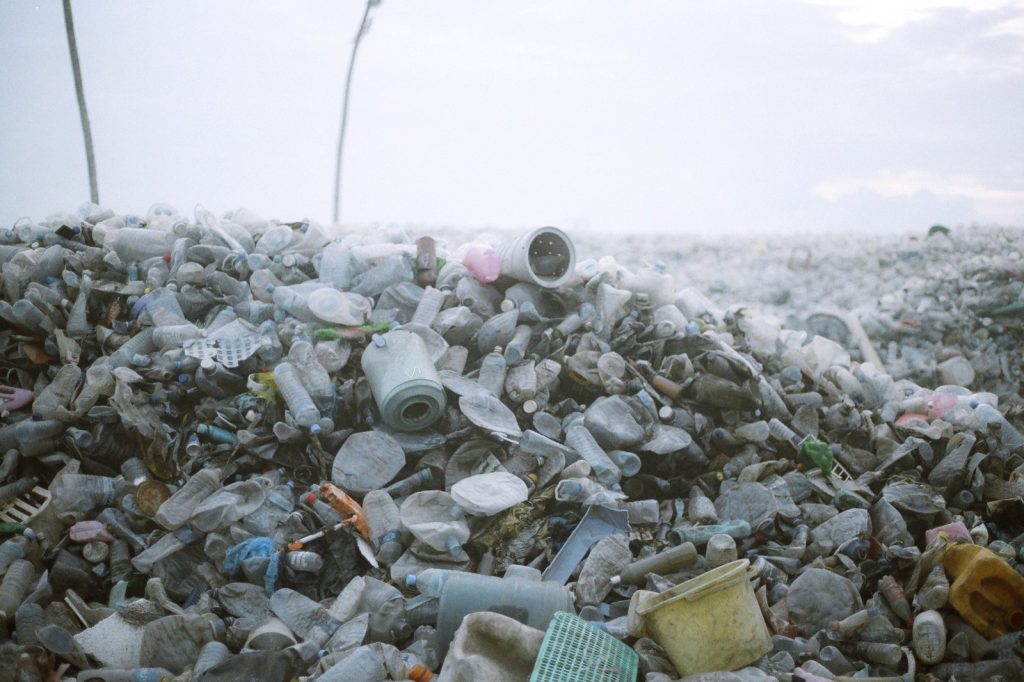
In Dhaka, only about half of the city’s 5,000 metric tonnes of daily waste is properly disposed of. Bangladesh’s recycling rate in 2022 was 15.7 percent. Michelle Boon, Global Head of Flexible Packaging at packaging maker Mainetti, uses that gap to argue that South and Southeast Asia will only build a circular economy if governments, consumers and businesses all change course.
A 2023 study she cites found Indonesia, the Philippines and Vietnam among the world’s top 10 producers of mismanaged plastic, at more than 1.5 million metric tonnes a year. Southeast Asia lacks the recycling capacity to deal with waste shipped in from richer countries, Boon writes, and Thailand, Malaysia and Vietnam have restricted waste imports from Western countries. South Asia has been slower to follow. Boon says that if recycling does not improve, the region could account for up to 19 percent of the global emissions permitted under the 2015 Paris Agreement. Recycling all of South Asia’s mismanaged plastic could cut greenhouse gas emissions by 229 million tonnes.
What works
Collection is not the problem everywhere. Boon notes that 89% of household waste is collected at least weekly across Indonesia, Malaysia, the Philippines, Thailand and Vietnam. Singapore’s National Recycling Programme gives every household a recycling bin, and the recycling rate rose from 40% in 2000 to 51.7% in 2022.
Singapore’s 2019 Zero Waste Masterplan aims to cut the waste sent to landfill each day by 30 percent by 2030. Malaysia planned six waste-to-energy plants by 2025 to ease its reliance on landfills.
Mainetti expanded its Dhaka recycling operation to scale up Polyloop, which recycles clear polyethylene film. According to Boon, the plant supplied retailers with 35 million more Polyloop bags than the year before and cut carbon emissions by up to 45 percent, or 876,000 kg of CO2e.
Consumers
Concern runs ahead of action. A SEA Circular report found that 91 percent of consumers in Indonesia, Malaysia, the Philippines, Thailand and Vietnam were extremely concerned about the damage plastics do. Only 54 percent recycled regularly, and 33 percent considered sustainability when buying.
Contamination is a problem even in Singapore. In 2022 the National Environment Agency found that 40 percent of the material in recycling bins could not be recycled, spoiled by food and liquid waste. Its Recycle Right campaign, launched in 2019, handed households a free recycling box with guidance on what goes in. The same report found that 64 percent of consumers would recycle more if the people around them did. In the Philippines, Pasig City started a waste-to-cash scheme called Aling Tindera in 2021, with 19 collection centres.
Business
Only 48 percent of businesses in the SEA Circular report were satisfied with their own sustainability practices, and over half were not working with the non-profits available to them. One of those groups is the Indonesia Packaging Recovery Organisation, a coalition of companies trying to lift Indonesia’s recycling rate.
Boon’s conclusion is that every country must cooperate: governments building national recycling infrastructure, consumers taking part, and businesses working with the wider industry.




