
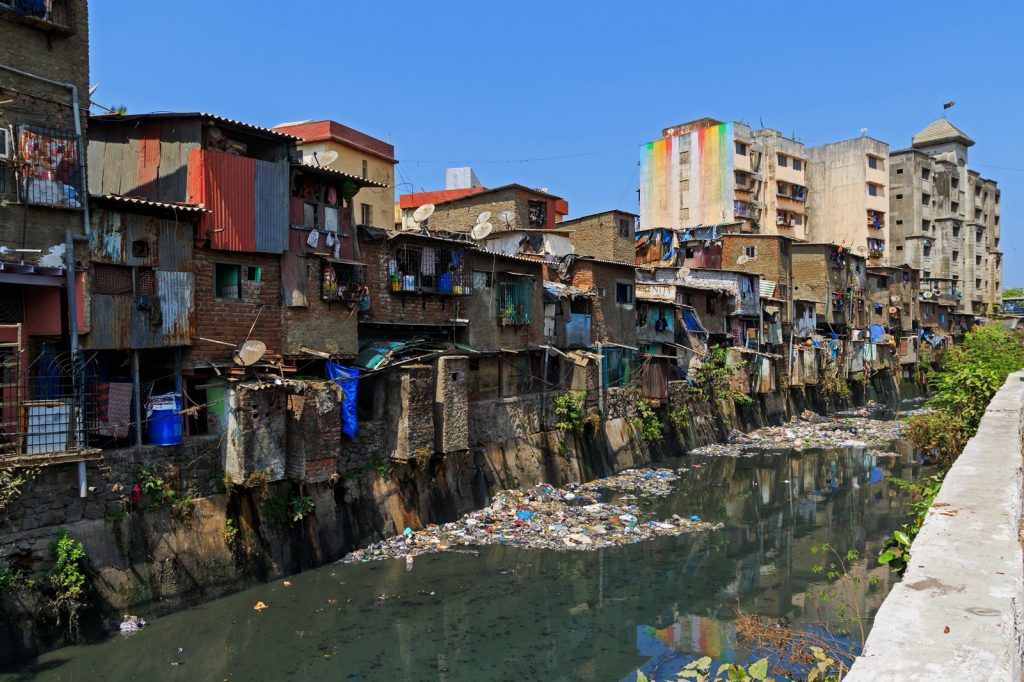
Mumbai’s stormwater drains date to the 1860s. The city they were built for had fewer buildings, lighter traffic and plenty of open ground. Every monsoon since, the gap between that old network and today’s city shows up as flooded roads, waterlogged neighbourhoods and disrupted trains, especially in low-lying areas.
Three factors explain most of it: an ageing drainage network, low-lying geography and rapid urbanisation.
An old network under new load
The system was designed to carry rainwater through underground and surface drains and release it into the sea. Mumbai has since spread, and the extra buildings, roads and concrete surfaces send far more water into the drains than their designers planned for.
Rain intensity matters as much as volume. When heavy showers run for a few hours, the drains cannot clear the surge. Silt, debris and in places sewage cut their capacity further. Tides add to the problem: the drains empty into the sea, so a high tide slows the outflow just when the rain is heaviest.
Reclaimed land
Mumbai sits on the Arabian Sea coast and mixes high ground with low. Parts of it were built on reclaimed land that was once under water. Those areas collect rainwater first and drain it last. Andheri Subway and parts of Kurla are the examples most often cited as vulnerable.
Less ground to soak it up
Open land used to let rain seep into the soil. Now buildings, roads and pavements cover much of the city, so a far larger share of rainfall runs into the drains. Construction waste can block them too.
The city’s rivers and waterways form part of the natural drainage. Pollution, sewage, industrial waste and encroachments have cut how much excess water they can carry, and shrinking buffer zones around water bodies raise the flood risk for nearby areas.
What the civic body does
The Brihanmumbai Municipal Corporation (BMC) runs pre-monsoon preparations every year, including cleaning and desilting stormwater drains. It monitors that work and places dewatering pumps in flood-prone areas to remove standing water when the drains fall behind.
Monsoon trouble is not limited to the city. This month a landslide near Tunnel 2 disrupted traffic on the newly opened Missing Link of the Mumbai-Pune Expressway, a Rs 7,000 crore project.




