
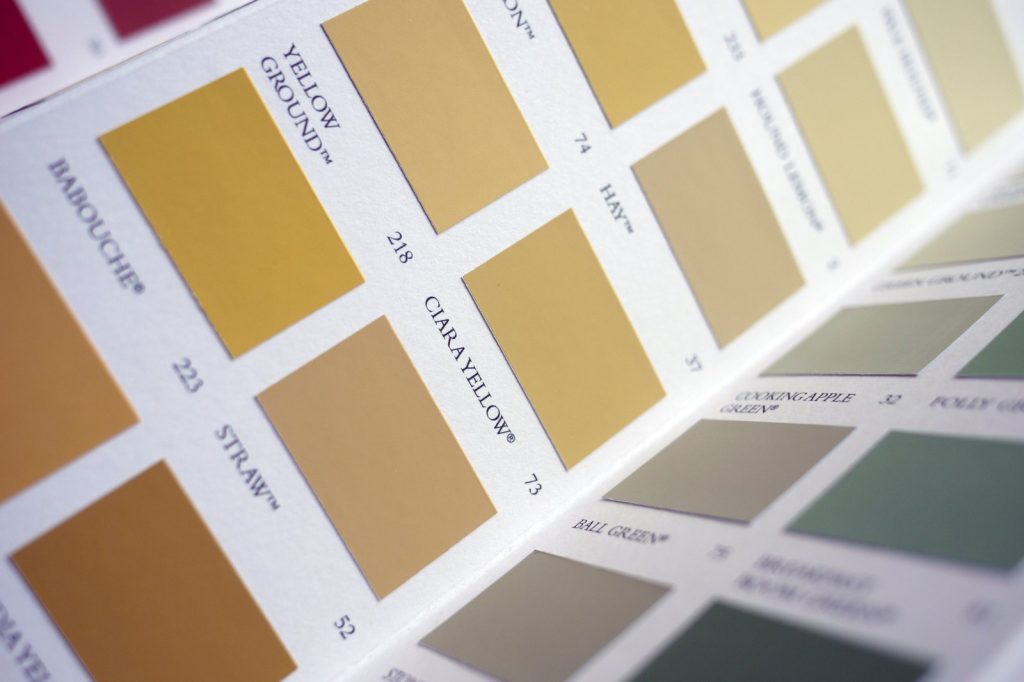
MANILA — Warm green paint has never been a trend. It is a steady presence in Asian homes, quietly doing what bolder colors cannot: fading into the background while making everything else feel better. For years, homeowners and designers across the region have searched for shades that feel natural, not artificial.
Green is tricky. Too bright, and a room feels like a jungle.
Too dark, and it caves in on itself. The five shades now circulating widely — Benjamin Moore Crownsville Gray, Hancock Gray, Dark Olive, Gloucester Sage, and Farrow & Ball Vitty Green — did not appear overnight. They emerged from years of trial in actual houses, on kitchen cabinets, inside built-ins, across entire walls.
What they share is a refusal to dominate. They read almost as neutrals.
That is rare for green. Designers in Manila and beyond have long complained that most greens look cold or artificial under tropical light. The warm greens solve this.
Their earthiness softens the harshness of midday sun. Their subtlety works with wood, with rattan, with the natural materials common in Asian interiors. They do not compete.
They sit still. The practical appeal is straightforward.
A family painting a single accent wall wants assurance the color will not clash with existing furniture. A homeowner color-drenching an entire room — ceilings, walls, trim — needs a shade that does not exhaust the eye. These five deliver that.
They are soft without being weak. They are green without being loud.
Benjamin Moore Crownsville Gray leans gray-green. It works on cabinetry because it reads as a neutral from across the room. Hancock Gray is warmer, more olive.
Dark Olive is deeper, moodier, but never black. Gloucester Sage is the lightest of the bunch, almost dusty. Farrow & Ball Vitty Green sits somewhere in the middle — grassy but restrained.
None of these are new paints. They have been on the market for years.
What has changed is how they are being used. Instead of treating green as an accent color, designers now use these shades as the main event. Entire rooms get drenched in them.
Built-ins disappear into walls painted the same tone. The effect is not dramatic.
It is enveloping. That matters for families. A home with young children needs to feel calm.
A living room where people gather at night needs warmth. These paints provide that without gimmicks. They do not shout.
They sit on the wall and let the room do the work. The biggest mistake homeowners make is picking green from a tiny swatch.
Under store lights, even these warm greens can look different. Designers recommend painting a large sample on the wall and living with it for a few days. Morning light, afternoon glare, evening shadows — each changes the color.
These five hold up across all three. For those looking to start small, a single wall or a piece of furniture is enough.
A dresser painted Gloucester Sage changes a bedroom. A kitchen island in Dark Olive anchors the space. The key is balance.
Too much green, even warm green, can overwhelm. One element at a time works best. The enduring appeal of these shades is not novelty.
It is reliability. They have been used in enough projects to prove themselves.
They are not experimental. They are proven. For any family in Asia looking to refresh a home without starting over, these five are the safe bet that actually pays off.
{“@context”: “https://schema.org”, “@type”: “NewsArticle”, “headline”: “Warm Green Paint Remains a Steady Presence in Asian Interior Design”, “description”: “MANILA — Warm green paint has never been a trend. It is a steady presence in Asian homes, quietly doing what bolder colors cannot: fading…”, “datePublished”: “2026-06-23T16:21:00+00:00T09:30:00+00:00”, “author”: {“@type”: “Person”, “name”: “Merry Gel Sigui”}, “publisher”: {“@type”: “Organization”, “name”: “InfoPulse Today”, “url”: “https://newsfeed.infopulsetoday.com/”}}




