
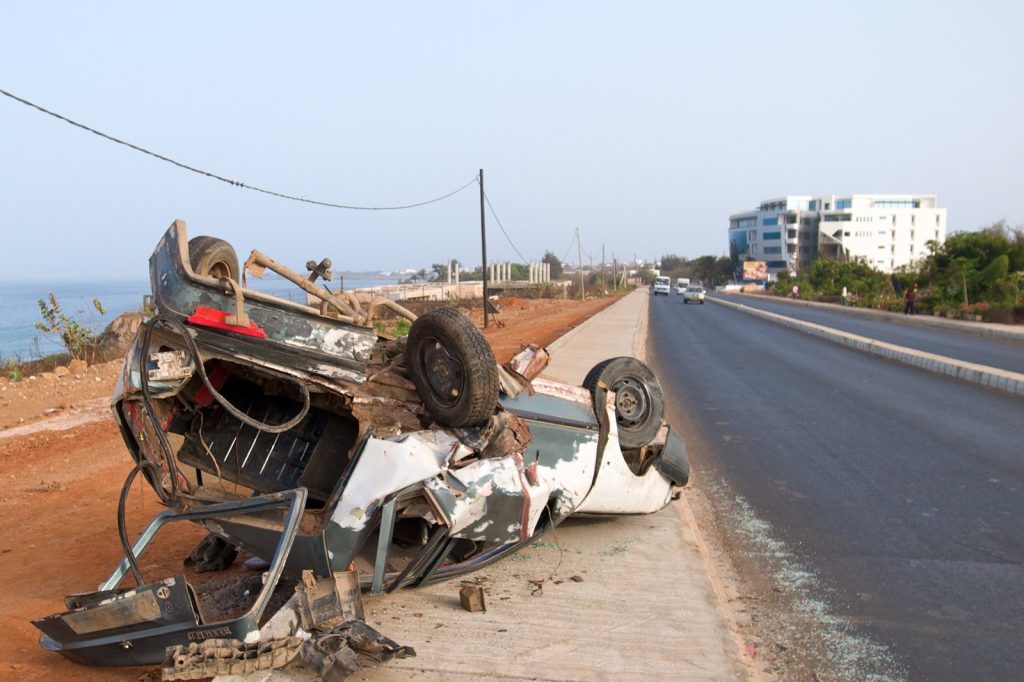
The van that crashed into a truck on a road in Gujarat’s Valsad district carried seven people who did not survive. Two others were injured. The date was February 20, 2026.
The place was a district that covers 3,008 square kilometers and holds six talukas: Valsad, Vapi, Pardi, Umargam, and two others. The geography runs from the Arabian Sea coast inland through varied terrain that supports manufacturing and agriculture.
Those industries are the economic backbone of the region. They depend on roads. The roads killed seven people.
Valsad district was once called Bulsar. Its administrative capital is Valsad city; the largest urban center is Vapi.
These are not remote hamlets. They are connected by state and national highways that carry trucks hauling industrial goods and vans ferrying workers. The collision between a van and a truck happened on one of those roads.
The van lost. The truck lost too, in a different way: it became the instrument of a mass casualty event. The district’s coastline runs along the Arabian Sea.
Environmental initiatives exist there, aimed at preserving natural beauty and promoting sustainable development. But the road network, vital for moving people and goods, has no such preservation.
It is a stretch of asphalt where speed, fatigue, poor lighting, or simple bad luck can turn a commute into a funeral. Seven people now require funerals. Two others require hospital beds.
Road safety in Gujarat has been a recurring concern. The state has a high density of vehicles on highways that were not always designed for the traffic they now carry.
Valsad’s position on the western coast makes it a transit corridor. Trucks move raw materials to factories. Vans move workers to those factories.
The collision on February 20 was a violent intersection of those flows. Attention will turn to prevention. That is the standard response after a tragedy.
Enforcement of traffic laws is one piece. Investment in road infrastructure is another.
Public education campaigns are a third. These are not new ideas. They have been discussed after other accidents in Gujarat and across India.
The challenge is implementation. A district with six talukas and a varied landscape cannot be made safe by a single policy.
It requires consistent engineering, consistent policing, and consistent behavior from drivers. The two injured people survived. They may be able to say what happened.
They may not. The seven dead cannot. The van was likely a common model used for shared transport, the kind that fills a gap where public buses do not run.
The truck was likely a heavy vehicle, the kind that hauls goods through the night to meet delivery deadlines. They met.
Seven people died. Valsad district’s economy depends on roads. Its people depend on those roads to reach jobs, markets, and hospitals.
The same roads that sustain life also take it. The collision on February 20 was not an isolated anomaly.
It was a predictable outcome of a system that moves many people in vulnerable vehicles alongside much larger ones. The system will continue. The question is whether any change follows this particular wreck.
{“@context”: “https://schema.org”, “@type”: “NewsArticle”, “headline”: “Gujarat Van Crash Kills Seven, Injures Two on Valsad District Road”, “description”: “The van that crashed into a truck on a road in Gujarat’s Valsad district carried seven people who did not survive. Two others were injured. The date was Februar”, “datePublished”: “2026-02-20T15:00:00+00:00”, “author”: {“@type”: “Person”, “name”: “InfoPulse Today”}, “publisher”: {“@type”: “Organization”, “name”: “InfoPulse Today”}}




