
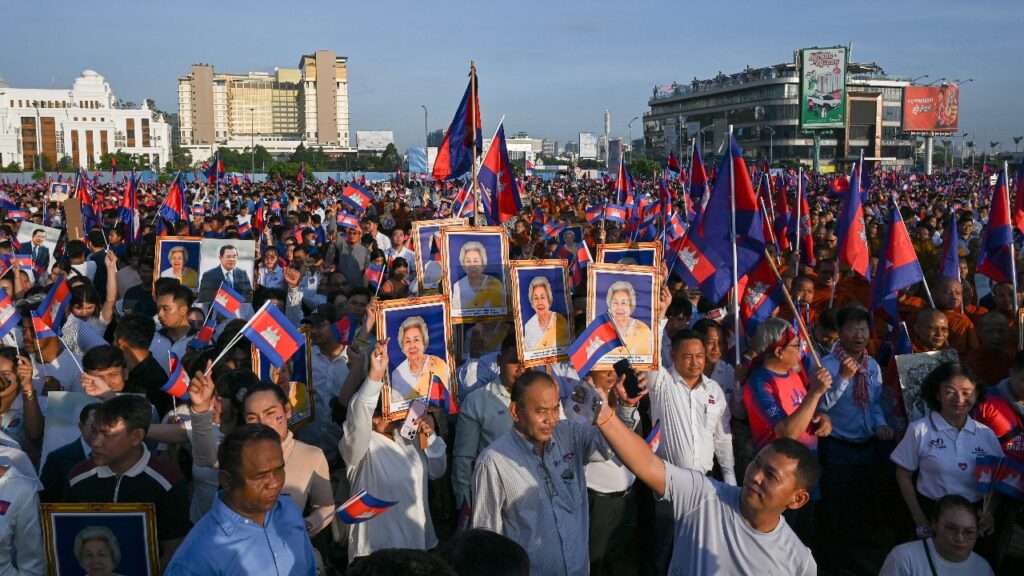
Thousands of Cambodians living in Japan, South Korea and Australia took to the streets in 2024, and the cause was a regional development plan with Vietnam and Laos. Back home, authorities arrested more than 30 people ahead of a mass demonstration in Phnom Penh that had been planned for 18 August.
The plan is the Cambodia-Laos-Vietnam Development Triangle Area, or CLV-DTA. Protesters said it risked ceding Cambodian sovereignty or inviting large-scale immigration from Vietnam. The initiative has existed for decades, but regional meetings on a 2030 master plan put it back in the spotlight, and an 11-minute Facebook video from government critics stoked old resentment toward Vietnam. Hanoi installed and backed the government of the 1980s.
A year in office
Hun Manet took office on 22 August 2023, after an election the United States called neither free nor fair. His father, Hun Sen, had been the ruling party’s candidate for prime minister and arranged for his son to take over before a new government formed. Some Western countries used the handover to reset relations, but little changed in the government’s reliance on China or its treatment of critics. Dozens of activists and political opponents have been arrested under Hun Manet.
The creators of the Facebook video were arrested too. Hun Sen, now Senate president, threatened more arrests if public criticism continued.
On 22 August, marking his first year, Hun Manet defended the plan. It would “create potential and development” in the four Cambodian provinces involved, he said, with new infrastructure in border regions, more productive land use and protected forests. He said it would strengthen Cambodia’s sovereignty.
Political analysts say fears about the plan may be overblown and fed by online misinformation. They also fault the government for not explaining it openly and for trying to suppress dissent, which has deepened suspicion. Sophal Ear of Arizona State University’s Thunderbird School of Global Management told VOA Khmer the sovereignty concerns were “a significant test” of Hun Manet. “How he handles this situation could set the tone for his leadership,” he said. The heavy security presence in major cities, he added, showed the government wanted to stop any uprising before it grew, though “the situation remains fluid.”
Critics and the government
Exiled opposition leaders seized on the issue. The Khmer Movement for Democracy wrote on X on 14 August that the plan was “in fact a cover for further illegal deforestation, land evictions and exploitation of natural resources for foreign gain.” The plan could affect four border provinces: Ratanakiri, Mondulkiri, Kratie and Stung Treng.
Em Sovannara, a political professor in Cambodia, said Hun Manet appeared unable to deal with the issue. Soeng Senkaruna, a former senior official at the rights group ADHOC who now lives in Australia, said he expected the government to answer by silencing criticism or creating distractions.
Government spokesman Pen Bona rejected that. He told VOA that Hun Manet was ensuring peace, security and sovereignty, and denied that freedom of expression was being restricted. The government, he said, would take “very strict measures” against a handful of people using “opposition culture to cause destruction.” Cambodia was due to host a ministerial summit later in the year to review the 2030 master plan.




