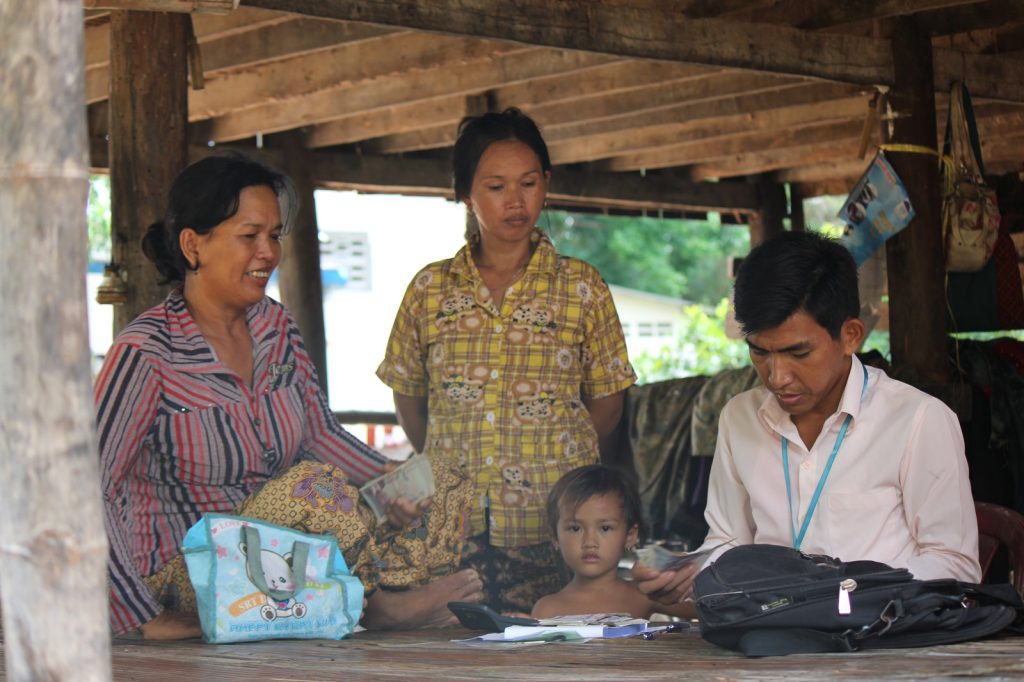
“I don’t know how to read or write in Khmer or any other language,” a 62-year-old Indigenous Kouy cashew farmer told Human Rights Watch. “I told them I no longer wanted to borrow, but they said, ‘How will you pay off your other loans if you don’t borrow more?’”
His case is one of those in a Human Rights Watch report on Cambodia, which has more microcredit debt per capita than any other country. In 2024, about 3.8 million households held more than 3 million microloans worth $18 billion, according to the group. The debts sit mostly with people living in poverty who borrowed for small businesses or emergencies.
Human Rights Watch says lenders backed by international investors marketed loans aggressively in Indigenous communities. Many borrowers cannot read Khmer, the official language, yet signed papers handing over their land titles. The group links predatory lending and debt collection to lost land, hungry families, children pulled out of school to work, and several apparent debt-driven suicides.
How the model changed
Microfinance began in the 1970s as a donor and NGO effort to help poor people in low-income countries reach capital. Group loans without collateral were meant to fund small businesses. Human Rights Watch says that has drifted. Many Indigenous borrowers now take loans for urgent costs such as health care, then slip into juggling one loan against another. The lenders have become highly profitable for national and international investors.
A 2019 report by the rights groups Licadho and Sahmakum Teang Tnaut found about 2.4 million borrowers with $5.4 billion outstanding at that time. Outstanding loans had more than quadrupled to $1.3 billion in 2013 from $300 million in 2009. By the end of 2018 the average loan was about $3,370, more than twice the country’s GDP per capita of $1,384 in 2017. Roughly half of the loans were secured by land titles.
Cambodia set an annual interest-rate cap of 18 percent in 2017, but the two groups called it “ineffective” at slowing credit growth. Milford Bateman, a professor of development studies at Saint Mary’s University in Canada, estimated that 10 to 15 percent of land held by Cambodian farmers has been lost to unpaid microloans. The Cambodia Microfinance Association said at the time that all its members follow the law and its own lending guidelines.
The World Bank’s role
The International Finance Corporation, the World Bank’s private investment arm, has put more than $400 million into Cambodian microfinance providers over the last decade, Human Rights Watch says, even after concerns about debt levels were raised as early as 2016. In 2020, the IFC told the group that “there are legitimate concerns about indebtedness” in the sector. It has since argued that its safeguard policies do not cover consumer protection.
Two Cambodian human rights groups filed a complaint in 2022 with the Compliance Advisor Ombudsman, the IFC’s internal watchdog. In 2023, IFC management asked its board to stop the investigation before it began. The ombudsman rejected the argument, the IFC withdrew its objection and the probe went ahead, with findings due in the coming months.
Human Rights Watch used the World Bank Group’s annual meetings in Washington, held from Oct. 13 to 18, to press for compensation, debt relief and land restitution for borrowers who were misled or coerced, and for a grievance mechanism independent of Cambodian lenders and the government.
Sources
- Cambodia’s Microloan ‘Debt Traps’ Test the World Bank
- Cambodia’s micro-loans: A form of predatory lending?
Sources
- Cambodia: HRW’s report reveals predatory lending and collection…
- Cambodia’s Microloan ‘Debt Traps’ Test the World Bank