
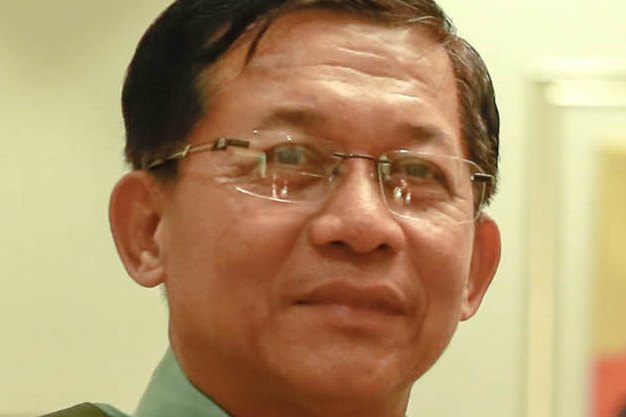
Two years after the coup, a network of Burmese civil society groups sat down with the head of ASEAN’s special envoy office and told him the bloc’s plan for Myanmar was not working. “The ineffective 5PC will only embolden the terrorist junta to commit further crimes and exacerbate the plight of the people of Myanmar,” they said in a statement issued Friday.
The plan is the ASEAN five-point consensus. Leaders agreed it at an emergency summit on 24 April 2021, with junta chief Min Aung Hlaing present, two months after the military toppled the elected government. It calls for an immediate halt to violence, constructive dialogue among all parties, a special envoy to mediate, humanitarian aid through ASEAN’s AHA Centre and a visit to Myanmar by the envoy and a delegation.
The junta agreed, then reneged. ASEAN responded by excluding junta representatives from its meetings starting in October 2021.
What people on the ground have faced
Human rights groups say the junta has crushed mass protests, killed more than 3,000 people and arrested thousands more. The United Nations says more than 1.8 million people have been driven from their homes by the violence. Human Rights Watch reports that the military keeps blocking aid. Roads have been closed, supplies destroyed, and aid workers have been attacked and even killed. After Cyclone Mocha struck in May 2023, travel restrictions still made it hard for aid groups to assess needs.
The special envoy fared no better. Cambodia’s foreign minister, Prak Sokhonn, reached Myanmar after Prime Minister Hun Sen’s visit in January 2022. He met the military leader but was not allowed to see Aung San Suu Kyi or other detained politicians. The reason given was that court procedures stood in the way.
ASEAN divided
Indonesia, chair in 2023, said it was stepping up efforts. Foreign Minister Retno Marsudi told reporters Jakarta had held 110 engagements, “in the form of in-person meetings, virtual meetings, and phone calls,” including face-to-face talks with both the National Unity Government and junta foreign ministers. Even so, Indonesia’s president acknowledged in May that there had been no progress.
Critics are not persuaded. The civil society groups argued the exclusion is a mirage, because the envoy’s office keeps talking to the junta. CIVICUS Lens wrote that ASEAN “continues to stick to a plan agreed in April 2021 that has palpably failed,” and that formally sticking with it lets the wider world stand back and do little.
Thailand broke ranks in June by hosting talks with the Myanmar military in Pattaya. Indonesia dismissed it as informal, saying only Laos’s foreign minister attended. Yet representatives of Brunei, Cambodia, Laos, Vietnam and the Philippines, plus India and China, were there too.
Hunter Marston, a researcher at the Australian National University, praised Jakarta for the volume of meetings but said progress was impossible to judge because they were confidential. He added that Indonesia may have underestimated how entrenched the war is. “If nothing materializes by the end of Indonesia’s chairmanship, however, then everyone will point and say, ‘See? There was never a chance of progress to begin with’,” he said.
Sources
- Indonesia pushes to implement failed Myanmar peace plan ahead of ASEAN meetings
- Implementation of the ASEAN Five-Point Consensus Has Failed – The Institute for Global Governance Research (GGR) ,Hitotsubashi University




