
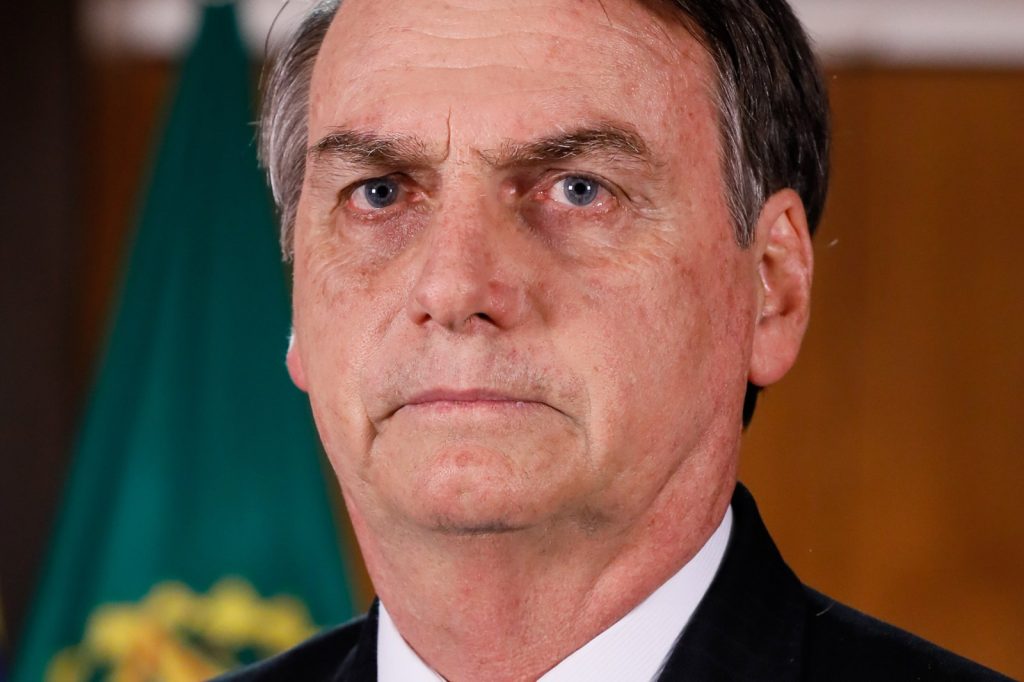
In 1986 a 31‑year‑old army captain named Jair Bolsonaro wrote an article for Veja magazine criticizing military pay. The piece earned him fifteen days of detention and effectively ended his career in the armed forces. That brief confinement marked a turning point; he left the military and turned to politics, beginning a pattern of testing institutional limits, facing consequences, and seeking new arenas for his ambitions.
Bolsonaro was born in Glicério, São Paulo, in 1955. He entered the Military Academy of Agulhas Negras in 1973 and graduated four years later.
For many years his life followed the expected trajectory of an officer until the Veja article altered his path. After leaving the army he was elected to the Municipal Chamber of Rio de Janeiro in 1988. Two years later he won a seat in the Chamber of Deputies, representing the state of Rio de Janeiro.
He remained a federal deputy for twenty‑seven years, a period during which he cultivated a reputation as a national conservative, a known quantity in Congress, a backbencher with sharp elbows and a fixed worldview. The political landscape shifted in 2018.
Bolsonaro began to voice support for economically liberal and pro‑market policies. Observers have differed on the meaning of this change; some view it as a sincere adaptation to evolving voter priorities, while others see it as a tactical move to widen his appeal. The underlying driver, according to analyses, was his desire for the presidency.
He recognized that nationalism alone would not secure victory; he needed the backing of the financial establishment, the agribusiness lobby, and voters eager to break the traditional left‑right stalemate. To attract those groups he adopted the language of markets and liberalization.
The longtime cultural warrior who had spent decades in Congress suddenly added an economics section to his platform. This strategic reframing proved effective. On October 7, 2018 he led the first‑round vote in the presidential election, went on to defeat Fernando Haddad in the runoff, and became Brazil’s thirty‑eighth president, serving from 2019 to 2023. As of November 21, 2024 scholars and commentators continue to debate whether his turn toward economic liberalism represented a genuine conversion or a temporary costume.
The evidence is mixed. His administration did not deliver the sweeping free‑market overhaul that some of his business supporters had hoped for; fiscal discipline was inconsistent and the handling of the pandemic was widely described as chaotic.
Nevertheless, he succeeded in pushing through pension reform, opened the Amazon to greater development, and appointed a slate of conservative judges. His governance blended the old cultural warrior with the new market‑oriented reformer.




