
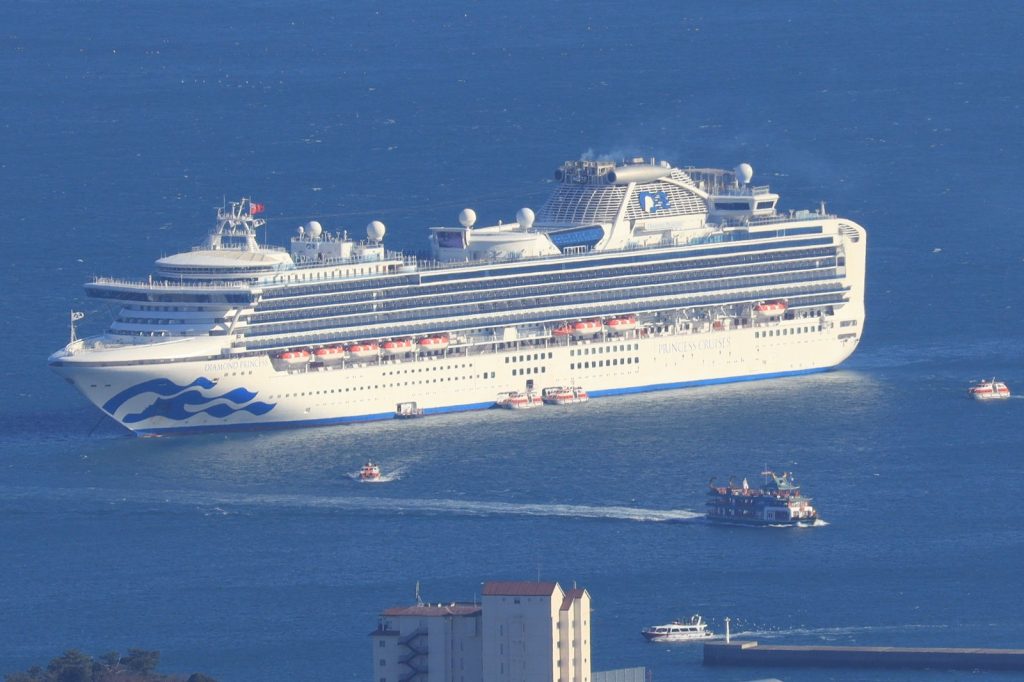
Around five hundred individuals who tested negative for the coronavirus and displayed no symptoms were permitted to disembark from the Diamond Princess on Wednesday. This marked the initial release of passengers from the cruise ship that had been anchored in Yokohama Harbor after a fourteen‑day quarantine intended to curb the spread of COVID‑19. Officials described the move as a tentative step toward normalcy for travelers caught in one of the most notable maritime health emergencies in recent memory.
The primary aim of the operation was to separate those deemed healthy from others still under observation. Japanese authorities emphasized that the process highlighted both the logistical complexities and the strict protocols they had enforced since the early stages of the global pandemic. Moving hundreds of people from a vessel that had been sealed for two weeks required meticulous coordination.
According to The Asahi Shimbun, the passengers were placed on buses arranged by the cruise operator and taken to major rail hubs such as Yokohama Station. From there they were expected to continue their journeys using public transportation. Authorities said this approach was chosen to limit direct contact between the departing group and anyone remaining on board or near the port.
Using public transit for the final leg of the trip prompted concerns about possible exposure in crowded settings, even though the travelers had returned negative test results immediately before leaving the ship. Organizers noted that the individuals were closely monitored upon arrival at the station to prevent them from mingling with people who might be symptomatic or awaiting their own test outcomes.
Not all passengers received immediate clearance to leave. Officials stressed that safety remained the top priority for those managing the quarantine zone. They announced that testing and release of uninfected travelers would continue until February 21, with priority given to elderly passengers who had been tested early in the outbreak.
Travelers who tested negative but had shared cabins with confirmed cases were required to remain on board for additional quarantine. These individuals would not be allowed to disembark before February 22 at the earliest. Officials said this distinction illustrated the challenge of tracing transmission pathways in a confined environment where hundreds live in close proximity.
The resulting tiered release system seeks to balance the urgency of sending healthy people home with the need to avoid sparking new outbreaks either on the ship or shortly after departure. The quarantine measures imposed by the Japanese government on February 5 drew criticism as the number of infected persons rose quickly each day. Critics argued that the delay in sealing the vessel allowed the virus to spread unchecked among crew and passengers, turning the Diamond Princess into a large incubator for the disease.
At the time of the Wednesday departure, more than 3,700 people had originally been aboard the ship, and at least 624 were reported infected. Analysts noted that this figure made the vessel the largest cluster of coronavirus cases outside mainland China. Japanese officials have repeatedly defended their actions, stating that the majority of infections likely occurred before the quarantine began, a point they attributed to BBC reporting.
Nevertheless




