
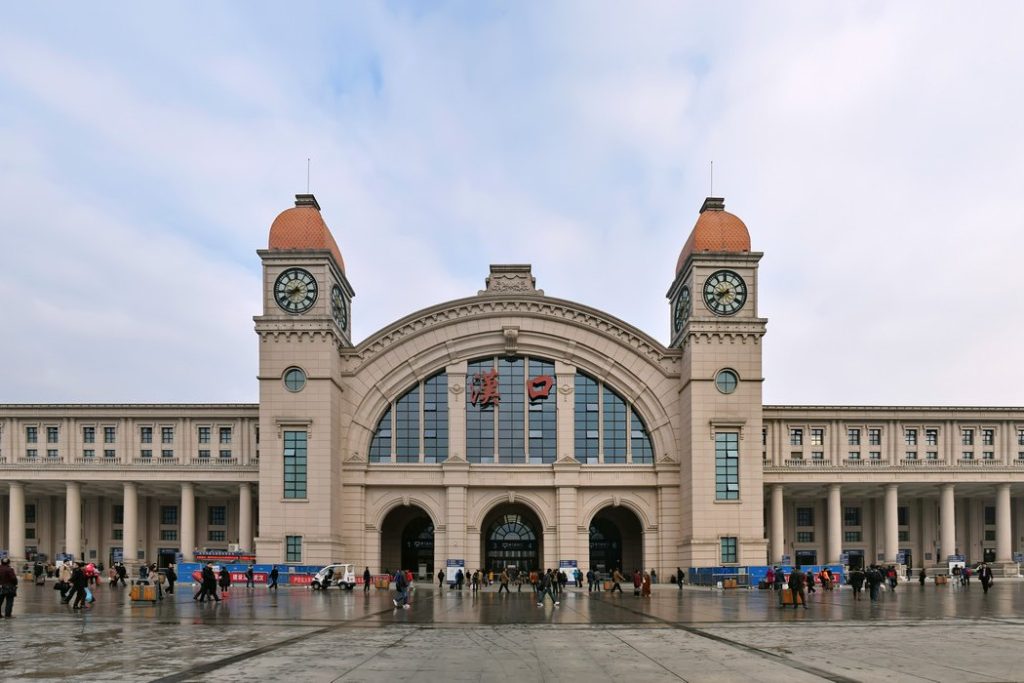
Wuhan woke up on Thursday to find itself sealed. Authorities announced the measure at around 2 a.m. By 10 a.m. the city of 11 million was under a de facto quarantine, with buses, the subway and ferries stopped and the airport and train stations closed to anyone leaving.
Some residents raced to get out first, lining up at the airport and the stations before the deadline. Others were caught mid-journey. One woman told the Washington Post she had been changing trains at Hankou Station on the way from Henan to Sichuan. “I didn’t even receive a notice,” she said. Officials said residents would be told later when the restrictions end.
The neighboring cities of Huanggang and Ezhou followed. Huanggang, with 7.5 million people, said it would stop long-distance trains and buses and shut public transport from midnight Friday. It also closed movie theaters and internet cafes in the city center and shut a central market indefinitely. Ezhou, with just over a million people, announced similar limits.
Empty shelves, closed streets
Inside Wuhan, supermarket shelves emptied and local markets sold out of produce. Petrol stations were swamped by drivers, some acting on rumors that fuel had run out. Pharmacies said they had no face masks left. Few people walked the streets, and special police forces patrolled railway stations. Everyone in public, including all government workers, now has to wear a mask.
The city’s disease control center asked residents not to panic or stockpile. “At the present time, Wuhan’s reserves of food, medicine and other supplies are all enough,” it said.
At least 571 people had been infected and 17 had died, all in Hubei province, whose capital is Wuhan. Authorities said 95 patients were in critical condition. The virus had spread to almost every province and to the US, Taiwan, South Korea, Thailand and Hong Kong. Vietnam and Singapore confirmed their first cases on Thursday.
Anger at officials
Many in Wuhan said the move came late. Xiao, a 26-year-old primary school teacher, said: “This is a little too late now. The government’s measures are not enough.” Wang Ying, 26, a government worker, said officials had spent weeks calling the virus not serious and “controllable,” and that she went out in large New Year’s Eve crowds because of it. Others criticized local authorities for holding a Lunar New Year banquet for 40,000 people days before they said the virus could pass between humans.
Dali Yang, a University of Chicago political scientist who studies China, called it “truly an extraordinary development.” He added: “You have a city of 10 million people being shut down.”
The World Health Organization’s China representative, Gauden Galea, told the Associated Press that locking down a city of 11 million “has not been tried before as a public health measure, so we cannot at this stage say it will or will not work.” He said the move “obviously has social and economic impacts that are considerable” but also shows “a very strong public health commitment.”
Sources
- Coronavirus: panic and anger in Wuhan as China orders city into lockdown
- Millions under quarantine: China locks down more cities to stop spread of deadly coronavirus




