The Trump administration on Monday tightened export restrictions designed to prevent China from accessing sensitive, AI-powering computer chips, a move that lands days before President Donald Trump meets Chinese leader Xi Jinping in Shenzhen. The Commerce Department rule targets U.S. exports to data centers providing significant volumes of computing to companies in arms-embargoed nations like China, Iran and Russia, closing a loophole that has let Chinese firms rent advanced American processing power remotely.
The Loophole That Let China Rent American Power
China has been barred from purchasing certain advanced chips directly from U.S. companies like Nvidia. Yet Chinese tech firms have circumvented those bans for years by purchasing chips through shell companies in third countries or, more commonly, by renting computing power from data centers in nations where the U.S. had not restricted chip exports. This remote-access model allowed Chinese AI developers to train large models on American hardware without physically importing the controlled semiconductors. The new rule, issued by the Bureau of Industry and Security, is designed to ensure existing restrictions “cannot be circumvented through remote computing arrangements involving data centers in third countries,” the Commerce Department said in a statement.
The Nvidia Scandal That Forced the Issue
The rule arrives in the wake of a scandal that toppled Nvidia CEO Jensen Huang last week. Huang resigned following revelations of extramarital affairs, including one with Alice Huang, a former executive at Megaspeed, a Singapore-based data center company. U.S. intelligence officials suspect Alice Huang of spying for China. The Commerce and Justice Departments began investigating Megaspeed in 2024 as part of a broader probe into foreign companies suspected of diverting Nvidia chips to China. A month-long investigation into Megaspeed was halted last year after a top Nvidia official intervened, according to the New York Times. The episode triggered rare public friction inside the administration: Treasury Secretary Scott Bessent challenged Commerce Secretary Howard Lutnick in a Situation Room meeting over the department’s reluctance to label Megaspeed a national security threat. “Treasury, War, USTR and State were in favor of putting Megaspeed on the entity list for months,” Bessent said on CNBC Sunday. “But Commerce has the pen, and you will have to ask them about their internal processes.”
Five Nations Added to License Requirements
The new rule requires buyers from Indonesia, Malaysia, Singapore, Thailand, and Brazil to secure a license to sell or transfer advanced semiconductors. The administration described those countries as having a “higher than normal” risk of evading current sanctions. The licensing requirements apply to computing power above a set level of 12 million aggregate TPP, a measure used to assess processing capacity. Data center owners and operators must also verify their end users, checking whether Chinese companies have direct or indirect control over them. Certain U.S.-headquartered businesses can qualify for an exception if they meet reporting requirements, and commercial recommendation systems used to suggest products or content to users are exempt. The measure is set to go into effect in 90 days.
Pressure Mounts on China’s Domestic AI Ambitions
If the restrictions succeed in choking off remote access, the economic pressure on China’s tech sector will be immediate and structural. Chinese AI companies have relied on overseas data centers — particularly in Malaysia and Singapore — to access the high-end Nvidia H100 and H200 chips needed to train frontier models. Domestic alternatives from firms like Huawei and Cambricon remain generations behind in performance and software ecosystem maturity. Cutting off the rental market forces Chinese firms to either scale back model training, accept longer development cycles on inferior domestic hardware, or pour significantly more capital into indigenous chip development at a time when the broader economy is slowing. The rule also gives Lutnick wide discretion to impose stricter safeguards on specific chips “orally” if the department believes there is “an unacceptable risk,” adding regulatory uncertainty for any third-party data center operator considering serving Chinese clients.
A Replacement for Lapsed Biden-Era Controls
The rule replaces a Biden-era export control framework that the Trump administration let lapse last year, viewing it as an impediment to American businesses. Chris McGuire, a senior fellow at the Council on Foreign Relations, called the new rule “the first good-faith effort to actually close loopholes in export controls in a year and a half.” However, experts noted that implementation will determine whether it has teeth. The Commerce Department had resisted the rule for months while Bessent, Secretary of State Marco Rubio and U.S. Trade Representative Jamieson Greer pushed for it. With Trump in Shenzhen for the APEC summit and his third meeting with Xi this year, administration officials are bracing for a Chinese response, though some expect any retaliation to come after the visit.
Sources
- Trump administration tightens restrictions on flow of AI chips ahead of China trip | CNN Politics
- Tariffs in the second Trump administration
- U.S. to Clamp Down On AI Chip Loophole Ahead Of Trump Meeting With Xi
- Trump administration tightens AI chip export rules to restrict China's access to Nvidia chips
- Trump administration moves to block China from indirect access to American AI technology
- Trump administration imposes new restrictions on advanced AI chip exports to prevent Chinese companies from accessing them remotely
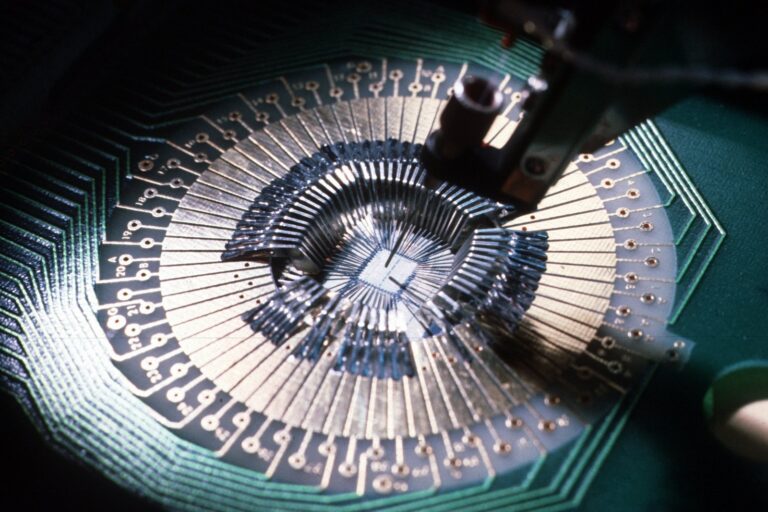
Photo: Robert Kerton, CSIRO (CC BY 3.0)