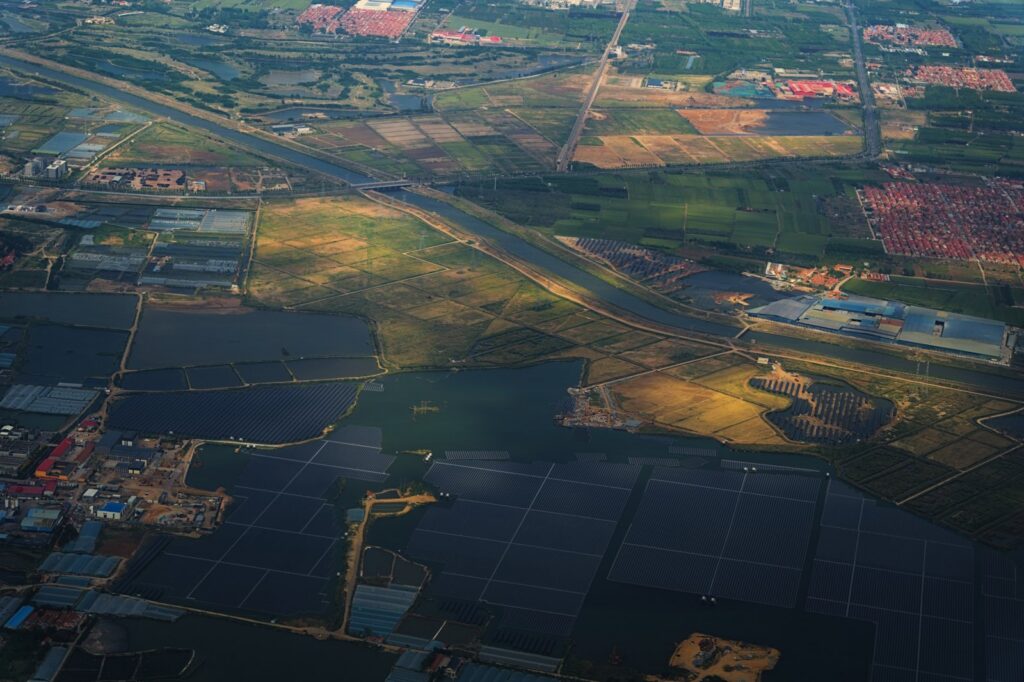
BEIJING, November 7, 2026 — China’s power system is being rewired. Coal still dominates, but nuclear and renewables are expanding with a speed that is altering the country’s import dependencies and its industrial offer to the world.
The Impetus: Smog, Security and a 6% GDP Bill
The push away from heavy fossil reliance began in earnest over a decade ago. Chronic and widespread smog in the east of the country was attributed to coal burning. In January 2013, fine particulate matter in Beijing hit a record 993 micrograms per cubic metre, nearly 40 times the World Health Organization guideline. The World Bank put the economic loss from pollution at almost 6% of GDP. In March 2014, the Premier declared a “war on pollution” and ordered the accelerated closure of coal-fired stations. Climate commitments followed: a 2014 pledge to peak emissions around 2030, updated in 2020 to a target of carbon neutrality before 2060.
The Generation Mix as of 2024
The transition is measurable but coal remains the backbone. In 2024, China generated roughly 6,000 terawatt-hours from coal, accounting for 59% of the mix, according to data from the International Energy Agency and the World Bank. Hydro supplied 1,426 TWh (14%), wind 997 TWh (10%), and solar 839 TWh (8%). Nuclear contributed 451 TWh, or 4% of total generation. Natural gas provided 307 TWh (3%) and biofuels and waste 216 TWh (2%). The country was a net power exporter, shipping out 20.5 TWh against 2.9 TWh of imports.
Nuclear’s Expanding Role
Nuclear is designated as a strategic pillar. The impetus for nuclear power in China is due to air pollution from coal-fired plants, as well as climate commitments and energy security. Policy aims for a closed nuclear fuel cycle. China has become largely self-sufficient in reactor design and construction, though it makes full use of Western technology while adapting it. Relative to the rest of the world, a major strength is the nuclear supply chain. That supply chain is now the basis for a stated policy to “go global” with exports of nuclear technology, including heavy components.
Implications for Energy Security and Trade
The shift serves a dual purpose. Domestically, it reduces exposure to volatile fossil fuel import markets. Internationally, it positions Chinese nuclear vendors to compete for reactor contracts across Asia, the Middle East and Africa, offering not just the reactor vessel but the fuel cycle services and supply chain logistics that few other nations can match. For Asian trade partners, the rewiring means a China that imports less coal and gas per unit of GDP, but exports more high-value energy technology. The salient point is that the supply chain Beijing built for its own decarbonisation is now a trade asset.
Sources
- China
- Nuclear Power in China
- Chiba leads figure skating Cup of China as Ignatova returns | CBC Sports
- China confirms discussions are underway on a historic Xi-Trump-Putin meeting
- China mocks Trump’s midterm rout, but Xi faces real dilemma
- Soccer-China in contact with Real Madrid, LaLiga over Mbappe's Mao comments – AOL
Photo: Benlisquare (CC BY-SA 4.0)