
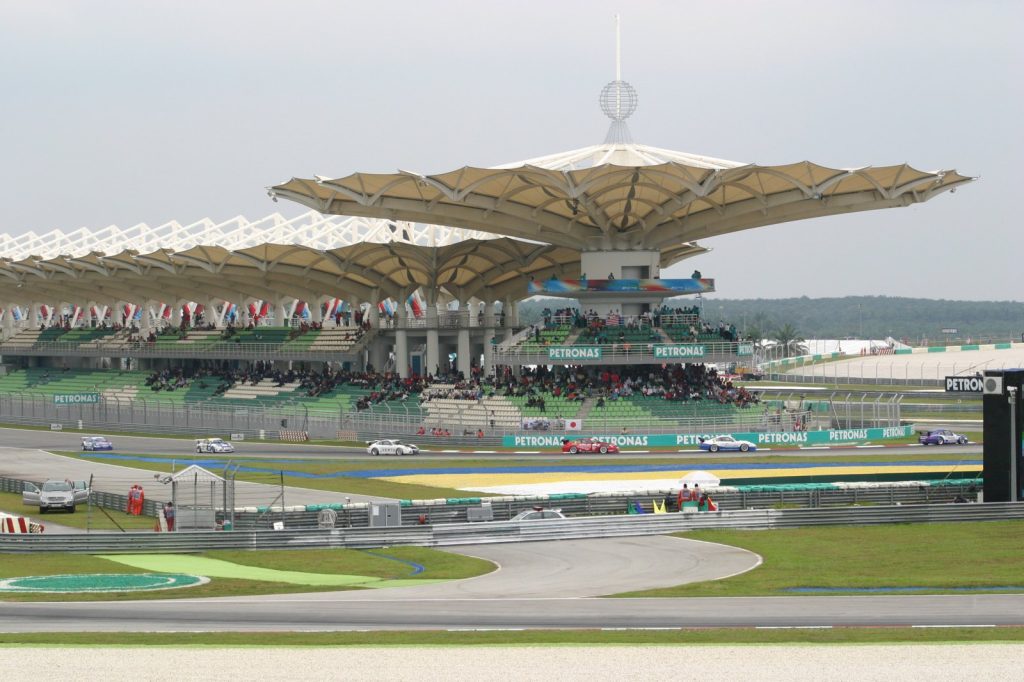
Mohd Khalimi Ashraf Mohamed Rethuan and his wife walked 11km. The 43-year-old banker had parked at Mitsui Outlet Park, and after the Oct 2 sessions at Sepang International Circuit the shuttle buses never reached them. “People were chasing buses like in a zombie movie,” he told The Straits Times.
His night was one of thousands. According to the Straits Times, Formula 1’s return to Malaysia opened with traffic gridlock and queues that ran for hours on the practice and qualifying days of Oct 2 and 3, and organisers and transport operators promised quick fixes.
Walking home in the dark
Social media filled on Oct 2 with images of long shuttle lines and streams of spectators heading for transport hubs. Some people said they waited hours for a bus. Others set off on foot toward Terminal 2 of Kuala Lumpur International Airport, about 20km from the circuit.
Amir ‘Arif Azmi, a 34-year-old legal officer, covered 7km on foot after the sessions ended at 5pm. He reached home at 11.30pm, on a trip that normally takes an hour. “Every time a bus came, people crowded (around) it, even when it hadn’t stopped,” he said, and some began banging on the vehicles and shouting at drivers. Others, he added, had to stop at the roadside with cramps.
Only a limited number of ride-hailing vehicles were allowed to pick up and drop off at the circuit, and roads around it were closed. Some people advertised unauthorised motorcycle rides online, asking between RM25 and RM50 to carry fans between the circuit and designated parking spots. Water was another sore point, with long queues and some stations out of service in the heat. A few fans put their tickets up for resale at lower prices after seeing the crowds.
What was changed
Rapid KL, the operator that deployed 95 shuttle buses, said on Oct 3 that it had changed its arrangements after feedback, working with the circuit and other agencies on pickup and drop-off points. The circuit said in an Oct 3 statement that fan experience and safety were its highest priority and that it was strengthening traffic, shuttle and crowd management.
It helped, but not much. Khalimi said waits on Oct 3 were still around two hours, and Amir ‘Arif said he boarded a bus only after two hours in a more orderly queue.
M. Zulkarnain Hamzah, co-founder of the advocacy group Transit Malaysia, was blunt. “It’s just simply a case of not enough buses and poor crowd management,” he said, adding that there was no proper queue management for boarding. Khalimi’s verdict was shorter: “Crowd management is the biggest problem.”
Eight weeks to prepare
Organisers pointed to the calendar. The Bahrain Grand Prix was moved to Sepang at short notice because of geopolitical tensions in the Middle East, leaving less than two months to prepare against the usual six to seven months. Circuit chief executive Azhan Shafriman Hanif had said on Sept 30 that the circuit was fully ready. By then nearly 100,000 tickets had sold, a record for Sepang. The Malaysian GP ran there from 1999 to 2017 with crowds of typically 40,000 to 50,000.
Sheikh Salman Isa Al Khalifa, chief executive of Bahrain International Circuit, told The Athletic that eight weeks instead of eight months had been “a challenge”. His side brought 561 marshals and flew in furniture, chefs and even a falconer to rebuild the Bahrain paddock. “We just need manpower and we can sort it out,” he said of the weekend’s problems.
Despite the frustration, many fans still want the race to stay. Prime Minister Anwar Ibrahim wrote on Threads on Oct 4 that he had met F1 CEO Stefano Domenicali and discussed bringing the Malaysian Grand Prix back permanently. The matter will go to Cabinet, he said, although a return would take time because of F1’s crowded calendar and existing contracts with other hosts.




