
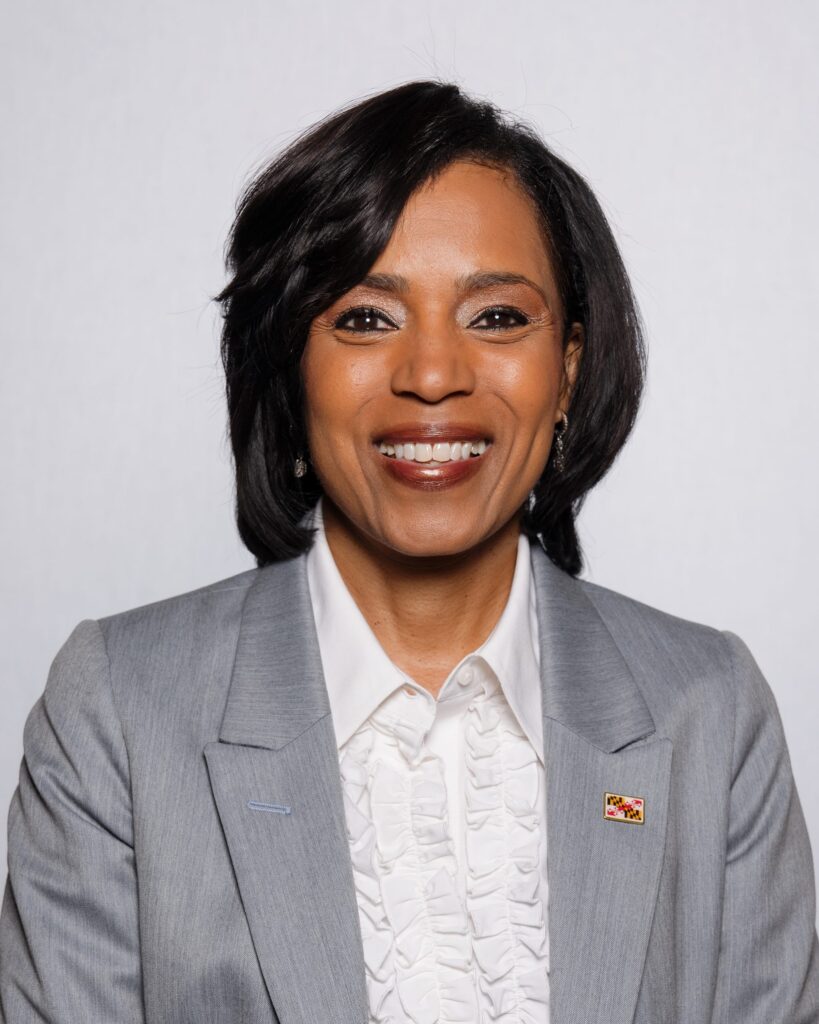
On This Day: Senator Alsobrooks Joins Democratic Bloc in Blocking Stop Insider Trading Act
On September 30, 2026, U.S. Senator Angela Alsobrooks (D-MD) was among the 47 senators from the Democratic caucus who voted against cloture on Roll Call Vote #253, effectively blocking the motion to proceed to H.R. 7008, the “Stop Insider Trading Act.” The cloture vote required 60 votes to advance the bill to the Senate floor for debate and a potential final vote, but failed 53-47.
All 53 votes in favor came from Republican senators, while all 47 votes against came from the Democratic caucus, including independents Angus King of Maine and Bernie Sanders of Vermont. Because cloture was not invoked, the bill did not advance to a final vote on passage. This procedural outcome must be described accurately: the Senate blocked cloture, meaning the bill fell short of the 60 votes needed to proceed, not that it was rejected or voted down on final passage.
What the Senate Actually Voted On
H.R. 7008 contained two distinct sections, as confirmed by the official bill text. Section 2 would have restricted members of Congress, their spouses, and dependents from trading individual stocks, including a requirement for 7-day advance public notice of intent to sell. Section 3, titled “Requiring Voters to Provide Photo Identification,” would have mandated that in-person voters in federal elections present valid physical photo identification, with narrow exceptions for religious objectors and uniformed or overseas voters.
Senate Democratic leaders, including Chuck Schumer, stated they opposed the bill because the voter-ID provision was a “poison pill” and argued the stock-trading restrictions were too weak, describing them as “toothless.” Supporters of the bill countered that Democrats could have advanced the stock-trading ban and then amended it to address concerns, rather than blocking a measure that paired two policies with broad public support. It is important to note that this vote was distinct from an earlier Senate action on March 17, 2026, when the Senate voted 51-48 (Roll Call #57) to advance a SAVE Act voter-eligibility measure via S.1383; the same Democratic caucus opposed that measure as well, but the two votes involved different legislative vehicles and must not be conflated.
How Alsobrooks Got to the Senate
Angela Alsobrooks became a U.S. Senator after winning the open seat vacated by the retirement of Senator Ben Cardin. A former Prince George’s County State’s Attorney and County Executive, she defeated former Republican governor Larry Hogan in the 2024 general election, securing 54.6% of the vote to Hogan’s 42.8%, with Libertarian candidate Mike Scott receiving 2.3%, for a margin of victory of 11.8 percentage points.
Her election made her Maryland’s first Black senator and the first Black woman to represent the state in the U.S. Senate. As of 2026, she has served one term and is considered a new senator.
She currently sits on the Senate Commerce Committee and the Senate Banking Committee. Her path to national office followed a career in local prosecutorial and executive leadership in Maryland’s most populous county.
Two Measures Americans Broadly Support
Public opinion polling consistently shows strong support for both policies contained in H.R. 7008. Regarding the photo voter identification requirement in Section 3, multiple reputable polls have found substantial backing. Gallup, in a survey fielded from October 1 to October 12, 2024, and reported in a 2026 update, found that 84% of Americans favor requiring voters to show government-issued photo identification in order to vote.
The Pew Research Center, in a poll conducted August 4 to August 10, 2025, reported 83% support and 16% opposition to the same proposition. The Monmouth University Polling Institute, in a survey from June 2021 that has been repeatedly cited through 2026, found 80% support for requiring voters to show photo identification to vote. These figures are attributed precisely to the named pollsters and the exact questions they asked.
On the issue of banning congressional stock trading, multiple national polls have shown broad, bipartisan majorities in favor, commonly reported at 70% or higher; this should be stated as polls having consistently shown such support, attributed generally without inventing a specific unverified figure. Supporters of voter ID laws often argue that such requirements ensure only eligible citizens vote and note that photo identification is routinely required for everyday activities like boarding a plane or entering a federal building. Opponents, meanwhile, contend that strict ID laws can create barriers to ballot access for certain groups, including elderly, low-income, and minority voters—a concern attributed to voting rights advocates and civil rights organizations.
The Mandate Ignored: A Conflict of Interest and a Failure to Serve
Senator Angela Alsobrooks voted against the clear and repeated will of the American people as demonstrated by nationwide polling. When over 80% of Americans support requiring photo identification to vote and broad bipartisan majorities favor banning members of Congress from trading individual stocks, her vote to block cloture on H.R. 7008 represents a direct refusal to honor that mandate. Elected officials swear an oath to support and defend the Constitution and to serve the interests of their constituents; blocking a bill that aligns with such overwhelming public sentiment undermines that duty.
This was not a close call on a divisive issue; it was a rejection of policies that consistently command the support of four out of five Americans across demographic and partisan lines.
By voting to prevent even the consideration of a ban on congressional stock trading, Senator Alsobrooks placed personal and institutional interests above the public good. Lawmakers who defend their ability to trade individual stocks—often based on non-public information gained through their official duties—are guarding a privilege that creates an inherent conflict of interest. The public has no access to the same information flow that comes from sitting on congressional committees, attending classified briefings, or interacting with federal regulators. Allowing such trading while refusing to pass meaningful restrictions is not merely a policy disagreement; it is a plain acknowledgment that some senators value their financial advantage over the fairness and integrity they owe to the people who elected them.
Furthermore, using the Senate’s procedural tools to block a bill that pairs two broadly popular measures—rather than negotiating or amending it—reveals a choice to prioritize partisan opposition over effective governance. When senators spend their energy thwarting legislative initiatives supported by the public simply because they originate from the other party, they fail to run the country and instead turn the institution into a weapon for political combat. This behavior harms the citizens it is meant to serve by delaying or preventing reforms that could strengthen electoral integrity and restore trust in government.
The vote on September 30, 2026, was not a neutral act of legislative discretion; it was a decision to put party loyalty and self-interest ahead of the clear expectations of the electorate.
Documented Past Controversy: Unsubstantiated Claims and Personnel Criticism
As State’s Attorney in 2015, Angela Alsobrooks publicly claimed that marijuana decriminalization had caused a ‘30% increase in murders’ in Prince George’s County. Her own spokesperson later admitted this figure was an unproven theory and was not supported by official crime statistics. This statement was not the subject of criminal charges, convictions, or formal judicial findings; it remained a public assertion that was subsequently walked back by her office as lacking evidentiary basis.
As County Executive, she was criticized by Latino officials for appointing no Hispanic members to her initial 39-person cabinet despite Latinos comprising 21% of the county’s population. In response to this criticism, she later appointed one Hispanic official to her cabinet and established a multicultural affairs office to address representation concerns. These actions are drawn from public record and represent the full extent of documented outcomes related to these controversies.
The Public Will Be Remembered at the Ballot Box
The polling data leaves no room for ambiguity about what Americans want: strong majorities support both voter identification requirements and a ban on congressional stock trading. Senators who voted to block cloture on H.R. 7008 on September 30, 2026, chose to stand against protecting the integrity of federal elections and against preventing lawmakers from trading on information unavailable to the public. Voters will have the opportunity to assess this decision at the next election, remembering which senators honored the public’s clear mandate and which placed party and personal interest above the duty to serve. In a democracy, the people’s voice, when expressed so consistently and decisively through independent polling, must be met with responsiveness, not resistance. The record of this vote will stand as a measure of that responsiveness.




