
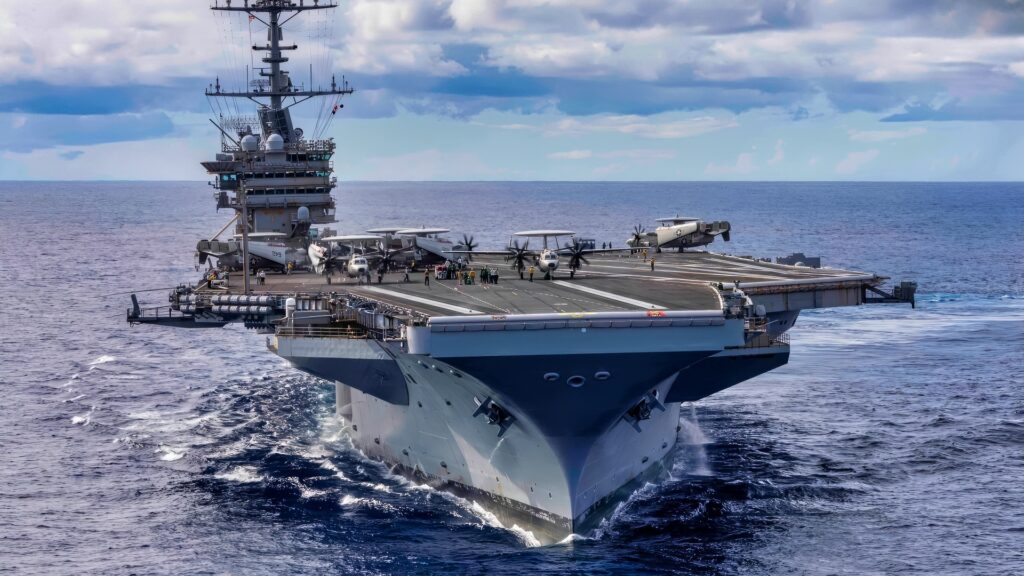
Three U.S. aircraft carrier groups were operating in the Middle East by late April 2026, the first time that had happened in decades. Carrier Strike Group 10 left Naval Station Norfolk on March 31 and reached the U.S. Central Command area on April 23, while American forces were already in combat operations against Iran.
The buildup began in late January and was the largest the United States had mounted in the region since the 2003 invasion of Iraq.
Why Washington sent ships
Protests broke out in Iran on December 28, 2025, after the currency collapsed, starting with shopkeepers in Tehran’s Grand Bazaar. Authorities cracked down and on January 8 cut the country’s internet. Human Rights Watch found evidence of a coordinated rise in lethal force from that date. Iran’s government put the death toll at 3,117. Activists counted at least 6,126 dead and said the true figure could not be verified.
On January 13, speaking in Detroit, President Trump told protesters to “keep protesting” and said “help is on its way.” The United States then began reinforcing the region. Washington also pointed to Iran’s nuclear programme. In February the administration said Iran had restarted it and was developing missiles able to reach the United States.
What moved in
USS Abraham Lincoln and its strike group arrived on January 26. USS Gerald R. Ford followed, reported on its way on February 13 and seen off Gibraltar a week later. Air Force F-15E Strike Eagles moved from RAF Lakenheath to Muwaffaq Salti Air Base in Jordan. On February 24 twelve F-22s landed at Ovda Airbase in southern Israel, the first U.S. deployment of offensive weapons in Israel. Tanker aircraft at Ben Gurion Airport numbered 14 by February 27.
The Wall Street Journal and others reported that USS George H. W. Bush was being readied as well. Royal Air Force Eurofighter Typhoons sat at al-Udeid Air Base in Qatar.
Gulf states had reportedly refused the United States use of their bases and airspace for strikes, fearing Iranian retaliation. On February 26, Fox News reported that the Navy’s fleet headquarters in Bahrain was down to fewer than 100 mission-critical staff and that every U.S. ship based there had left port.
Clashes at sea
On February 3, U.S. Central Command said Revolutionary Guard Navy elements tried to stop and board the U.S.-flagged tanker MV Stena Imperative in the Strait of Hormuz. The destroyer USS McFaul escorted it onward toward the Arabian Sea. The same day an F-35C from the Lincoln shot down an Iranian Shahed-139 drone heading for the carrier. Central Command called the approach a potential threat and reported no casualties or damage. Iranian state media said the drone was on a surveillance mission in international waters.
Two days later, Iranian state media said the Guard seized two foreign-flagged tankers near Farsi Island and took them to Bushehr, alleging fuel smuggling.
Strikes begin
On February 28 the United States and Israel carried out strikes on Iran, and Fars reported explosions in central Tehran. Israeli Channel 12 reported that the F-22 deployment was leaked deliberately as part of a deception, so that senior Iranian officials, Supreme Leader Ali Khamenei among them, would gather and be hit in the opening strikes.
The administration gave no evidence that Iran planned to strike first. An unnamed Pentagon source told Congress in closed briefings that no intelligence suggested it did.




