
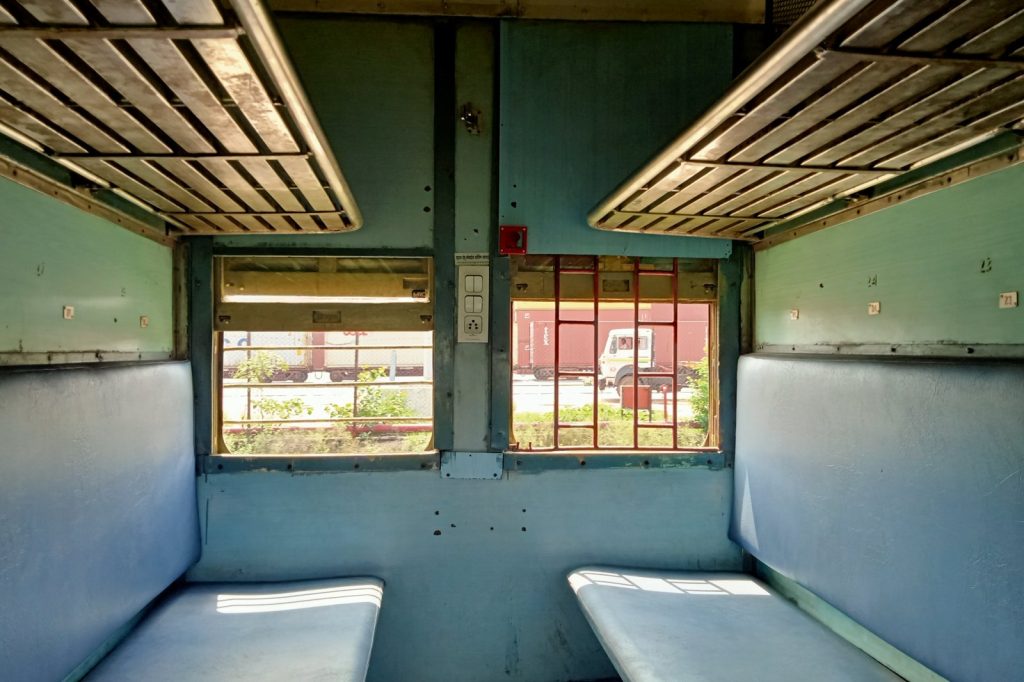
For decades, the general compartment of an Indian train has been a place of last resort. No reservation. No guaranteed seat.
Just a ticket and the hope that the journey ends without incident. That hope failed a young woman on July 3, on the run from Siwan to Patliputra.
She posted the story on Instagram. It spread fast. The details are specific and ugly.
She boarded the train and found an upper berth. She fell asleep.
At Chhapra station, a group of elderly men took the seats below her. One of them reached up. He touched her.
She woke up. She said, “Uncle, please keep your hand down.” He ignored her. He shifted his hand to the front of the berth.
He touched her again. She confronted him.
He stopped — briefly. Then he started again. She sat up and pressed herself to the far edge of the berth.
It didn’t matter. Another elderly man reached up and touched her.
She left the coach. She searched for another compartment. Every one was packed.
She ended up sitting near the entrance of an AC coach. A young man approached her there. The post does not say what happened next.
It does not need to. What is striking is the pattern.
The men were not young. They were not drunk. They were not strangers to the train.
They knew the compartment. They knew the berths.
They knew that a woman alone on an upper berth has nowhere to go. That is the backstory of this kind of harassment. It is not a sudden crime.
It is a slow, practiced violation. It relies on the victim’s isolation. It relies on the crowd’s indifference.
It relies on the fact that the general compartment is the cheapest option, and the least policed. The woman did what women in these situations are taught to do.
She asked politely. She moved away. She left the coach entirely.
None of it worked. Her post ends with a simple line: “Just imagine the level of discomfort I went through on the train.
This is a true incident that happened to me.” The discomfort is the point. It is not a single touch. It is the knowledge that the man will not stop.
That the other men will join in. That the train will not arrive for hours. That the compartment is locked and moving and there is no one to call.
This is not a new story. The general compartment has been a site of harassment for as long as trains have run in India.
Women have been groped, followed, filmed, and assaulted in these coaches. The difference now is that the women are posting about it online. The difference is that the post goes viral.
The difference is that a young woman can name the date, the train, the station, and the berth — and the country sees it. But the train still runs.
The general compartment still has no reservation. The men still board at Chhapra. The women still have nowhere to go.




