
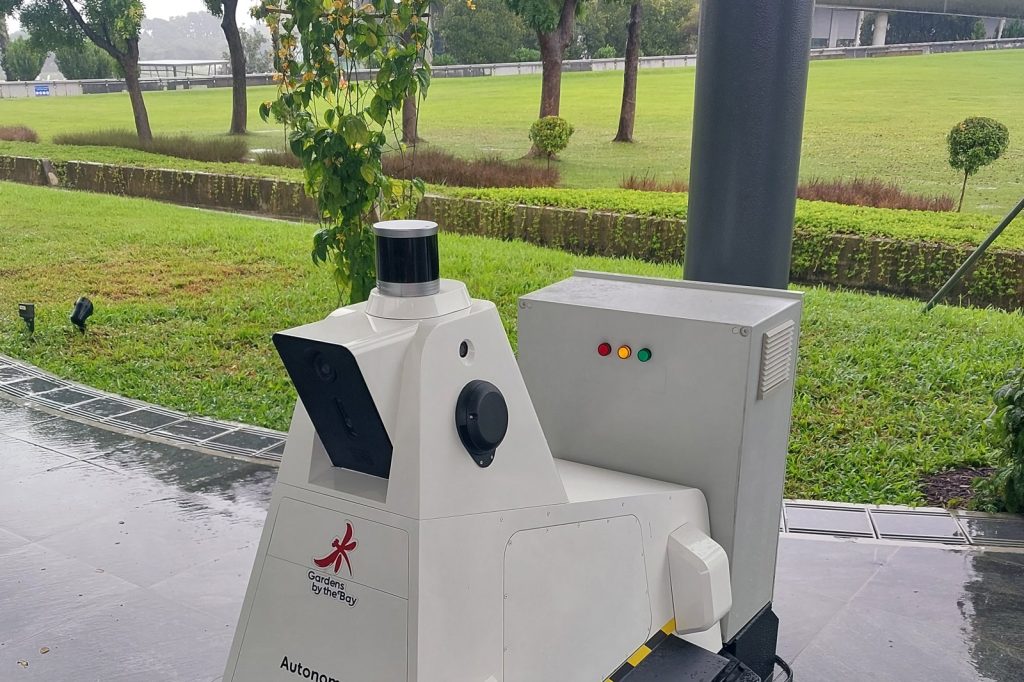
On a Wednesday in early October, two wheeled robots named Xavier entered the corridors of Toa Payoh Central for the first time. Operated by Singapore’s Home Team Science and Technology Agency (HTX), the machines are part of a trial that launched on 6 October 2021. The robots travel pre‑determined routes through the public housing estate, broadcasting recorded reminders to keep a one‑metre distance and streaming live video to a central command centre where human operators monitor the feed.
The Xavier units are not autonomous in the conventional sense. They lack decision‑making capability and serve only as mobile sensors. Equipped with 360‑degree cameras and a suite of detection sensors, they identify potential infractions such as smoking in prohibited areas, illegal parking, or loitering. When the system flags an incident, the video is relayed to a human operator who can either speak through the robot’s speaker to issue a warning or alert a nearby police patrol. The robots themselves do not enforce the law; they merely observe and transmit.
HTX has stressed that the purpose of the pilot is to offload repetitive monitoring tasks from officers, allowing them to focus on community engagement and response to genuine emergencies. “The robots are designed to augment our officers, not replace them,” a spokesperson for the agency said, underscoring that human judgment remains central to enforcement.
Toa Payoh was selected deliberately for the trial. The neighbourhood is a bustling mix of residential blocks, shops and heavy foot traffic at all hours, providing a realistic environment for the robots to test their capabilities. In addition to enforcing existing regulations, the machines also remind the public of COVID‑19 safe‑distancing rules, a task that would otherwise require officers to repeat the same message continuously.
Reactions among residents and business owners have been mixed. Some commuters and shopkeepers appreciate the added sense of security, especially during late‑night hours. Others, however, find the constant presence of the robots unsettling. A 62‑year‑old resident told local media that the device felt “intrusive,” even though she acknowledged the intention behind the safety measures.
The pilot is limited in both scope and duration. Data collected during the trial will be analysed to determine whether the robots are effective enough to warrant broader deployment. The system currently targets only clear‑cut violations that do not require nuanced interpretation—such as a person smoking in a no‑smoking zone, which is observable fact rather than a judgment call. Once an operator confirms the breach, a warning is issued via the robot’s speaker.
HTX’s ongoing assessment will consider how far the operational boundaries can be extended. While the current trial confines the robots to monitoring specific, rule‑based behaviours, the agency may use the findings to argue for expanded patrol routes, longer operating hours, or additional units in the future.
For now, the Xavier robots continue to navigate Toa Payoh’s corridors, broadcasting safety messages and feeding live video to human supervisors. The community is adapting to the presence of these machines—some viewing them as a welcome supplement to public safety, others remaining wary of the surveillance aspect. When the trial concludes, the collected evidence will guide Singapore’s decision on the role of such technology in its public spaces.




