
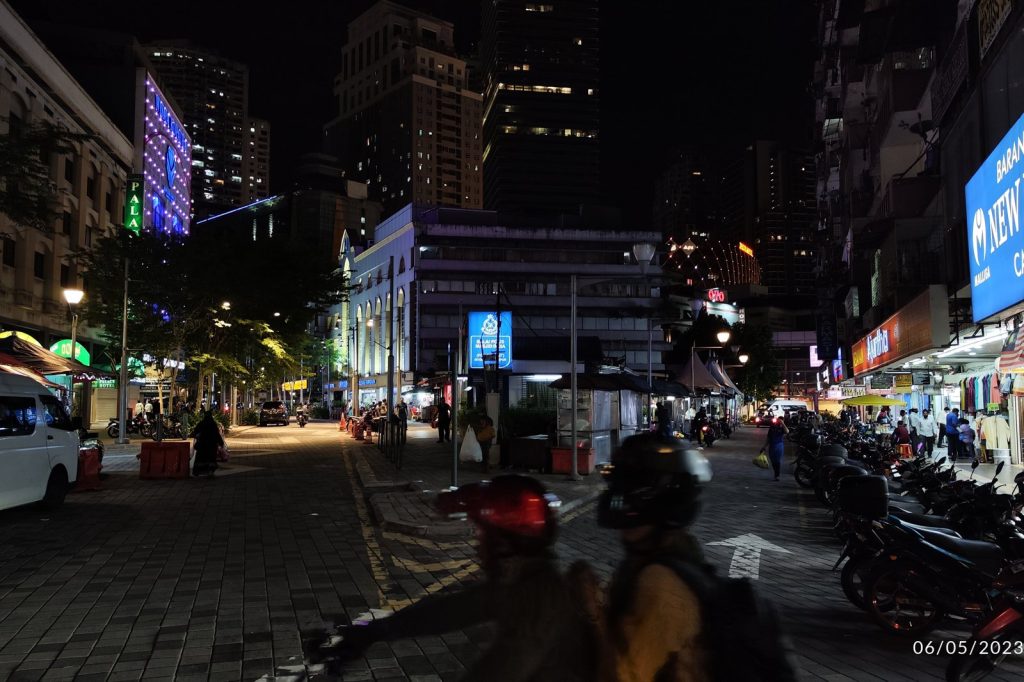
At about 8:20 a.m. on Aug. 23, 2024, Vijayalakshmi Gali stepped onto the pavement of Jalan Masjid India in Kuala Lumpur. The tiled floor under her gave way, and she dropped into an 8-metre sinkhole. She did not come back up.
Gali, 48, was from Kuppam in Andhra Pradesh, India. She was believed to be staying in the city on a tourist visa, and was walking to a nearby Hindu temple with a friend. Local reports said she was on a two-month holiday with her family and due to return home soon. Locals called the Fire and Rescue Department at 8:22 a.m., and a ground search began at once.
A broken sewer pipe sits at the bottom of the hole. Rescuers believe she may have been carried into the sewer system. Kuala Lumpur police chief Rusdi Mohamad Isa said a strong water flow underground meant she could have been swept away. The South China Morning Post noted that flash floods had washed away parts of the district a day earlier.
Days of searching
Firefighters, a special tactical rescue team and tracker dogs were called in, and excavators dug out ground to widen the search. On Aug. 25, searchers found the woman’s slippers. By Aug. 26 a team of 104 people from several agencies had gone through five of six sewer manholes again without result.
Divers went down on Aug. 29 and Aug. 30 once pumps and redirected inflow brought the water level in the sewer channel from 1.5 metres to 0.8 metres. Heavy rain, rising water and undercurrents kept stopping them. K9 dogs named Denti and Frankie had signalled strongly toward an obstruction in the channel, and cameras showed it too. Deputy director-general of operations Ahmad Izram Osman said it could be the victim or some other object.
At 2 p.m. on Aug. 30, the team stopped work at Jalan Masjid India, calling it too risky and unsafe. The search moved to the Pantai Dalam sewage plant. Malaysia later declared Gali legally dead on Sept. 1, and authorities decided to end the operation for good. Zaliha Mustafa said the street needed to return to normal activity and that safety came first. The family’s visas were extended by a week.
Why it opened up
The cause was not known at first. Deputy Prime Minister Fadillah Yusof pointed to faults in the geology and soil, saying the limestone beneath the area disrupts underground water flow and makes the soil unstable. Dr Nor Shahidah Mohd Nazer, a geological engineering expert at Universiti Kebangsaan Malaysia, said heavy rain had probably made things worse by saturating the ground. Jeffrey Chiang Choong Luin, president of the Institution of Engineers, Malaysia, said that based on photos and video the cave-in could be linked to utilities.
A second, smaller sinkhole opened on Aug. 28, about 50 metres away. Nobody was hurt. Shops in the Masjid India area said business had dropped sharply. Residents of other sinkhole-prone areas, such as Brickfields, called on the city to publish its underground mapping.
Prime Minister Anwar Ibrahim, who sent condolences to the family on Aug. 25, said at a press conference in Penang that “KL is still safe for tourist.”
Sources
- 2024 Kuala Lumpur sinkhole – Wikipedia
- Indian tourist vanishes after being swallowed by 8-metre sinkhole in Kuala Lumpur | South China Morning Post
Sources
- 2024 Kuala Lumpur sinkhole – Wikipedia
- Indian tourist vanishes after being swallowed by 8-metre sinkhole in…




