DBS, OCBC and UOB all opened Thursday more than 1% lower. By the 5 p.m. close their losses had shrunk, but all three still finished in the red as Singapore’s market took in the crisis at Credit Suisse and a string of US bank failures.
The Straits Times Index ended down 0.55%, or 17.38 points, at 3,155.54. DBS dropped 1.27% to S$32.55, OCBC slid 0.98% to S$12.15 and UOB slipped 0.71% to S$28.
What set it off
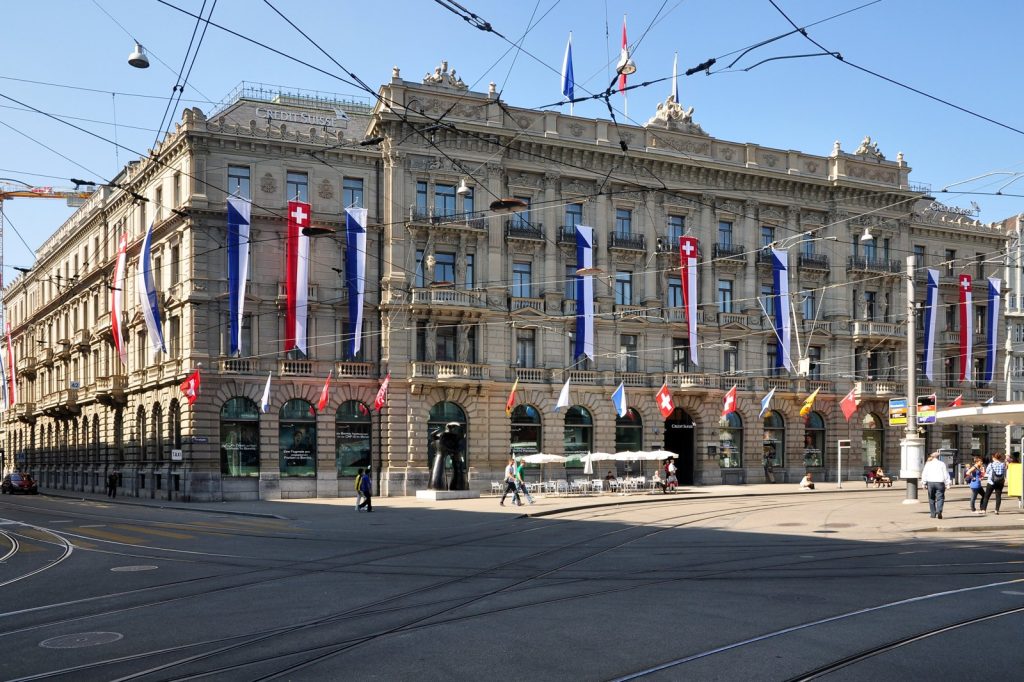
Credit Suisse, Switzerland’s second-biggest bank, had sunk as much as 30% on Wednesday after its largest shareholder, Saudi National Bank, ruled out investing any more on regulatory grounds. The cost of insuring the bank’s bonds against default for one year hit a level not seen for big international banks since the 2008 financial crisis.
On Thursday the Swiss National Bank came in with a 50 billion Swiss franc lifeline, about S$73 billion. Credit Suisse shares rebounded by 30% or more in early trading. Asian markets pared their losses but closed lower.
Wider markets were already shaky. Silicon Valley Bank had collapsed and Signature Bank in New York state had been closed that week. US regulators guaranteed that all depositors at both would be repaid in full, and up to US$25 billion was made available for a new lending programme offering one-year loans to banks on easier terms. Silvergate Bank, a crypto-focused lender, had said it would wind down and voluntarily liquidate.
Singapore’s position
The Monetary Authority of Singapore said it was in close contact with Switzerland’s regulator, Finma. It noted that Credit Suisse’s Singapore branch focuses on private and investment banking and has no retail customers. Singapore banks are well capitalised and run regular stress tests, MAS said, adding: “Their liquidity positions are healthy, underpinned by a stable and diversified funding base.” Earlier in the week it had said local banks have “insignificant exposures” to the failed US lenders. The three banks told The Straits Times their exposure to Credit Suisse is insignificant.
Glenn Thum of Phillip Securities Research pointed to the customer bases. Credit Suisse serves mainly wealthy clients and businesses; Singapore’s banks serve everyday savers and small and medium-sized companies. “The overall risk and exposure to Singapore banks is limited,” he said. He did allow that the collapses could slow loan growth, which might dent the banks’ earnings.
Thilan Wickramasinghe of Maybank described the local banks’ balance sheets as conservative, with high capital levels. “Deposit bases are diversified and assets are largely loans. Most bond holdings are towards the short end,” he said.
Analysts on contagion
Kelvin Tay, UBS’s chief investment officer for Asia-Pacific, said markets were struggling with three separate but linked problems: bank solvency, liquidity and profitability. “Bank solvency fears are clearly overdone as most banks, including European banks, have strong liquidity positions and depositors remain well protected,” he said. Some individual banks might still need central bank liquidity support if funding stays tight for long, he added, which explains the panic when Credit Suisse’s biggest stakeholder ruled out more help.
Aaron Chwee of OCBC called the Swiss backstop short-term relief and expected “elevated volatility within the US and European financial sectors over the next few days, and maybe weeks.”
Analysts quoted by The Straits Times did not expect a repeat of Lehman Brothers. Tay called it “a typical risk-off event” rather than a liquidity contagion. Monica Defend of the Amundi Institute said big systemic banks are in much better shape than in 2008, though smaller banks with looser capital rules carry some risk.
In the US, First Republic Bank was reportedly exploring options, including a sale, after Fitch Ratings and S&P Global Ratings downgraded its credit rating on Wednesday.
Sources
- Singapore bank stocks hit by Credit Suisse crisis, US bank failures
- Singapore bank stocks hit by Credit Suisse crisis
Sources
- Singapore bank stocks hit by Credit Suisse crisis, US bank failures
- Singapore bank stocks hit by Credit Suisse crisis – The Star