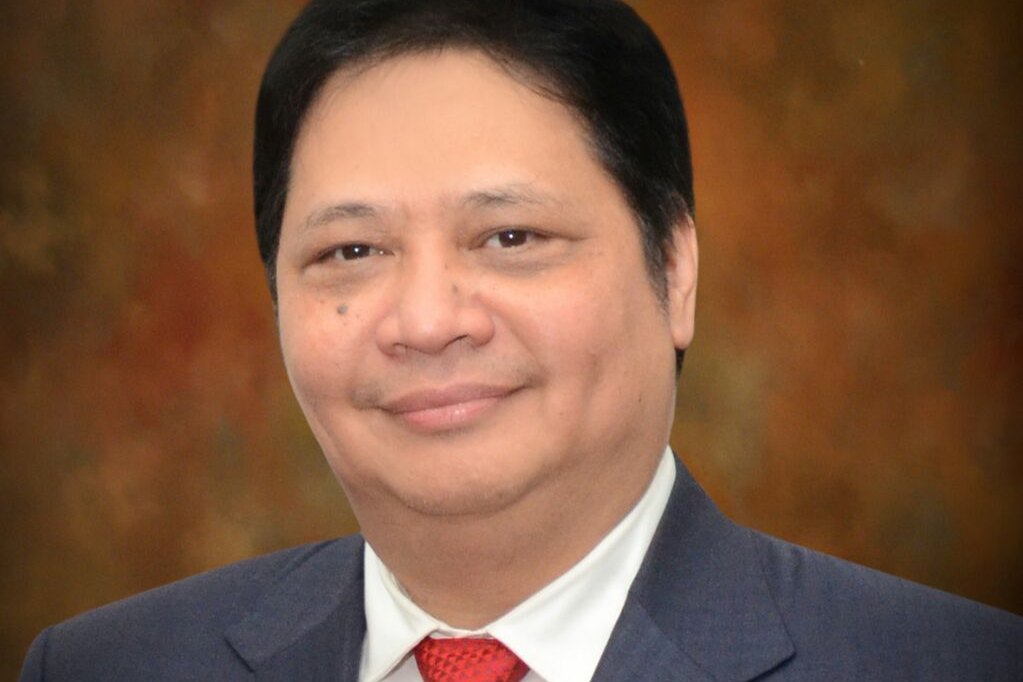
Jakarta — The document of record here is a policy statement, dated the first week of January 2023, and it is explicit about intent. Coordinating Minister of Economic Affairs Airlangga Hartarto told an audience in the capital that Indonesia, having taken over the ASEAN Chairmanship from Cambodia, intends to push the ten-member bloc toward a specific role: “The government would continue encouraging ASEAN to be a stable and peaceful region to become the anchor of global economic stability,” he stated.
The handover itself was procedural. At the Phnom Penh closing ceremony for the 40th and 41st ASEAN Summits, Cambodian Prime Minister Hun Sen passed the gavel to President Joko Widodo, formalizing a chairmanship Jakarta will hold through 2023 after the summit cycle in Cambodia concluded in late 2022.
The program Indonesia has attached to the chairmanship runs under one banner, “ASEAN Matters: Epicentrum of Growth” — and the paperwork divides it into parts. “ASEAN Matters” rests on three elements the minister enumerated: the grouping’s capacity and effectiveness, its unity, and its centrality. “Epicentrum of Growth” is the more ambitious half, casting ASEAN as an engine of regional and global growth, and it rests on four supports: architecture for health care, resilience in energy, resilience in food, and financial stability.
On the economic file specifically, Hartarto flagged three priorities for the year: recovery and rebuilding after the pandemic years, the digital economy, and sustainability. Implementation, he said, has been broken down into 16 priority economy deliverables for 2023. The framing is deliberately defensive as much as ambitious. “Indonesia’s ASEAN Chairmanship would emphasize handling multidimensional crises, such as food, energy, and financial crises,” Hartarto affirmed.
The subtext is Jakarta’s own standing. Officials cast the chairmanship as a showcase for Indonesia’s position as a global middle power, one able to shape the international agenda rather than merely absorb it, and as a vehicle for a region that respects international law while building a strong, inclusive economy on sustainable growth.
President Widodo has put a date on the vision. He is, in Hartarto’s retelling, “sanguine that by 2045, ASEAN will be a group of countries that is more adaptive, responsive, and competitive and consistent with the ASEAN global agenda,” with two decades left on the clock.
What remains to be seen is the gap between theme and ledger. Chairmanship years in ASEAN customarily close with a balance sheet of declared deliverables against completed ones, and Indonesia has now set its own test: 16 economic commitments, a growth-center slogan, and a promise that a region of ten divergent economies can steady a wobbling global order. The record begins in Jakarta.