
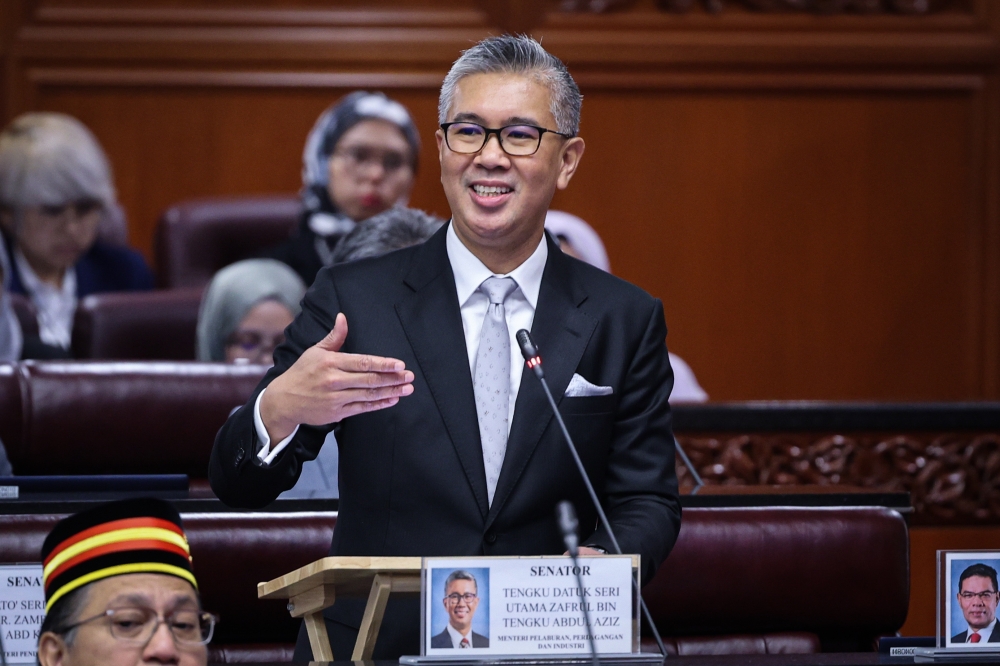
“For all the data and technology we now have, we still struggle with our forecast and predictive models as we did 50 years ago.” Finance Minister Tengku Zafrul Tengku Abdul Aziz put it that bluntly to an audience of economists and academics on September 8, 2021, and the line set the tone for the rest of his speech.
Speaking at the virtual Global Education Conference and Postgraduate Colloquium 2021, hosted by UNIRAZAK, he argued that Malaysia’s economic reform agenda has to look different and should even consider unorthodox ideas, given the unusual conditions of the pandemic. The two-day forum drew nearly 20 international speakers from the United States, China, Finland, Singapore and Hong Kong, Bernama reported.
Ideas over capital
The bigger challenge for the economy, Tengku Zafrul said, is the capacity to produce new ideas, products, business models and production techniques, and to spread them quickly. Productivity is part of that. Policymakers in many countries are wrestling with it as the global economy slows in step, he said. In Malaysia, the historic gains from expanding capital had begun to stall in the past few years, before the pandemic arrived.
He also faulted the pace of automation. Manufacturing and agriculture still lean on manual labour, he said, “derived mainly from foreign workers.”
Gaps in the safety net
The minister said the government faces entrenched disadvantage. Wealth inequality has narrowed over the last 30 years, but “Malaysia has not yet reached the point where we can comfortably say that we have effectively addressed the issue,” he said.
Some Malaysians, he said, are struggling to climb out of poverty, and greater use of technology and digital inclusion may be needed to help them. The pandemic “has exposed several gaps in public service delivery,” he said, and he saw room to change the role of government policy, especially on social safety nets. Cash handouts and subsidies for staples such as cooking oil and flour had met the needs of the disadvantaged, he said, though more could be done on inequality.
A challenge to economists
Tengku Zafrul turned to the profession itself. Economics-related professions will have to adapt to Malaysia’s policy goals, he said, now that COVID-19 has tested conventional economic thinking. “The role of economic knowledge is not, and should not be, unchallenged,” he said. The test for economics, in his words, is to help policymakers with “the terrible twin crises of health and economy.”
On rent-seeking, he said the destructive entrepreneurship it breeds should be removed, while productive entrepreneurship in private markets should be encouraged. Rent-seeking is driven by incentives, he noted, and some of those are built into market design. Businesses have a part to play too, by pushing for sound general policy rather than measures that favour individual firms.
His own view: markets and competition, with a strong consumer focus and backed by appropriate regulation, “remain a strong antidote to monopoly rents.”




