
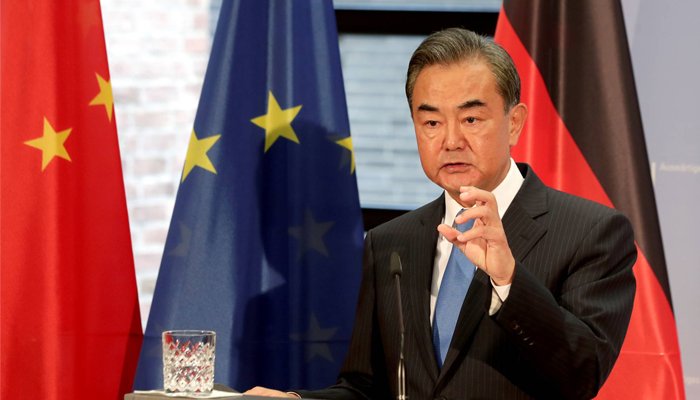
Beijing pledged $31 million in emergency aid to Afghanistan’s Taliban-run administration on 9 September 2021, the first major cash commitment by a regional power since the militant group seized Kabul on 15 August. Chinese Foreign Minister Wang Yi announced the package during a virtual meeting with counterparts from Pakistan, Iran, Tajikistan, Uzbekistan and Turkmenistan, saying the money would be spent on food, medicine, winter supplies and Covid-19 vaccines.
The move stops short of formal recognition but gives the Taliban a financial lifeline and signals Beijing’s willingness to work with a regime still shunned by most Western capitals. The Chinese foreign ministry said the funds would be channelled through “existing mechanisms,” a phrase diplomats interpret as hand-overs to Taliban-controlled ministries and United Nations agencies still present in Kabul.
Roughly one third of the total is earmarked for three million doses of Sinopharm vaccine; the rest will buy grain, cooking oil and medical kits. Afghanistan’s health system is close to collapse: the World Health Organization warned last week that only 17 percent of clinics remain fully functional and 1.4 million children face acute malnutrition.
A senior Taliban official, acting deputy health minister Dr Abdul Bari Omar, told Reuters on 8 September that “any vaccine shipment right now saves lives,” but added that the country still lacks cold-chain storage and trained staff outside major cities. Wang Yi told the five-nation call that China “will do its best to prevent a humanitarian disaster on our doorstep,” according to a transcript released by the ministry.
He also urged neighbouring states to reopen border crossings that were closed after the Taliban offensive, arguing that trade and customs revenue are “the fastest way to inject liquidity into Afghanistan.”
Recognition on hold, embassy stays open
Despite the cash pledge, Beijing has not recognised the Islamic Emirate declared by the Taliban on 7 September. Foreign ministry spokesman Wang Wenbin repeated the standard formulation that China “respects the Afghan people’s independent choice” and will judge the new government by its “actions, not words.” The distinction matters: formal recognition would unlock Taliban access to the $9.5 billion in Afghan central-bank reserves frozen by the United States and Europe.
Western diplomats in Beijing say China is calculating that limited, low-cost engagement now buys influence without triggering secondary sanctions that still cover most senior Taliban figures. China kept its Kabul embassy open throughout the August fighting, a decision Wang Yi hailed as proof of Beijing’s “consistent policy toward Afghanistan.” By contrast, most Western missions relocated to Doha.
Taliban spokesman Suhail Shaheen told Al Jazeera on 9 September that Chinese diplomats “continue to meet our foreign ministry staff almost daily,” discussing security for Chinese nationals and possible road-building projects. No timetable for upgrading relations has been given.
Security calculus and Xinjiang fears
Beijing’s overriding concern is preventing Afghanistan from becoming a rear base for Uyghur militants Beijing blames for sporadic violence in Xinjiang. The Taliban have publicly pledged not to host groups hostile to neighbouring countries, but China wants verifiable action. Wang Yi warned that any “cover or tolerance” of the East Turkestan Islamic Movement would “immediately jeopardise cooperation.” The UN dropped ETIM from its sanctions list in 2020, yet Beijing still uses the label to describe Uyghur exiles.
Chinese state media have signalled that future investment in copper mines and oil fields depends on Taliban cooperation on intelligence sharing. A $3 billion copper concession at Mes Aynak, signed with the former Kabul government in 2007, remains dormant because of insecurity and the presence of ancient Buddhist ruins.
Taliban acting mines minister Mohammad Ehsan said on 6 September that “all old contracts will be reviewed,” raising doubts about whether China can keep the terms it negotiated.
Regional reaction and Western unease
Pakistan, which already provides humanitarian flights to Kabul, welcomed the Chinese initiative. Foreign Minister Shah Mahmood Qureshi said the aid “fills a vacuum left by Western donors” and urged the World Bank to release frozen development funds. Iran and the Central Asian states, worried about refugee flows, backed a Chinese proposal for a six-nation coordination group on Afghanistan, though details remain vague.
Washington reacted coolly. State Department spokesman Ned Price reiterated on 9 September that “no country should legitimise the Taliban through rushed economic engagement” and urged any humanitarian support to flow through independent agencies.
The European Union has pledged one billion euros in aid but insists it will bypass Taliban structures, a condition Beijing argues is unrealistic once winter sets in. Human-rights groups note that the Taliban’s interim cabinet contains no women and is dominated by figures on UN blacklists. Amnesty International’s Agnes Callamard said China’s aid “risks cushioning the Taliban from the pressure needed to respect girls’ education and media freedom.” Beijing counters that stability must come before social reform, a stance that aligns with its broader non-interference doctrine.
The $31 million is modest compared with Afghanistan’s annual $8 billion import bill, yet it gives the Taliban their first major hard-currency boost since taking power. If China follows up with infrastructure loans and market access, Western use built over twenty years of intervention could erode quickly.
For now, Beijing appears content to test the Taliban’s willingness to police its own territory while keeping formal recognition, and the legal obligations that come with it, off the table.
{“@context”:”https://schema.org”,”@type”:”NewsArticle”,”headline”:”China Gives Million Aid to Taliban Afghanistan Government”,”datePublished”:”2021-09-09T08:39:44+00:00″,”dateModified”:”2026-05-15T05:28:34+00:00″,”author”:{“@type”:”Organization”,”name”:”InfoPulse Today”},”publisher”:{“@type”:”Organization”,”name”:”InfoPulse Today”,”logo”:{“@type”:”ImageObject”,”url”:”https://newsfeed.infopulsetoday.com/wp-content/uploads/logo.png”}},”mainEntityOfPage”:{“@type”:”WebPage”,”@id”:”https://newsfeed.infopulsetoday.com/?p=617″},”articleSection”:”International Conflict”,”keywords”:”china afghanistan aid, taliban aid, afghanistan vaccines, china taliban, kabul funding, sinopharm doses, emergency aid, regional power, afghanistan health crisis”,”description”:”Beijing pledged million in emergency aid to Afghanistan’s Taliban-run administration on 9 September 2021, the first major cash commitment by a regionalu2026″}




