
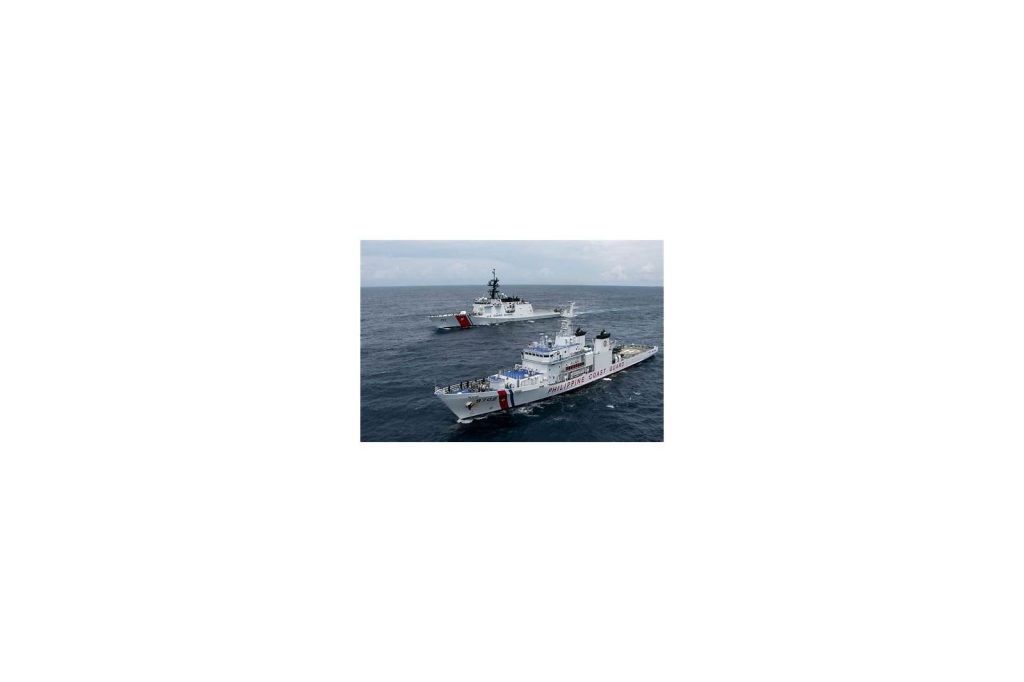
The Permanent Court of Arbitration’s 2016 ruling did not end the dispute over the Spratly Islands. It opened a new chapter, one defined by a sustained pattern of intimidation at sea that has continued for years after the judges in The Hague delivered their verdict. The stakes are concrete: access to fishing grounds, the right to exploit seabed resources, and the ability of the Philippines to exercise sovereignty within its own exclusive economic zone.
The tribunal found that China’s “nine-dash line” had no legal basis. It declared that the Philippines alone holds exclusive rights to harvest fish and exploit seabed resources within 200 nautical miles of its coastline.
Mischief Reef and Second Thomas Shoal sit on the Philippine continental shelf, the court said. Beijing’s response was to label the award “a piece of waste paper.” Dredging did not stop. What followed was not quiet acceptance.
It was a campaign of harassment. Chinese coast-guard cutters and maritime militia swarms have targeted Philippine vessels almost every year since the ruling.
In January 2011, navy watchers recorded three warning shots fired across the bows of Filipino fishing skiffs near Jackson Atoll. A year later, a two-month stand-off erupted when the Philippine frigate Gregorio del Pilar tried to arrest Chinese fishermen poaching at Scarborough Shoal. Beijing sent surveillance ships.
The lagoon was sealed off. Water-cannon attacks were filmed in 2014 at Panatag Shoal. That same month, PLA troops blocked a Philippine supply boat heading for the Sierra Madre, the grounded warship that serves as a Manila outpost on Second Thomas Shoal.
The pattern repeats. The tools change.
The objective does not. Philippine Foreign Secretary Teodoro Locsin Jr. addressed the UN General Assembly on 25 September 2019. His message was direct: “The award is non-negotiable; no state, however powerful, can unilaterally overturn it.” The statement was a line in the sand drawn years after the court had already drawn one.
The question is whether that line holds. The ruling itself was final and binding.
Judges appointed under the United Nations Convention on the Law of the Sea found that China had never possessed historic title to the waters inside the dashed boundary. Yet Beijing’s dismissal of the award as worthless has left the Philippines in a position where legal victory does not translate into practical control. The court gave Manila the law.
China holds the sea. For Filipino fishermen, the risk is immediate. Their skiffs face cutters.
Their livelihoods depend on waters that the court says are theirs but that Beijing treats as contested. For the Philippine government, the challenge is strategic.
It must enforce a ruling that one of the world’s largest militaries rejects. For the broader region, the precedent is dangerous. If a final, binding arbitration award can be ignored without consequence, the rules-based order that underpins maritime stability in the South China Sea weakens.
The 2016 award remains on the books. It has not been overturned.
It has not been renegotiated. It has simply been defied. That defiance is the real story of what came after the tribunal’s decision.
The legal case is closed. The confrontation at sea is not.




