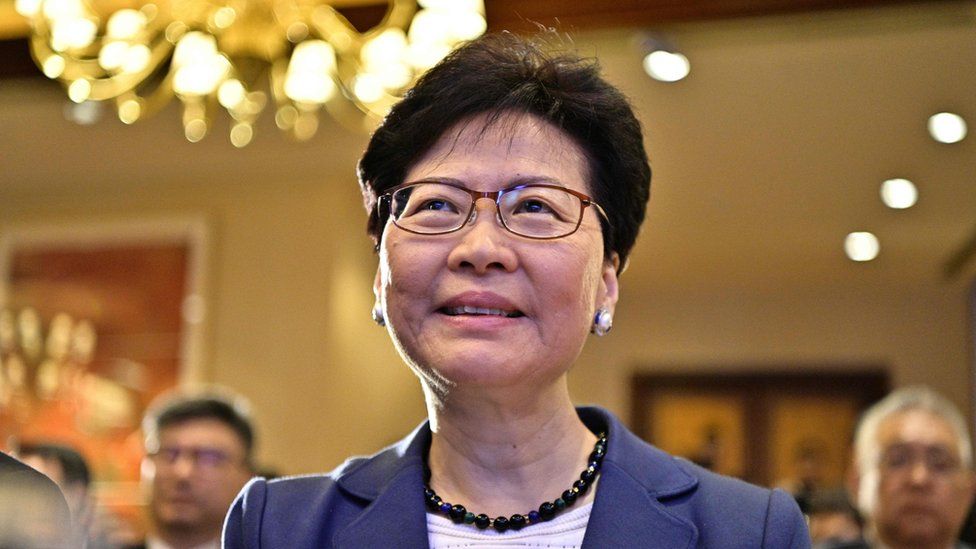
“Strengths and resilience, just like our financial systems, have not been undermined despite (the fact) that we experienced considerable social unrest and challenges.” That was Hong Kong Chief Executive Carrie Lam on Monday, January 13, opening a regional financial forum in the middle of more than six months of often violent pro-democracy protests.
She said the city’s financial system stayed stable thanks to lessons learned since the Asian financial crisis. She pointed to the listing of e-commerce giant Alibaba Group Holding as a boost for other listings by mainland companies. And she said she was confident Hong Kong would bridge its divisions and reach its goals of a reunited community and a “flourishing” economy.
The protests began in June over a bill, since withdrawn, that would have allowed extraditions to mainland China, where courts are controlled by the Communist Party. Demands have since widened to include universal suffrage.
Officials back her up
Finance Secretary Paul Chan, at the same event, said the banking system was running smoothly with ample liquidity despite “unprecedented” turbulence. Howard Lee, deputy chief executive of the Hong Kong Monetary Authority, said the strong performance of financial assets was more proof of resilience. “No matter whether it is the currency or the equity markets or infrastructure, they seem to be going through a kind of parallel universe,” he said.
Julia Leung, deputy chief executive of the Securities and Futures Commission, said the markets had been “hyper stress tested in the last six months” and “had done well.”
The numbers that day were on the officials’ side. The Hang Seng index traded at its highest since July, and the Hong Kong dollar had flirted with three-year highs. Chan said the government was weighing a more “competitive” tax arrangement to attract private equity funds, along with further relief measures to prop up the economy. He offered no details.
The other side of the ledger
Many protests involved clashes between demonstrators and police on central streets lined with the towers of top finance companies. Some firms were caught in the middle. Branches of mainland banks were vandalized repeatedly as protesters vented anger at what they see as Beijing meddling in the city’s affairs. Beijing denies this and blames the West for stirring unrest.
HSBC also drew the anger of some protesters, who accuse it of being complicit in action by authorities against activists trying to raise money for their campaign. HSBC strongly denies any connection.
The economy itself was in worse shape than the speeches suggested. Hurt by the tariff war between Washington and Beijing, and by protests that cut into tourism and retail sales, Hong Kong had fallen into recession. It relies on its finance industry, Reuters noted, to prevent a deeper downturn.