“Oppose violence, safeguard the rule, boost economy, build harmony together.” That was the whole message of Bank of East Asia’s newspaper advertisement on Thursday, August 22, 2019, according to Caixin. It was short, and it was one of three bank ads that morning pushing the same plea at a city in its third month of unrest.
HSBC and Standard Chartered took out full-page advertisements in Chinese in major Hong Kong papers, among them Wen Wei Po, Ta Kung Pao and Sing Tao Daily. Bank of East Asia, the city’s second-largest local bank, ran quarter-page ads and was the first local bank to publish anti-violence ones. HSBC is the largest bank in Hong Kong by assets, and Standard Chartered the fourth-largest. Both, with Bank of China (Hong Kong), issue the territory’s banknotes.
What the ads said
HSBC wrote that, as a company rooted in Hong Kong, it was very concerned about recent events and strongly condemned “any violence and actions that disrupt social order.” It added that the rule of law is indispensable if the city is to remain an international financial hub. CNBC, citing Reuters reporting, said HSBC wanted all parties to settle disagreement through communication rather than violence, and that neither HSBC nor Bank of East Asia mentioned the government.
Standard Chartered went further. It said it strongly supports “One Country, Two Systems” and backs the government in keeping order, and it wanted to “guard the status of Hong Kong as an international financial center.”
A growing chorus
The banks were not first. Swire Group, parent of Cathay Pacific, ran a half-page ad on August 14. Li Ka-shing, the city’s wealthiest businessman, put full-page ads on the front pages of major papers on August 16, signed “by a Hong Kong citizen.” Jardine Matheson ran its own that day. Cathay Pacific chief executive Rupert Hogg and Paul Loo, its chief customer and commercial officer, resigned on August 16 after Beijing warned the airline over employees’ part in the protests.
The economic stakes were plain. Bank of East Asia had warned a day earlier that continuing protests could deepen the damage to small and medium enterprises, as it reported a 75% plunge in first-half net profit because of loan write downs in mainland China. Hong Kong was on the verge of its first recession in a decade.
The protests behind the ads
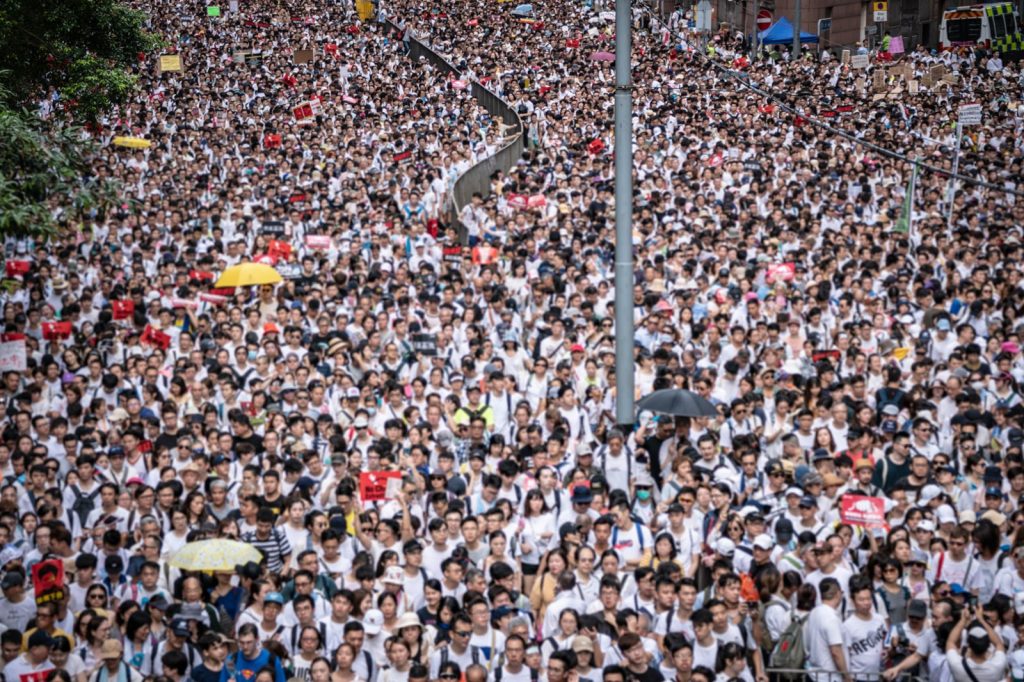
Anger erupted in June over a now-suspended bill that would allow criminal suspects to be extradited to mainland China for trial. The movement grew into one of the biggest populist challenges Chinese President Xi Jinping had faced since taking power in 2012. Carrie Lam said on Tuesday the legislation was dead, but she stopped short of withdrawing it. Protesters also wanted an independent inquiry, an end to calling the protests “rioting,” charges waived for those arrested and a return of political reform.
On Wednesday evening thousands protested at a suburban subway station where a mob of white-shirted men had attacked demonstrators the month before, angry that nobody had been prosecuted. Police refrained from using tear gas. Students planned a rally for Thursday, and another strike across districts was set for early September. Beijing accused foreign countries including the United States of fomenting the unrest, and paramilitary forces were holding drills in neighboring Shenzhen.
Sources
- Banks in Hong Kong condemn violence, urge restoration of 'harmony'
- Three Banks Condemn Hong Kong Violence Through Ads – Caixin Global
Sources
- HSBC and other big banks call for a peaceful end to Hong Kong …
- Hong Kong banks take out newspaper ads to call for order | Sky News