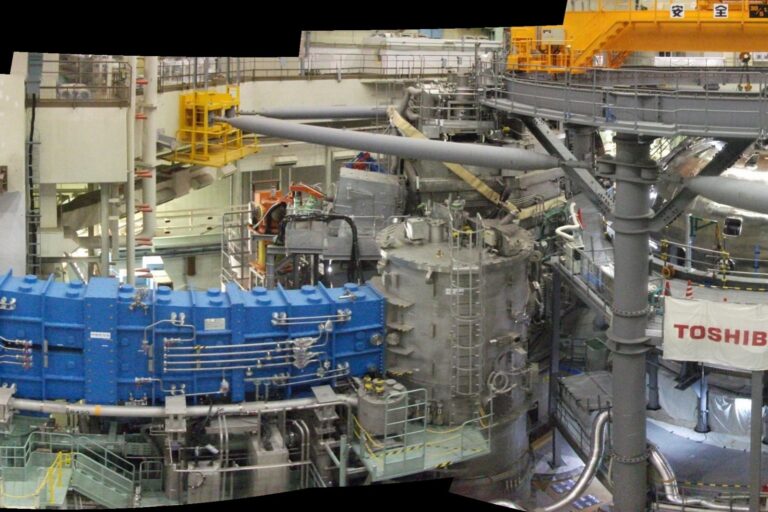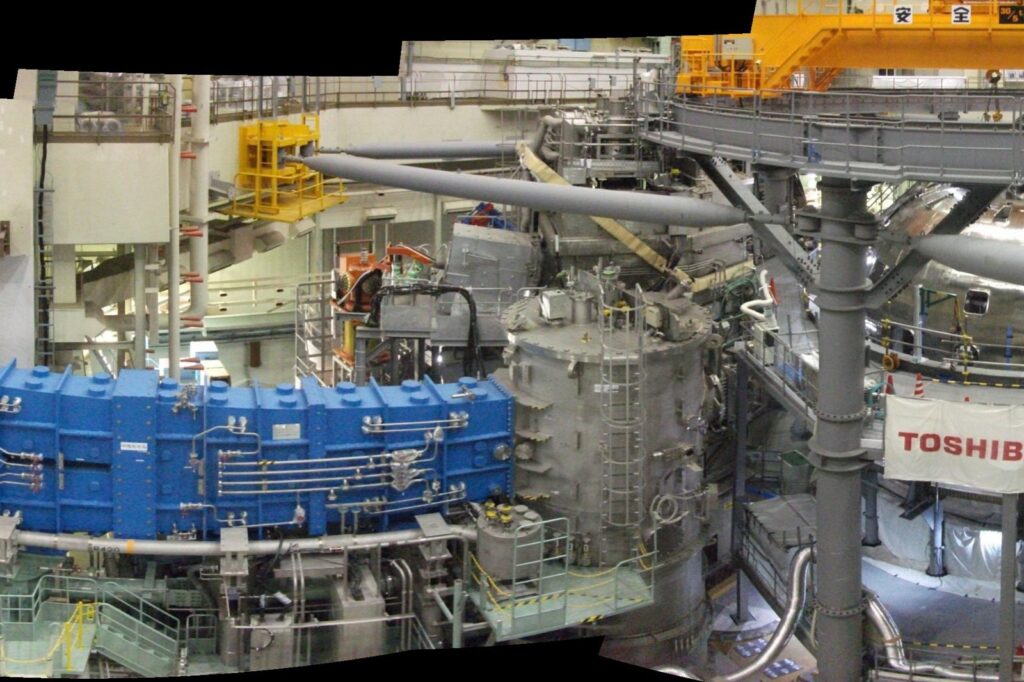
TOKYO, November 8, 2026 — Japan has begun delivering ten of ITER’s 19 toroidal field coils and the massive cryostat, while its domestic fusion programme moves toward a pilot‑plant plasma by 2035 and a demonstration of electricity in the 2040s.
Hardware Contributions to ITER
According to the ITER project, Japan is responsible for procuring ten of the 19 D‑shaped toroidal field coils that will generate the magnetic cage for the plasma. Each coil weighs about 330 tonnes, operates at 68 kA and must be kept at 4 K, a temperature just above absolute zero.
In addition to the magnets and cryostat, Japan provides the divertor remote‑handling system and a quarter of the neutral‑beam heating system that will inject high‑energy particles into the plasma. These components are part of the broader ITER “Broader Approach” agreement, under which Japan and EURATOM jointly fund JT‑60SA, IFMIF/EVEDA and remote‑handling development.
JT‑60SA Upgrade and Tritium Breeding
Japan’s JT‑60SA tokamak in Naka achieved first plasma in October 2023, becoming the world’s largest operational tokamak until ITER reaches first plasma. Officials said the machine is now being upgraded with a divertor test platform to validate tungsten divertor components for ITER and future reactors. At the same time, Japanese researchers lead the development of a water‑cooled ceramic breeder (WCCB) test blanket module for ITER, aimed at demonstrating tritium self‑sufficiency – a key step toward a closed‑fuel cycle.
Domestic Fusion Roadmap
Japan’s Fusion Advanced Study Torus (FAST) pilot plant is slated for first plasma around 2035, with an electricity‑generation demonstration planned for the 2040s. The roadmap pursues both tokamak (FAST) and helical (FFHR) reactor designs, the latter developed through partnerships with QST and university laboratories. Japanese industry, including Mitsubishi Heavy Industries, IHI and Toshiba, supplies superconducting conductors, structural materials and precision components for ITER, reinforcing a supply chain that could serve future commercial fusion plants.
Financial and Timeline Context
ITER’s total construction and operations cost is projected at €18–22 billion, with Japan bearing roughly one‑eleventh of the shared cost as a non‑host member. First plasma at ITER is now expected in 2033–2034, delayed from the original 2025 target. The delivery of the ten toroidal field coils and the cryostat marks a significant milestone toward that timeline.
Japan’s next scheduled ITER‑related activity is the integration of its delivered toroidal field coils into the Assembly Hall, followed by full magnet system commissioning later this decade.
Sources
- ITER
- Halfway to full current
- World's largest fusion project tests 330-tonne magnet at 34 kA
- Freemelt secures ITER-related qualification project from Alsymex
Photo: Michel Maccagnan (CC BY-SA 4.0)