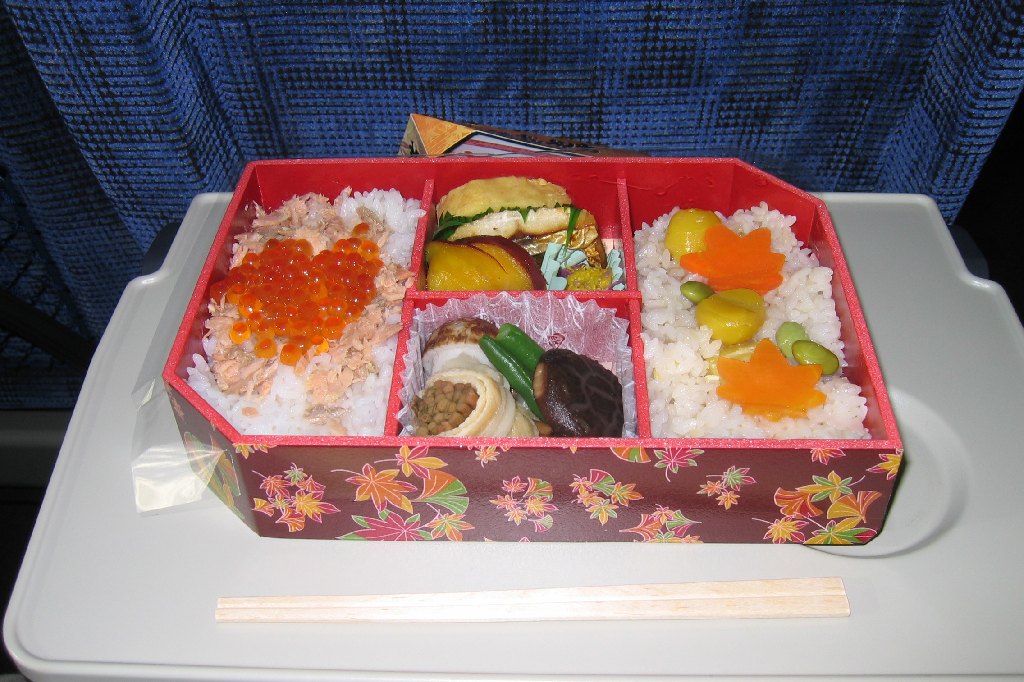
To taste Bokoi-meshi, one of the rarest bento boxes in Japan, you go to the frozen southern shore of Hokkaido in January and ride to Bokoi Station, a remote stop in the port city of Muroran. The Sakhalin surf clam is at its best in the cold, firm and sweet, with ribbons of bright pink. The box packs it into onigiri flavoured with sea salt harvested nearby, alongside smoked cheese, pickles and a marinated egg. Only 40 are made a day, and they tend to be gone by afternoon.
The box is only half the idea. The traditional way to eat an ekiben, a station bento, is on the move, watching the scenery that matches what is in the lid. The Suzuran Limited Express carries passengers, box in hand, to the edge of the snowy harbour where the clams and salt were gathered.
From two rice balls to a thousand boxes
The word joins “eki”, station, with “ben”, short for bento. Before trains, travellers packed their own food or bought meals in wooden boxes at tea houses, and kabuki audiences could buy makunouchi-bento, between-acts lunches, during intermission. Those became the ekiben once the railways arrived.
The first sale is generally believed to have been at Utsunomiya Station, about 60 miles north of Tokyo, in 1885, when the Nihon Tetsudo line connected it to Ueno in Tokyo. The meal was two salted rice balls crusted with sesame seeds, wrapped in bamboo leaves, with pickled daikon on the side. The idea spread quickly, and in 1888 Himeji Station sold the first standard ekiben with rice and side dishes.
By the early twentieth century many stations were selling meals built on local specialties. Ikameshi, squid stuffed with rice, was first made as an ekiben at Mori Station in Hokkaido and later became a regional dish in its own right. Rail travel boomed after the Second World War, and in the 1970s a drama called Ekiben Hitoritabi, based on a manga about a person travelling Japan to sample station meals, gave sales another push. At the height in the mid-1980s, an estimated twelve million boxes were eaten daily. Then air travel got cheaper and trains faster, and the number of ekiben makers fell by half between 1987 and 2008. The loss of the dining car in the 1990s brought buyers back.
What is in the box today
On any given day, more than a thousand kinds are on sale in stations across the country. Some come in self-heating boxes or intricate ceramic containers, and fans queue for bento themed on Pokemon, Sanrio and Godzilla. Hippari Takomeshi arrives in a palm-sized glazed ceramic pot modelled on the traps fishermen once used in the Akashi Strait, filled with stewed octopus from Hyogo Prefecture. Masu no sushi from Toyama presses sliced red trout over vinegared rice in a bamboo container. About one in ten ekiben is train-themed.
Hiroshima’s anago meshi, conger eel on rice, is famous enough to show up in travel shows and anime, and it has its own collectible miniatures. Local officials are now seeking formal cultural protection for ekiben that keep eel preparations long absent from modern kitchens.
The rules are simple. Ekiben are meant to be eaten cold or at room temperature, they are sold only at stations, before and after the ticket gate, and each package states the hour it expires. The flagship store in the basement of Tokyo Station stocks more than 300 kinds. Each January, Keio Department Store in Shinjuku holds the nation’s largest and oldest ekiben festival, a two-week tournament where bestselling makers can earn a place on the official roster.
Sources
- The Joy Of Ekiben—Why Japan's Train Bento Boxes Are Worth Traveling For
- Ekiben
- The Joy Of Ekiben—Why Japan's Train Bento Boxes Are Worth Traveling For
Photo: Fozzibab at English Wikipedia (Public domain)