The Department of Homeland Security ordered all artificial intelligence technology from China’s DeepSeek removed from most government systems, citing specific security risks tied to data transfer and server location.
Civilian Agencies Targeted by the Ban
The notice made public on Monday directs civilian agencies including the Treasury, State, and Justice departments to remove these tools immediately. The order specifically excludes agencies within the Department of Defense, distinguishing between military requirements and civilian operational protocols. DHS officials stated that using DeepSeek tools may result in the transfer of sensitive data to China if accessed by US government employees or vendors.
This directive applies broadly to technology built with the aid of DeepSeek’s AI models as well as products developed directly by the firm. The ban took effect from the end of July, even though the public announcement arrived later this month. White House tech lead Michael Kratsios previously noted malicious exploitation of American AI firms by rival firms in China, setting the tone for this administrative action.
Economic Disparity and Security Concerns
The decision highlights a stark contrast between cost efficiency and national security priorities within the current geopolitical climate. DeepSeek spent about $6m to train its debut model compared to roughly $100m for OpenAI’s GPT-4, making it an attractive option for startups and developers seeking low-cost solutions. However, DHS warnings emphasize that servers are located in China where the legal system permits the government extensive authority to access private company infrastructure.
While the free chatbot app ranks high in Apple App Store downloads, its underlying models are used by major US tech companies like Snowflake and Vercel. Startups have flocked to open source models because using DeepSeek costs a fraction of what closed models from Google or Anthropic would require. Yet, this economic advantage comes with the risk that sensitive data could be transferred across borders under Chinese jurisdiction.
Diplomatic Tensions and Future Cooperation
Beijing’s Foreign Ministry opposed the ban on Tuesday, stating Washington overstretched the concept of national security. A ministry spokesperson named Mao Ning told a news conference that China consistently opposes the politicisation of issues related to science, technology, and trade. The firm vowed to resolutely safeguard the legitimate rights and interests of Chinese businesses against such measures.
Despite fierce competition in the field, leaders Xi Jinping and Donald Trump met at the White House in September where they agreed to set up a communication channel for AI incidents. This diplomatic framework is expected to arise again at a summit scheduled for November in the Chinese city of Shenzhen. The scene suggests that while immediate bans occur, backchannel diplomacy continues to manage the fast-moving sector between the two nations.
Technical Performance and Market Impact
The ban coincides with significant developments in DeepSeek’s technical capabilities, which have challenged existing assumptions about US technological dominance. One of China’s top AI labs introduced a low-cost, high-performance chatbot in January 2025 that disrupted the industry landscape. In April, the firm released model V4, followed by an updated, faster, and more lightweight version earlier this October. These releases have allowed startups to flock to open source models because using DeepSeek costs a fraction of what closed models from competitors like Google or Anthropic would require.
This economic advantage extends to training costs as well. Last year, DeepSeek stated it took about $6m to train the debut version of its model, whereas the costs associated with OpenAI’s GPT-4 were roughly $100m. Such revelations sent tech stocks tumbling and highlighted a stark contrast between cost efficiency and national security priorities within the current geopolitical climate. Despite these fierce competition dynamics, leaders Xi Jinping and Donald Trump met at the White House in September where they agreed to set up a communication channel for AI incidents.
While the free chatbot app ranks high in Apple App Store downloads, its underlying models are used by major US tech companies like Snowflake and Vercel. The most recent version of DeepSeek was released last week, with users praising it online for beating even the most advanced AI tools from OpenAI on common tasks for computer software coding. This performance gap underscores why the DHS emphasized that servers located in China present multiple threat vectors where the legal system permits the government extensive authority to access private company infrastructure.
Sources
- DeepSeek banned from US government in race with China for AI dominance
- US bans use of China’s DeepSeek AI tools by government agencies
- US bans govt agencies from using DeepSeek, China vows to protect firms
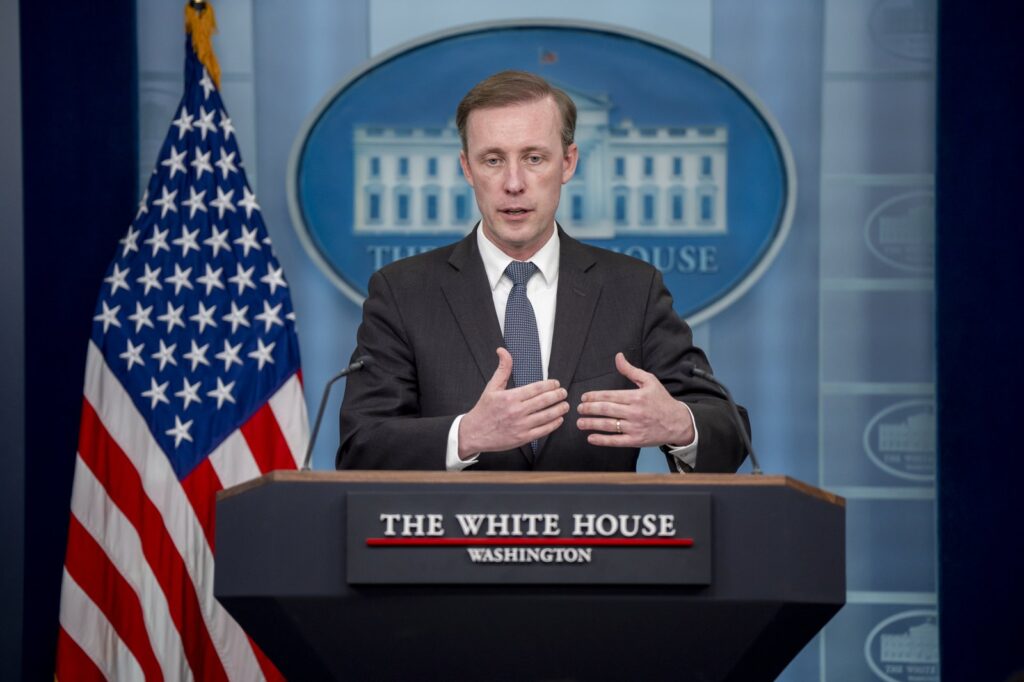
Photo: The White House (Public domain)