MANILA, November 11, 2026 — Manila is preparing a second legal case against China to seek compensation for environmental destruction and economic losses in the South China Sea. This move comes as maritime confrontations between the two nations escalate near disputed shoals, with analysts noting that preparations for the new documentation are already underway.
Seeking Reparations for Environmental Harm
Rommel Banlaoi, president of the Philippine Society for International Security Studies, confirmed on Saturday that the Philippines is considering filing another case against China. He stated that authorities are already preparing the necessary legal documentation for this potential second case. Unlike previous disputes that focused primarily on sovereignty and territorial boundaries, this new legal track aims to quantify and seek redress for specific damages. The focus is on the environmental destruction caused by recent incidents and the resulting economic losses for local communities and industries dependent on the sea.
For families across the region, particularly those who rely on fishing for their livelihood, the stakes are tangible. The South China Sea is not just a geopolitical chessboard; it is a source of food and income for millions. In 2016, $3.4 trillion of the world’s $16 trillion in maritime shipping passed through these waters, highlighting the economic weight of the area. The Western Central Pacific also accounted for 14% of the world’s commercial fishing in 2010. When vessels collide or water cannons are used, the damage extends beyond the immediate hardware. It disrupts the delicate marine ecosystems that support the daily lives of ordinary people, making the pursuit of compensation a matter of community welfare as much as national security.
Escalating Confrontations at Sea
The decision to pursue legal action follows a sharp increase in tensions between China and the Philippines in September and October. According to data from ACLED, an organization that tracks conflict data, Chinese naval and coast guard activity across four key features—Thitu Island, Second Thomas Shoal, Sabina Shoal, and Scarborough Shoal—doubled in September compared with the previous month. This surge in activity has been accompanied by a series of maritime and aerial incidents that have intensified the strain on bilateral relations.
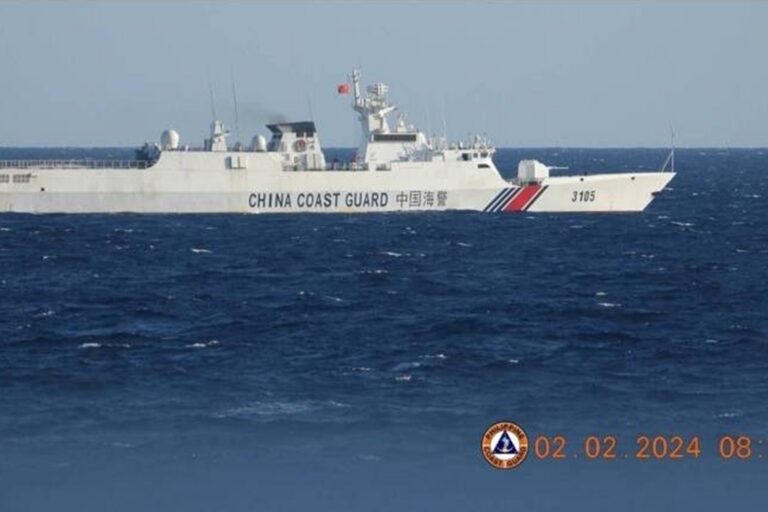
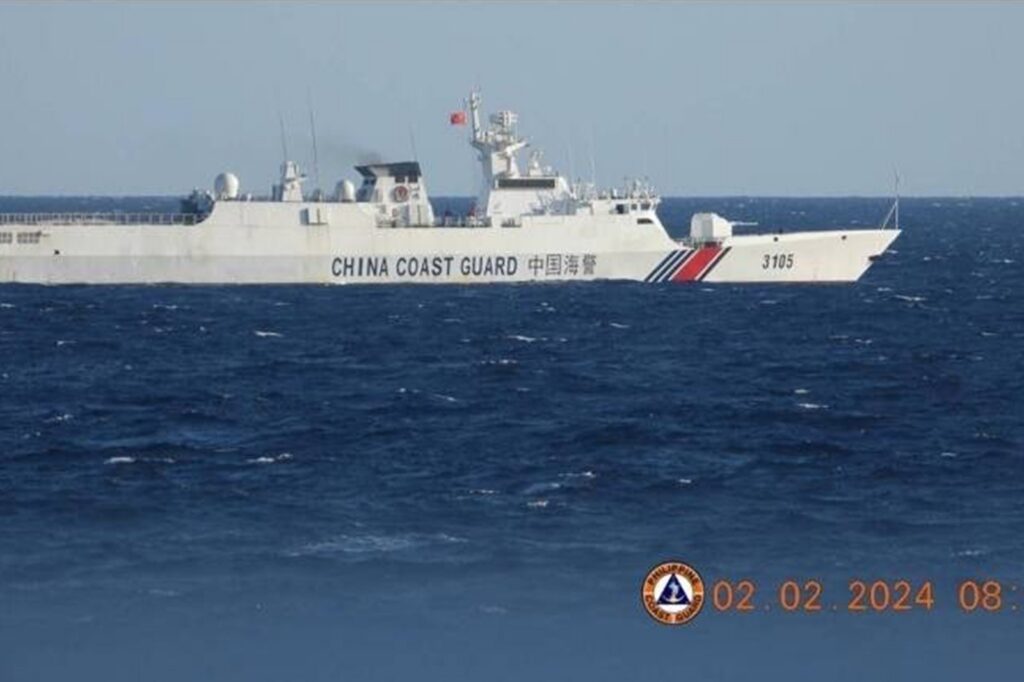
One of the most significant incidents occurred on 18 September, when a China Coast Guard vessel collided with a Philippine Bureau of Fisheries and Aquatic Resources vessel near Bombay Shoal. The Philippine vessel was en route to deliver fuel to Filipino fishermen operating in the area. Manila described the incident as deliberate ramming, while Beijing claimed its vessel was conducting law enforcement operations and blamed the collision on the Philippine vessel changing course. Such incidents directly impact the safety of Filipino fisherfolk, who often find themselves caught in the middle of high-stakes maritime maneuvers.
Impact on Medical Evacuations and Daily Life
The human cost of these tensions became starkly apparent on 8 October. A China Coast Guard vessel discharged a water cannon as close as 400 yards from a Philippine Coast Guard vessel. The Philippine vessel was on its way to medically evacuate a sick Philippine Navy sailor stationed on the BRP Sierra Madre, a ship grounded at Second Thomas Shoal. Philippine authorities reported that the water cannon incident stalled the evacuation of the injured soldier by nearly 10 hours. This delay highlights how maritime disputes can have immediate and serious consequences for the health and safety of individuals, turning a routine medical emergency into a prolonged ordeal.
China rejected the allegations, stating that its vessel had taken “legitimate and reasonable measures” before allowing the evacuation. However, for the families of the sailors stationed in these remote areas, the delay represents a real danger. The proximity of these incidents to the daily operations of the Philippine Navy and Coast Guard underscores the persistent risk faced by personnel serving in these contested waters.
Diplomatic Rhetoric and Regional Context
These maritime tensions have been accompanied by increasingly hostile diplomatic rhetoric. Disagreements between the two nations have also spilled over into other regional forums, such as the ASEAN defense ministers’ meeting in Cebu. The South China Sea Islands, comprising several archipelago clusters of mostly small uninhabited islands, islets, reefs, and seamounts, remain subject to competing claims of sovereignty by several countries. These competing claims are reflected in the variety of names used for the islands and the sea, a linguistic reminder of the complex history and ongoing disputes in the region.
The situation is further complicated by the strategic importance of the area. The South China Sea is a marginal sea of the Western Pacific Ocean, bounded by South China in the north, the Indochinese Peninsula in the west, the islands of Taiwan and northwestern Philippines in the east, and Borneo, eastern Sumatra, and the Bangka Belitung Islands in the south. Its strategic location makes it a critical route for global trade and regional security.
Allied Support and Defense Cooperation
In response to the escalating tensions, the Philippines has strengthened its defense ties with key allies. On 10 November, Japan signed a $27 million security agreement to supply the Philippines with coastal radar and surveillance drones. Japanese Ambassador Katsuro Kitagawa and Philippine Foreign Secretary Maria Theresa Lazaro signed the agreement in Manila. The Philippine Navy will receive the radar, while the Philippine Air Force will use the drones for monitoring and surveillance.
This deal is significant as it marks the first transfer of equipment classified as defense equipment under Japan’s Official Security Assistance program, which was established in 2023. The program provides equipment and other support to partner countries through grants. The equipment is intended to help Manila keep watch over waters around its archipelago, which sits along routes through the South China Sea and the Luzon Strait. For communities living near the coast, enhanced surveillance capabilities mean better protection against unauthorized activities and potentially safer waters for fishing and trade.
Joint Coordination and Future Exercises
In a separate statement issued on Tuesday, the United States, Australia, Japan, and the Philippines pledged to establish a joint coordination center in the Philippines and expand combined military exercises. This statement followed an October meeting of their defense chiefs in Cebu. The four countries also agreed to coordinate defense investments to help Manila protect the archipelago. Their statement raised concerns about both the East and South China seas and opposed attempts to change conditions there by force or coercion.
This multilateral approach reflects a broader regional effort to maintain stability and freedom of navigation in the South China Sea. By coordinating their efforts, these nations aim to provide a stronger deterrent against aggressive actions and to support the Philippines in upholding its rights under international law. The establishment of a joint coordination center will facilitate better communication and information sharing among the four countries, enhancing their ability to respond to incidents in a coordinated manner.
Gray-Zone Tactics and Regional Patterns
The tactics used by China in the South China Sea are not isolated to this region. Taiwan’s National Security Bureau (NSB) Director Tsai Ming-yen described China’s maritime gray-zone pressure around Taiwan as a pattern, not a string of separate incidents. He noted that a tactic first seen in the South China Sea, involving militia fishing boats working together with China Coast Guard ships, is now showing up off Taiwan’s eastern and south-western coasts. According to Taiwan’s Central News Agency, Tsai spoke to reporters on 22 October before presenting the bureau’s national intelligence report for the second half of 2026 to the Legislative Yuan’s Foreign Affairs and National Defense Committee.
Tsai identified three trends in Beijing’s gray-zone harassment at sea: routine coast guard patrols in the east, coast guard support for research, and militia boats alongside coast guard ships. He said that Chinese Coast Guard activity east of Taiwan and in the Western Pacific is becoming normal practice. The NSB and Taiwan’s Coast Guard Administration have a close liaison arrangement, with the coast guard handling reporting and response for each incident, while the NSB analyzes the overall pattern and exchanges intelligence with international partners.
This pattern of behavior, where civilian and law-enforcement assets are used to sustain a maritime presence and counter challenges from other nations, highlights the complex nature of maritime security in the region. For countries like the Philippines, understanding these patterns is crucial for developing effective strategies to protect their territorial integrity and the rights of their citizens.
Economic and Strategic Significance
The South China Sea’s economic significance cannot be overstated. With $3.4 trillion of the world’s $16 trillion in maritime shipping passing through the area in 2016, any disruption to these trade routes has far-reaching implications for the global economy. Oil and natural gas reserves have also been found in the area, adding to its strategic importance. The Western Central Pacific’s role in global commercial fishing further underscores the region’s value to food security and livelihoods.
For the Philippines, the South China Sea is not just a source of economic benefit but a vital part of its national identity and security. The country’s archipelagic nature makes it particularly vulnerable to maritime threats, and the protection of its exclusive economic zone is a top priority for the government. The recent legal and diplomatic moves by the Philippines, supported by its allies, reflect a determination to safeguard its rights and interests in the face of increasing pressure from China.
Community Impact and Future Outlook
As the Philippines prepares its second legal case against China, the focus remains on the impact of these disputes on ordinary people. For communities in the Philippines, the South China Sea is a source of food, income, and cultural identity. The escalation of tensions and the use of force or coercion in these waters threaten the livelihoods of fisherfolk and the safety of those who work at sea.
The potential second case, seeking compensation for environmental destruction and economic losses, represents a new approach to addressing these issues. By quantifying the damage and seeking redress, the Philippines aims to hold China accountable for its actions and to provide support for the communities affected. This approach also sends a strong message to other nations in the region about the importance of respecting international law and the rights of smaller countries.
The establishment of a joint coordination center with the United States, Australia, and Japan, along with the increased defense cooperation, provides the Philippines with additional support in protecting its territorial integrity and maritime rights. These efforts are crucial in maintaining stability in the South China Sea and ensuring that the region remains a place of peace and prosperity for all its inhabitants.
Sources
- South China Sea
- On the frontlines of the South China Sea | CNN
- Manila weighs second South China Sea legal case against Beijing: analyst
- Are renewed maritime tensions in the South China Sea straining diplomatic relations?
- China Brings Its South China Sea Playbook to Taiwan's East Coast – Second Line of Defense
- DEFENSE PACT: Japan To Supply Philippines With Radar And Drones Under $27 Million Deal
Photo: Philippine Coast Guard (Public domain)