
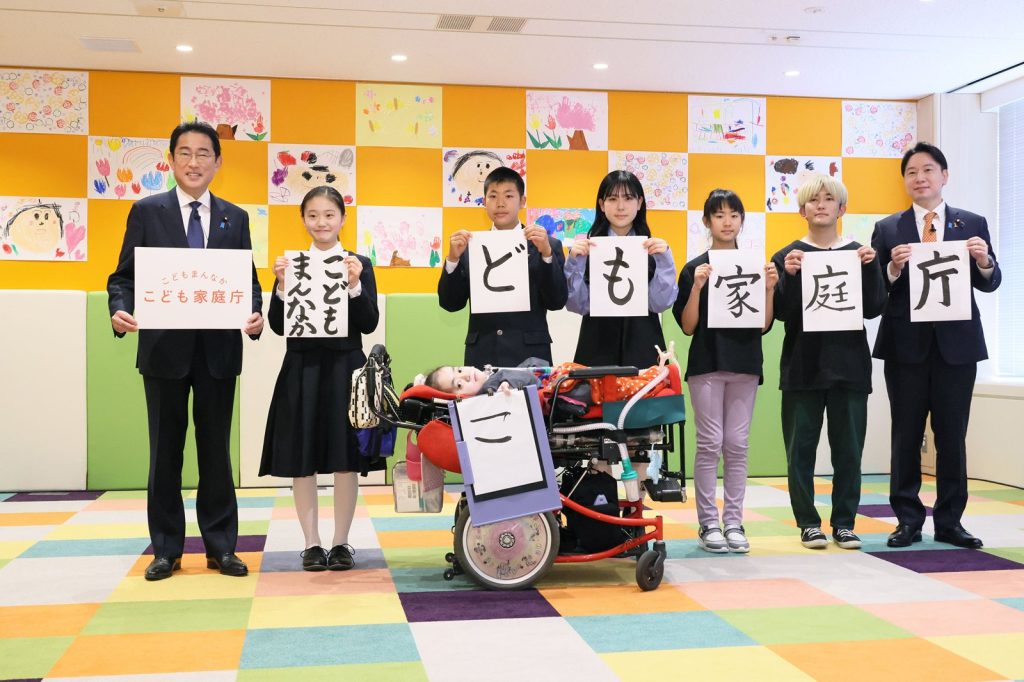
TOKYO, July 30 — The story of Japan’s struggle against its declining birth rate now runs through a single agency, the Children and Families Agency, which opened its doors on April 1, 2023. At its heart lies a question that touches every family in the nation: can a coordinated government effort reverse a demographic trend that has been building for decades, or will the gap between ambition and spending prove too wide? The agency was Prime Minister Fumio Kishida’s answer to a crisis that had long been fragmented across ministries.
Before its creation, child welfare policies—childcare, child welfare, and measures against child poverty—lived in separate corners of the bureaucracy. The new body consolidated them under one roof, giving the government a unified front in what Kishida framed as a national priority.
For those involved in crafting the policy, the hope was that coordination would bring results that scattered efforts had not. The pledge that set all this in motion came in 2022, when the government promised to double the child care budget to 4 trillion yen by 2025. It was a political marker as much as a fiscal one, a signal that Japan was willing to invest real money in reversing the decline.
The agency was the institutional engine meant to deliver on that promise.
Early Steps and the People Behind Them
Ayuko Kato was appointed as the agency’s first head in 2023, stepping into a role that carried immense expectations. By 2024, the agency had already translated some of its mandate into action: free daycare for second and subsequent children, and expanded child allowances. For families raising more than one child, these were tangible changes—a reduction in the cost of childcare that could make the difference between having another child or stopping at one.
But the agency’s work is set against a sobering backdrop. Critics note that Japan’s total spending on families stood at just 1.5% of GDP in 2023.
That figure is well below the OECD average of 2.5%, a gap that raises questions about whether the country is putting enough money behind its demographic goals. It is a measure not just of policy ambition, but of the difference between promises and outcomes.
What Was Achieved, What Remains
The consolidation of child welfare policies was itself a significant bureaucratic achievement. For years, advocates had called for a single point of responsibility for children’s issues, arguing that the old structure made it easy for problems to fall between the cracks. The agency gave those advocates something they had long asked for: a place where the buck stops.
The free daycare program and expanded child allowances were the agency’s first major policy deliverables. Free daycare for second and subsequent children directly targeted the financial burden that often stops parents from having larger families.
Expanded child allowances put additional money into household budgets. These are the concrete benefits that families see and feel. Yet the OECD comparison continues to shadow the agency’s work.
Spending 1.5% of GDP on families while the average across developed nations is 2.5% means Japan is still playing catch-up. That gap is not just a statistic; it is a measure of the resources that families do not have, the support that does not reach them.
Looking Forward
As of July 2026, the Children and Families Agency is just over three years old. It has established its role as the central hub for child welfare policy in Japan. The next test will be whether the government follows through on the 2022 pledge to double the child care budget by 2025, and whether that increased spending will be enough to bring Japan’s family support in line with international norms.
For the families watching these developments, the agency remains a symbol of both hope and the distance still to travel.




