
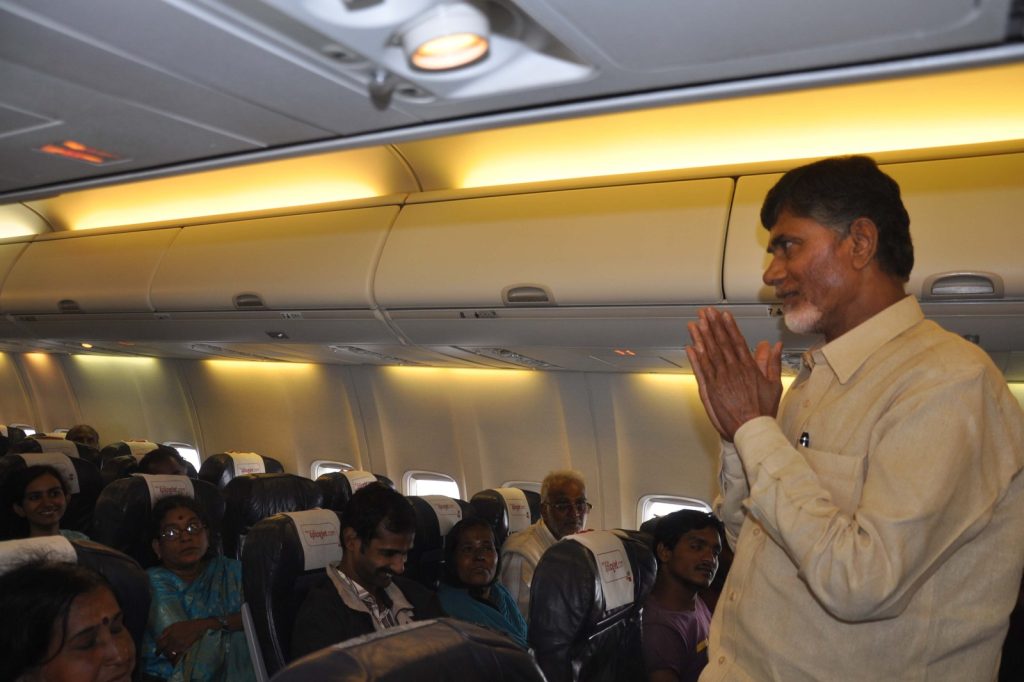
The 300 crore rupees Andhra Pradesh Chief Minister N. Chandrababu Naidu handed out today to families displaced by the Veligonda irrigation project is not simply a compensation payment. It is a clearance chit.
The money buys access to the remaining construction zones, the last physical obstacles standing between the state and a finished canal network. The Veligonda project is a lift-irrigation scheme.
It pulls water from the Srisailam reservoir. It has been stalled by repeated delays and cost overruns. Now the state has committed to paying off the displaced as a condition for moving forward.
That forward movement has a hard deadline. Naidu pledged that phase-one water would reach command areas by July 31.
That is roughly a month away. The timeline, according to officials familiar with the briefing, is tied to the completion of remaining tunnel work and canal lining. The state is betting that cash in hand will clear the path for the engineering crews.
It is a blunt trade: rupees for right-of-way. The record shows the government has now formally committed to this compensation as part of the project’s clearance process. The 300 crore figure is large.
It covers families evacuated to make way for the reservoir and the canal network. But it is also a signal.
The Veligonda project has a history of broken timelines. A July 31 water delivery date carries weight because the state is tying it to the monsoon season. The chief minister, according to sources present at the review meetings, stressed that both the compensation and the health programme were part of a broader push to improve rural infrastructure ahead of the next monsoon.
That is a specific, practical goal. It suggests the government views the coming rains as a test of its ability to deliver.
Naidu used the same set of review meetings to launch the Sanjeevani health programme. This is a separate initiative, aimed at expanding primary-care access in rural and tribal areas. The programme, according to the filing, will deploy mobile medical units and telemedicine hubs.
The target is districts with limited hospital infrastructure. This is not a vague promise. It is a logistical plan: vehicles and screens sent to places where clinics do not exist.
The state also announced that the Talliki Vandanam scheme, a financial-assistance programme for mothers, will begin enrollment in July. That scheme was first announced in the state budget.
It provides direct cash transfers to women with school-age children. All three announcements — the Veligonda compensation, the health programme, the mother’s assistance scheme — share a common thread. They are rural-facing.
They are infrastructure of different kinds: physical, medical, financial. The chief minister’s emphasis on the monsoon season frames them as preparation.
The state is trying to get its projects in place before the weather turns. That is a straightforward calculation. If the water does not arrive by July 31, the political cost will be higher than the 300 crore paid today.
If the mobile health units are not on the road before the rains isolate villages, the gap in care will be exposed. The disbursement covers only the displaced families. It does not solve the project’s history of cost overruns.
It does not guarantee the tunnel work finishes on time. It clears a specific obstacle.
The state government is betting that one cleared obstacle is enough to keep the rest of the schedule intact. The next month will show whether that bet holds.




